What Are 3D Interactive Experiences? Technology Categories and Event Applications
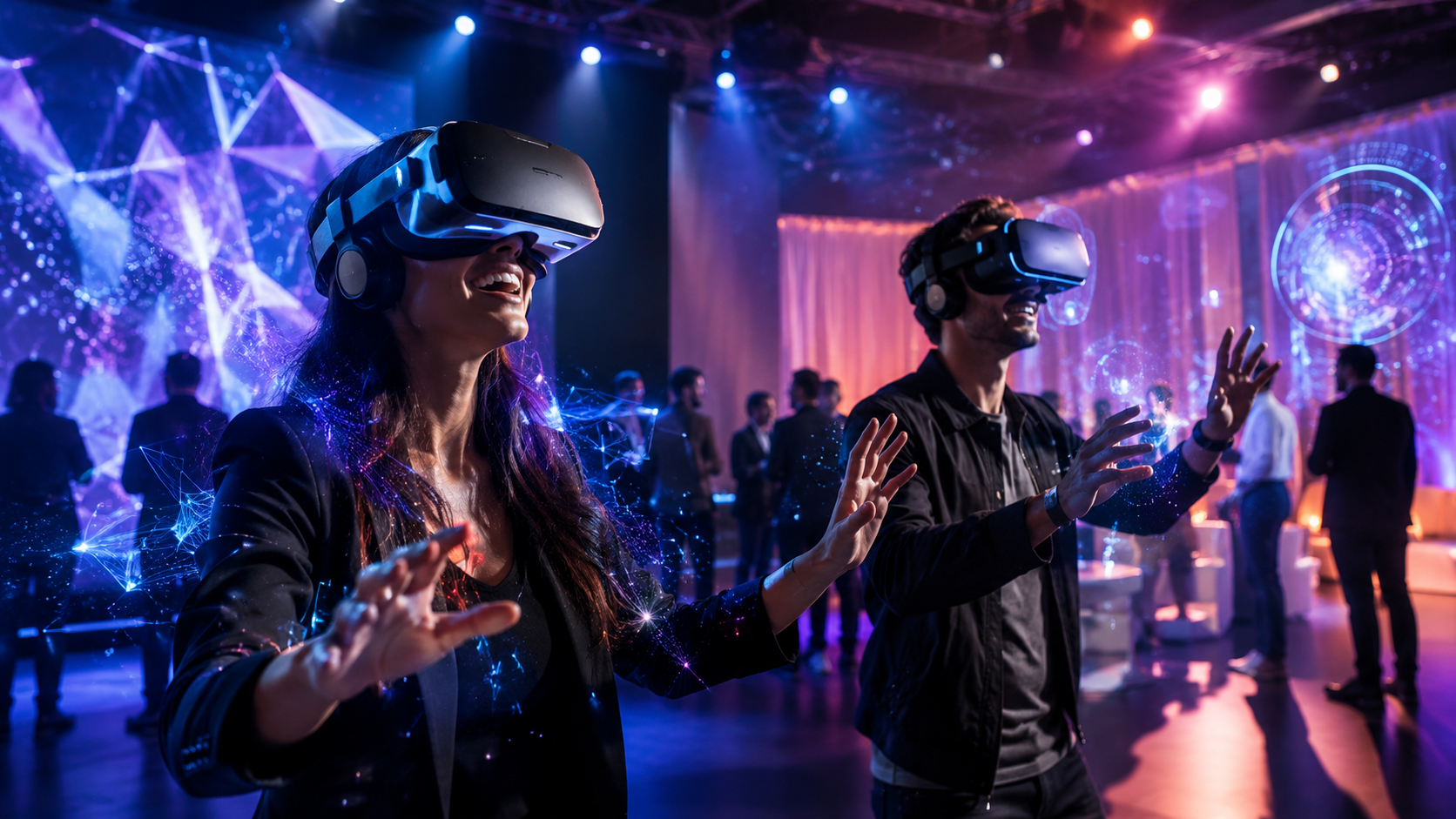
3D interactive experiences transform passive audiences into active participants through immersive technologies that respond to user input in real-time. From VR headsets that transport users to virtual worlds to AR overlays that enhance physical spaces, these technologies create memorable moments that traditional displays cannot match. For event planners and marketers, understanding which 3D technology fits your objectives, budget, and venue constraints determines success.
Virtual Reality (VR): Full Immersion Through Headset Rentals
Virtual reality delivers complete environmental control through 360-degree experiences that transport users into entirely digital worlds. Unlike other 3D technologies, VR requires no venue modifications and operates effectively in any 10×10 space, making it ideal for standard trade show booths and conference rooms.
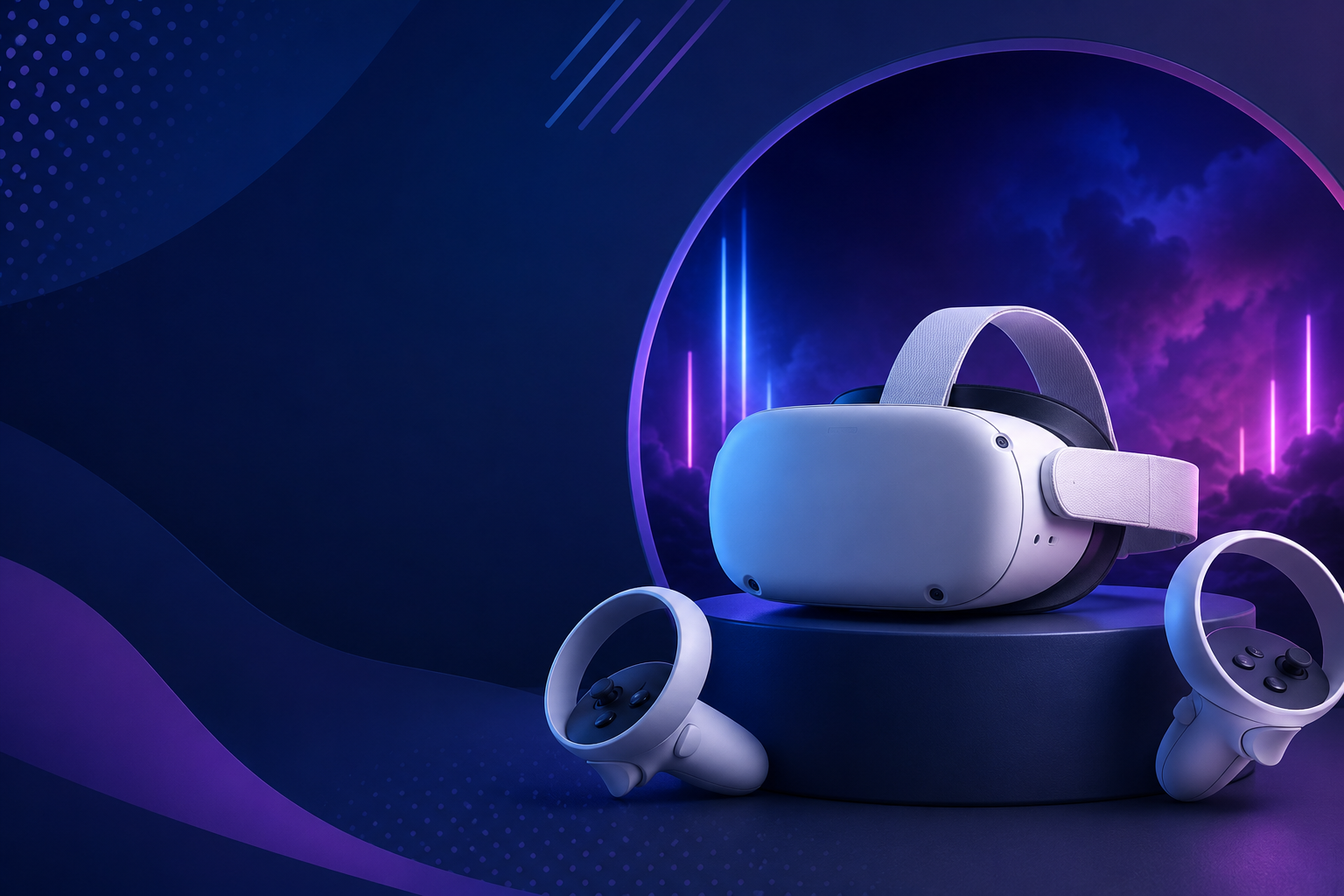
Modern VR rental packages include everything needed for deployment: headsets, tracking sensors, content libraries, and setup support. Professional-grade systems like the Meta Quest 3, HTC Vive Pro 2, and Pico 4 Enterprise offer wireless operation, eliminating trip hazards and expanding placement flexibility. These systems support experiences ranging from 2-minute product demonstrations to 30-minute training simulations.
VR excels in scenarios requiring controlled narratives and focused attention. Product demonstrations allow customers to explore features impossible to showcase physically—touring factory floors, examining internal components, or testing products in various environments. Training simulations provide risk-free practice for dangerous procedures, while virtual tours transport attendees to remote locations without travel costs.
The self-contained nature of VR experiences means consistent quality regardless of ambient lighting, crowd noise, or competing visual distractions. This reliability makes VR particularly valuable for events where environmental control proves challenging.
Augmented Reality (AR): Digital Overlays on Physical Spaces
Augmented reality enhances real-world environments by overlaying digital content onto physical spaces through smartphones, tablets, or specialized AR glasses. While AR creates engaging experiences that blend digital and physical elements, implementation requires either custom app development or specialized hardware rentals.
Smartphone-based AR reaches the widest audience since most attendees carry compatible devices. However, this approach demands app downloads, consuming valuable engagement time and potentially losing participants unwilling to install event-specific applications. Development costs for custom AR apps range from $15,000 for basic implementations to $50,000+ for sophisticated experiences with real-time tracking and multi-user capabilities.
Tablet-based AR solutions eliminate download friction by providing pre-configured devices but require additional rental costs of $50-100 per tablet per day. Microsoft HoloLens 2 and Magic Leap 2 offer hands-free AR through specialized glasses, though rental costs of $500-1,000 per day per device limit large-scale deployment.
AR works best for experiences that enhance rather than replace physical environments. Product visualization allows customers to see furniture in their spaces or customize vehicle configurations in real-time. Scavenger hunts drive booth traffic by placing virtual markers throughout event venues. Wayfinding applications help attendees navigate complex convention centers while discovering sponsor content.
Projection Mapping and Holographic Displays
Projection mapping transforms architectural surfaces into dynamic canvases, while holographic displays create three-dimensional images visible without special glasses. These technologies deliver spectacular visual impact but offer limited direct interactivity compared to VR and AR.
Projection mapping requires significant pre-production to survey venues, create custom content matching surface geometry, and install multiple high-brightness projectors. Setup typically takes 1-2 days with costs ranging from $10,000 for simple installations to $100,000+ for building-scale deployments. Environmental factors like ambient light, surface color, and viewing angles affect quality.
Holographic displays using LED fans, pyramid projections, or specialized screens create eye-catching centerpieces but lack the immersive quality of headset-based experiences. Rental costs of $2,000-5,000 per day position these as premium options for keynote presentations or booth attractions rather than hands-on engagement tools.
Both technologies excel at creating atmosphere and drawing attention but struggle to deliver personalized, interactive experiences. They work best as complementary elements alongside more interactive 3D technologies rather than standalone engagement solutions.
VR as the Most Accessible 3D Interactive Technology for Events
While AR requires app development and projection mapping demands specialized venues, VR delivers immediate immersive experiences through rental packages that include everything needed for deployment. Modern VR systems work in standard booth spaces, require no technical expertise from operators, and offer pre-built experiences that align with common event objectives from entertainment to education.
Setup Simplicity: Why VR Beats Other 3D Technologies
VR systems achieve operational status in under 30 minutes through streamlined setup processes that require no specialized knowledge. Modern inside-out tracking eliminates external sensors—simply power on headsets, define play boundaries using built-in guardian systems, and load selected experiences. This plug-and-play approach contrasts sharply with AR’s device configuration requirements and projection mapping’s complex calibration procedures.
Standard VR setups require only 6×6 feet of clear floor space per station, fitting comfortably within 10×10 trade show booths while leaving room for branding and storage. No venue modifications, special lighting conditions, or structural installations are needed. The same VR system that operates in a carpeted convention center works equally well in outdoor festival tents or hotel conference rooms.
Rental companies provide comprehensive support packages including on-site setup assistance, operator training, and technical troubleshooting. This turnkey approach means marketing teams can deploy VR experiences without dedicated IT staff or technical contractors. Pre-event training sessions, typically conducted virtually, prepare booth staff to guide users, swap experiences, and handle basic troubleshooting.
The self-contained nature of VR hardware eliminates dependencies that complicate other 3D technologies. While AR requires stable internet for app downloads and projection mapping needs precise architectural measurements, VR operates independently once initial setup completes. This reliability proves invaluable when venue Wi-Fi fails or lighting conditions change unexpectedly.
Content Availability: Pre-Built Experiences vs Custom Development
The VR ecosystem offers hundreds of ready-to-use experiences across entertainment, education, and enterprise categories. Unlike AR’s requirement for custom development or projection mapping’s need for site-specific content, VR rental companies maintain extensive libraries of proven experiences that deploy immediately.
Professional content categories include architectural walkthroughs for real estate marketing, surgical simulations for medical device demonstrations, and safety training modules for industrial equipment. Entertainment options range from rhythm games that draw crowds to meditation experiences for wellness events. Educational content covers everything from ocean exploration for environmental conferences to historical recreations for museum fundraisers.
Content curation services help match experiences to specific event objectives. Rental companies analyze your audience demographics, event goals, and brand guidelines to recommend optimal experience combinations. This consultative approach eliminates the guesswork of content selection while ensuring age-appropriate, culturally sensitive, and objective-aligned experiences.
For organizations requiring branded experiences, many VR applications support logo insertion, color customization, and messaging overlays without full custom development. These semi-custom options, typically adding $500-2,000 to rental costs, provide brand integration at a fraction of full development expenses while maintaining quick deployment timelines.
Cost Comparison: VR Rentals vs AR Development vs Projection Systems
VR rentals offer the most favorable cost-to-engagement ratio among 3D interactive technologies. Daily rental rates of $300-800 per headset include hardware, content licenses, and basic support. Week-long events typically receive 30-40% discounts, bringing per-day costs to $200-500 per headset. These predictable costs enable accurate budgeting without development timeline risks or hidden technical requirements.
AR development costs start at $15,000 for basic marker-based experiences using existing 3D models. Location-based AR with real-time tracking and multi-user support pushes costs to $30,000-50,000. These development expenses occur before any hardware costs, with tablet rentals adding $50-100 per device per day. Ongoing maintenance, app store fees, and update requirements create additional long-term expenses.
Projection mapping installations vary dramatically based on scale and complexity. Small booth installations using single projectors start around $10,000 including content creation and setup. Building-scale deployments requiring multiple high-brightness projectors, media servers, and structural rigging reach $100,000+. These costs assume single-event use—content modifications for different venues require additional production expenses.
Total cost of ownership calculations must include staffing requirements. VR experiences typically need one attendant per 2-3 headsets, while AR installations require technical support for app downloads and device troubleshooting. Projection mapping demands specialized operators for system monitoring and real-time adjustments. When factoring in these operational costs, VR’s simplicity translates to significant savings over multi-day events.
Implementation Guide: Deploying 3D Interactive Experiences at Your Event
Successful 3D interactive deployments require matching technology to objectives, understanding space requirements, and planning for throughput. Whether you’re running a trade show booth, corporate training session, or brand activation, these implementation frameworks ensure smooth operations and maximum engagement.
Trade Show Booths: Driving Traffic and Qualifying Leads
Position VR stations strategically to maximize visibility while maintaining operational efficiency. Corner placements create natural gathering points where waiting attendees can observe others’ reactions, generating curiosity and social proof. Mount external displays showing the user’s perspective to engage observers and create shareable moments for social media.
Design experiences lasting 2-3 minutes to maintain steady throughput while delivering meaningful engagement. Shorter experiences allow 15-20 participants per hour per headset, crucial for high-traffic trade shows. Include natural break points where booth staff can pause experiences to discuss features or answer questions, transforming passive viewing into sales conversations.
Implement lead capture during transition periods between users. While staff sanitize headsets—a 30-second process using UV-C wands or antibacterial wipes—have participants complete digital forms on tablets. This natural pause prevents bottlenecks while capturing contact information at peak engagement moments. Integration with CRM systems through APIs or manual export ensures leads flow directly into sales pipelines.
Select content that demonstrates unique value propositions impossible to convey through traditional media. B2B software companies use VR to visualize data architectures and workflow optimizations. Manufacturing firms showcase factory automation and safety protocols. Construction companies provide virtual site tours of projects under development. These experiences create memorable touchpoints that differentiate your booth from competitors relying on static displays.
Corporate Events and Training: Scaling Immersive Learning
Deploy multiple headsets simultaneously to accommodate entire departments or training cohorts. Modern VR platforms support 20+ concurrent users in shared virtual spaces, enabling collaborative exercises and group discussions within virtual environments. This scalability transforms traditional lecture formats into interactive workshops where participants practice skills together.
Choose platforms specifically designed for enterprise training rather than consumer entertainment. Applications like STRIVR, Immerse, and Virti offer learning management system integration, progress tracking, and performance analytics. These platforms include facilitator tools allowing trainers to monitor all participants, highlight specific elements, and control experience pacing from tablet interfaces.
Structure sessions with 15-20 minute VR segments followed by group discussions. This format prevents VR fatigue while reinforcing learning through peer dialogue. For day-long training events, alternate between VR modules and traditional instruction, using immersive experiences to demonstrate concepts introduced through conventional methods.
Safety training and skills simulations deliver measurable ROI through reduced workplace incidents and accelerated competency development. Walmart reports 10-15% higher employee satisfaction scores after VR training implementation. UPS documented 50% reduction in driver training time using VR simulations. These quantifiable outcomes justify VR investment to stakeholders focused on training effectiveness metrics.
Brand Activations: Creating Shareable Moments
Design experiences that generate organic social media content through spectacular visuals and emotional responses. Horror experiences create dramatic reactions perfect for TikTok. Extreme sports simulations generate excitement that translates to Instagram stories. Artistic experiences produce unique visuals that users want to share with their networks.
Configure mixed reality capture systems that composite users into virtual environments for external viewing. This technology, available on Meta Quest headsets and professional VR platforms, creates compelling content for live streaming and social media posts. Position green screens behind VR users to enhance composition quality and enable real-time broadcasting of branded experiences.
Incorporate competitive elements through leaderboards and time trials. Gamification drives repeat engagement as participants return to improve scores. Public leaderboards displayed on large screens create spectator experiences for non-participants while motivating competitive users to promote events within their social circles to recruit challengers.
Partner with influencers to amplify reach beyond physical attendees. Provide early access to VR experiences for content creators who can generate anticipation through preview posts. During events, dedicate specific time slots for influencer sessions, ensuring optimal lighting and minimal background distractions for content creation. Post-event, share captured footage for continued social media engagement.
Measuring ROI: Engagement Metrics and Success Indicators
3D interactive experiences generate measurable outcomes beyond traditional event metrics. From dwell time increases to social media amplification, understanding how to track and report on immersive technology deployments justifies investment and guides future implementations.
Quantitative Metrics: Usage Data and Engagement Rates
VR systems automatically capture detailed usage analytics unavailable through traditional event activations. Session duration data reveals average engagement times of 5-7 minutes for VR experiences versus 30-60 seconds for conventional booth interactions. This 10x increase in dwell time translates directly to deeper brand engagement and message retention.
Completion rates indicate content effectiveness and user satisfaction. Well-designed VR experiences achieve 85-90% completion rates, while poorly matched content sees 40-50% early exits. These metrics guide content selection for future events and identify optimal experience lengths for different audience segments.
Lead capture rates during VR sessions consistently exceed traditional booth interactions. Events report 70-80% of VR participants providing contact information versus 20-30% for standard booth visitors. The memorable nature of VR experiences creates reciprocity dynamics where participants feel comfortable sharing information after receiving unique value.
Repeat visitor percentages for multi-day events demonstrate sustained interest. Trade shows report 25-30% of VR participants returning on subsequent days, often bringing colleagues to share discoveries. This viral growth pattern amplifies reach beyond initial participants, creating organic audience expansion throughout event duration.
Heat mapping within virtual environments reveals user attention patterns and interaction preferences. This data identifies which features generate most interest, informing product development priorities and marketing message refinement. For training applications, interaction analytics highlight knowledge gaps requiring additional instruction.
Qualitative Outcomes: Brand Perception and Memory Formation
Post-event surveys consistently show 90% recall rates for VR experiences after 30 days versus 10-20% for traditional booth interactions. This dramatic difference in memory formation stems from VR’s multisensory engagement and emotional activation. Participants remember not just information but feelings associated with virtual experiences.
Brand perception metrics improve significantly following VR interactions. Companies report 40-50% increases in innovation perception scores and 30-35% improvements in brand favorability ratings. These improvements persist longer than traditional marketing impacts, with measurable differences still evident 60-90 days post-event.
Sales team feedback indicates VR-generated leads show higher purchase intent and shorter sales cycles. Qualified leads from VR experiences convert at 2-3x rates of traditional booth interactions. Sales representatives report easier follow-up conversations as prospects reference specific VR moments, creating natural conversation continuators.
Training retention studies demonstrate 75% knowledge retention after VR training versus 10% from traditional lectures. Employees trained through VR make 40% fewer errors during real-world task performance. These improvements in training effectiveness reduce operational costs while improving safety outcomes.
Social media sentiment analysis reveals overwhelmingly positive responses to VR experiences. User-generated content featuring VR interactions receives 3-4x more engagement than standard event photos. Hashtag tracking shows extended conversation lifespans as participants share experiences days or weeks after events conclude.
Rental Logistics: Planning Your 3D Interactive Experience Deployment
Successful 3D interactive rentals require coordination between equipment providers, venue managers, and event teams. Understanding the logistics timeline, technical requirements, and support options ensures smooth deployment and operation throughout your event.
Pre-Event Planning: Equipment Selection and Content Curation
Book VR rentals 4-6 weeks before events to ensure equipment availability and allow adequate preparation time. Premium hardware like Varjo Aero headsets or multi-user systems require longer lead times due to limited inventory. Early booking also secures better rates and enables rental companies to reserve backup equipment for contingency planning.
Request content previews through desktop demonstrations or video walkthroughs before finalizing selections. Most rental companies provide remote preview sessions where event teams can experience content via screen sharing or receive temporary access to evaluation versions. This preview process prevents day-of surprises and ensures content aligns with brand standards and audience expectations.
Confirm technical requirements including power access, internet connectivity, and space allocations. Each VR station requires standard 110V outlets capable of supporting 500W continuous draw. While VR operates offline, internet access enables remote support and cloud-based analytics. Verify venue ceiling heights accommodate room-scale experiences requiring 8-foot minimum clearance.
Schedule staff training sessions 3-5 days before events to ensure comfortable operation. Virtual training sessions lasting 60-90 minutes cover headset operation, content navigation, troubleshooting procedures, and hygiene protocols. Request recorded training sessions for reference during events and for briefing last-minute staff additions.
Coordinate shipping logistics for equipment delivery and return. Most rental companies ship equipment to arrive 1-2 days before events, allowing buffer time for delayed shipments. Confirm venue receiving procedures, storage locations, and return shipping arrangements. Insurance coverage during transit and event duration typically adds 10-15% to rental costs but provides essential protection against damage or theft.
Day-of Operations: Setup, Management, and Troubleshooting
Allocate 2 hours for initial setup and testing before attendees arrive. This timeframe allows for unpacking, charging, boundary configuration, and content verification. Professional rental packages include setup assistance either through on-site technicians or remote video support. Document setup configurations through photos for quick restoration if systems require reset.
Assign dedicated staff to manage equipment and guide users throughout operating hours. Optimal staffing ratios range from one attendant per two headsets for high-throughput scenarios to one per three for experienced audiences. Staff responsibilities include headset fitting, experience selection, safety monitoring, and hygiene management between users.
Implement systematic hygiene protocols that maintain equipment cleanliness without disrupting flow. UV-C sanitizing wands disinfect headsets in 30 seconds while antibacterial wipes clean facial interfaces. Disposable face masks or sanitary barriers provide additional protection for users concerned about hygiene. Schedule deep cleaning during lunch breaks and between event days.
Maintain readily accessible technical support contacts for immediate troubleshooting assistance. Rental companies typically provide dedicated phone lines with sub-5-minute response times during event hours. Common issues like tracking loss, software crashes, or audio problems usually resolve through simple resets guided by support technicians.
Establish contingency procedures for equipment failures or unexpected technical challenges. Keep one backup headset per five active units to enable quick swaps without disrupting user flow. Document all issues for post-event review and potential rental credits. Most rental agreements include equipment replacement guarantees for failures beyond normal troubleshooting.
Frequently Asked Questions
How much space do I need for 3D interactive experiences at my event?
VR experiences require minimum 6×6 feet of clear floor space per station for seated or standing experiences, expanding to 10×10 feet for room-scale interactions. Factor in additional space for queuing, equipment storage, and safety buffers. AR experiences using tablets or phones need less dedicated space but require consideration for user movement patterns. Projection mapping space requirements vary dramatically based on installation scale.
What’s the typical rental cost for VR equipment versus other 3D technologies?
VR headset rentals range from $300-800 per day including content and basic support, with weekly rates offering 30-40% discounts. AR tablet rentals cost $50-100 per device daily plus $15,000-50,000 for custom app development. Projection mapping starts at $10,000 for simple installations, reaching $100,000+ for building-scale deployments.
How many people can experience VR per hour at a trade show booth?
With 2-3 minute experiences and efficient transitions, expect 15-20 users per headset per hour. Longer 5-minute experiences accommodate 8-10 users hourly. Multiple headsets multiply throughput—three stations running 3-minute experiences can engage 45-60 attendees per hour while maintaining quality interactions.
Do I need technical staff to operate rented VR equipment?
No specialized technical knowledge is required. Rental companies provide comprehensive training covering basic operation, content selection, and simple troubleshooting. Most issues resolve through power cycling or boundary resets. Remote technical support handles complex problems, eliminating the need for on-site IT specialists.
What happens if VR equipment fails during my event?
Professional rental agreements include replacement guarantees and technical support. On-site backup equipment enables immediate swaps for failed units. Remote diagnostics resolve 80% of issues without physical intervention. For critical failures, rental companies dispatch replacement equipment via same-day courier services.
Can VR experiences be customized with our company branding?
Many VR applications support logo placement, color customization, and messaging overlays without full development costs. Semi-custom branding typically adds $500-2,000 to rental packages. Full custom development starts at $25,000 but creates entirely branded experiences unique to your organization.
How do you sanitize VR headsets between users?
UV-C sanitizing wands disinfect headsets in 30 seconds without chemical residues. Antibacterial wipes clean facial interfaces and controllers between users. Disposable sanitary barriers provide additional protection. Professional rental companies include hygiene supplies and training in their packages.
What’s the minimum rental period for 3D interactive equipment?
Most VR rental companies offer daily minimums, though some require 3-day commitments for premium equipment. Weekly rentals provide best value with 30-40% discounts versus daily rates. Month-long rentals for touring events or extended training programs offer even deeper discounts, sometimes reaching 50% off daily rates.
Maximizing Event Impact Through Strategic 3D Technology Selection
The evolution of 3D interactive experiences has transformed event engagement from passive observation to active participation. Among available technologies, VR emerges as the most practical solution for immediate deployment, offering proven ROI through increased dwell time, enhanced lead quality, and memorable brand interactions that persist long after events conclude.
Success with 3D interactive experiences requires matching technology capabilities to event objectives. While AR and projection mapping serve specific use cases, VR’s combination of setup simplicity, content availability, and cost-effectiveness makes it the optimal choice for most event applications. The ability to deploy professional VR experiences without custom development or venue modifications removes traditional barriers to adoption.
The rental model eliminates capital investment risks while providing access to latest-generation hardware and extensive content libraries. Professional support services ensure smooth operation regardless of internal technical expertise. Measurable outcomes from engagement metrics to training effectiveness provide clear ROI documentation for stakeholder reporting.
As competition for attendee attention intensifies, events that fail to incorporate interactive elements risk irrelevance. 3D interactive experiences represent not just technological novelty but fundamental shifts in how audiences expect to engage with brands, learn new skills, and explore products.
Ready to transform your next event with 3D interactive experiences? Contact professional VR rental providers 4-6 weeks before your event to secure equipment, preview content options, and develop deployment strategies aligned with your objectives. Request case studies from similar events in your industry and ask for ROI metrics that demonstrate value to stakeholders. The future of event engagement is interactive, immersive, and available today through strategic technology rental partnerships.