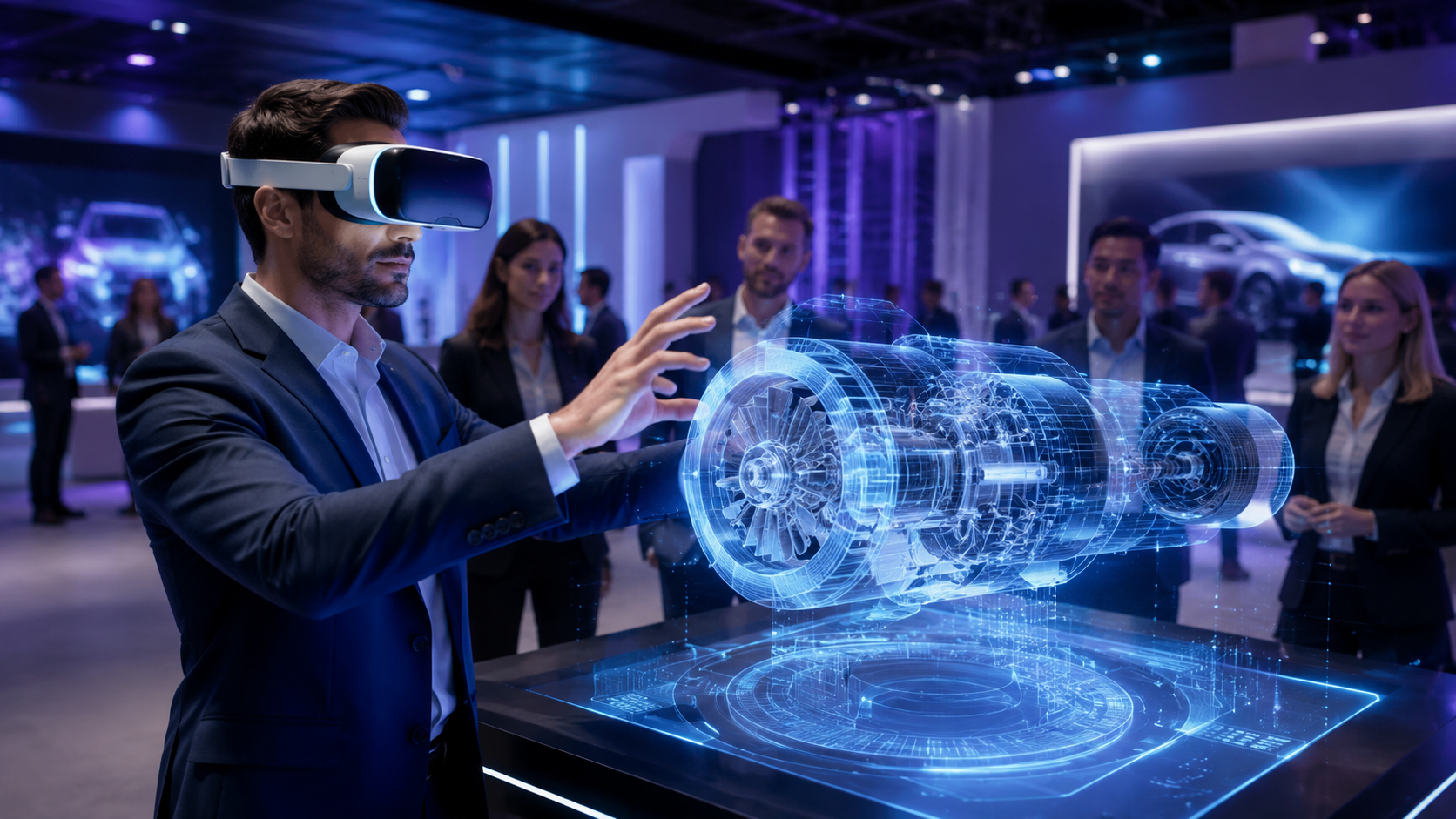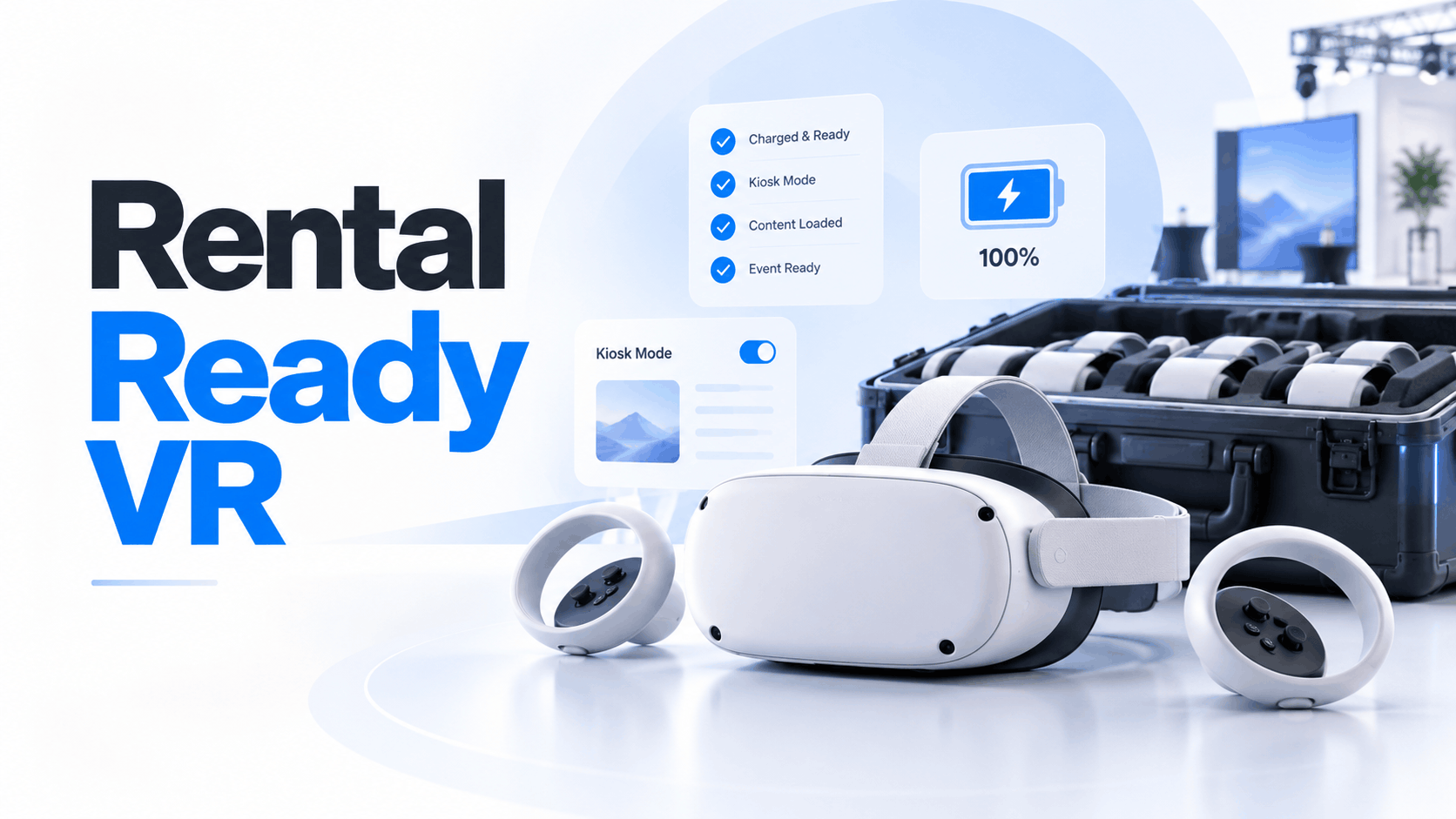
Virtual reality has transformed from a novelty into a powerful engagement tool for events, trade shows, and brand activations. But the technology alone doesn’t guarantee success the human element often determines whether your VR activation delivers memorable experiences or frustrating technical difficulties. Professional VR operators bridge this gap, ensuring smooth operations while maximizing guest engagement and ROI.
When Your Event Needs Dedicated VR Staff
Not every VR rental requires professional operators, but certain event scenarios demand trained facilitators to ensure smooth operations and maximum engagement. Understanding these triggers helps you budget appropriately and avoid day-of technical issues.
Event Scale and Complexity Factors
The need for dedicated VR staff typically emerges when your event crosses specific thresholds that make self-service or volunteer operation impractical.
Guest count thresholds become critical once you expect 50 or more concurrent users engaging with VR experiences. At this scale, queue management alone justifies professional staffing. A single operator can effectively manage 30-40 guests per hour through a VR experience, but only with proper onboarding workflows and efficient headset transitions.
Multiple VR stations running simultaneously create coordination challenges that untrained staff struggle to handle. When operating three or more VR stations, technical issues cascade quickly without dedicated troubleshooters. Professional operators maintain station synchronization, balance guest flow between experiences, and quickly identify which station needs attention when problems arise.
Mixed audience demographics significantly impact support requirements. Corporate executives need different onboarding approaches than tech-savvy millennials. Professional VR facilitators adapt their communication style, adjusting technical explanations and physical assistance based on each guest’s comfort level. They recognize anxiety signals in first-time users and provide reassurance that prevents abandonment.
Time constraints and throughput requirements make professional staffing essential for trade shows and limited-duration activations. When you need to process 200 guests through a VR experience in four hours, every second counts. Trained operators reduce average session time by 30-40% through efficient onboarding, while maintaining experience quality.
Technical Requirements That Demand Staffing
Beyond scale considerations, certain technical configurations require professional expertise that general event staff cannot provide.
Custom brand experiences with specific workflows need operators who understand both the technology and your marketing objectives. These operators guide guests through branded narratives, ensuring key messages land while maintaining immersion. They know when to intervene if guests miss critical brand moments and can reset experiences to specific checkpoints.
Multi-player or networked VR setups require constant monitoring of connection stability and synchronization. Professional operators manage player matching, troubleshoot network dropouts, and coordinate group experiences where timing matters. They understand how to quickly isolate network issues from hardware problems, minimizing downtime.
Data capture and analytics requirements transform VR operators into data stewards. They ensure proper user registration, verify data collection triggers activate correctly, and troubleshoot integration issues with CRM systems. Professional staff understand GDPR compliance requirements and can explain data usage to concerned guests.
Integration with event registration systems demands operators who can work with multiple technologies simultaneously. They troubleshoot RFID badge readers, QR code scanners, and API connections while maintaining the VR experience flow. This technical juggling act requires training that goes beyond basic VR operation.
What VR Event Staff Actually Do
Professional VR operators handle far more than just putting headsets on guests. Their responsibilities span technical operations, guest experience management, and real-time troubleshooting to keep your activation running smoothly.
Pre-Event Setup and Configuration
The value of professional VR staff becomes apparent hours before your first guest arrives, during the critical setup phase.
Equipment testing and calibration involves more than powering on headsets. Operators perform systematic checks of tracking sensors, controller responsiveness, and display clarity. They identify defective units before they impact guests, coordinate replacements, and maintain backup equipment pools. Professional staff arrive with testing protocols that catch issues general technicians miss.
Play area setup requires understanding of both safety requirements and optimal tracking configurations. Operators measure and mark boundaries, position tracking beacons for maximum coverage, and identify potential interference sources. They recognize how ceiling heights, reflective surfaces, and lighting conditions affect different VR systems, adjusting setups accordingly.
Content loading and experience customization goes beyond installing applications. Operators configure difficulty settings, enable accessibility options, and customize experiences for your specific audience. They pre-load multiple experience options, create user profiles for quick switching, and verify all branded content displays correctly.
Integration with event AV systems requires operators to coordinate with venue technicians, ensuring VR content displays on screens for spectator viewing. They configure audio routing, manage wireless frequencies to avoid interference, and establish backup communication channels for troubleshooting.
During-Event Operations
Once doors open, VR operators shift into high-gear hospitality mode while maintaining technical vigilance.
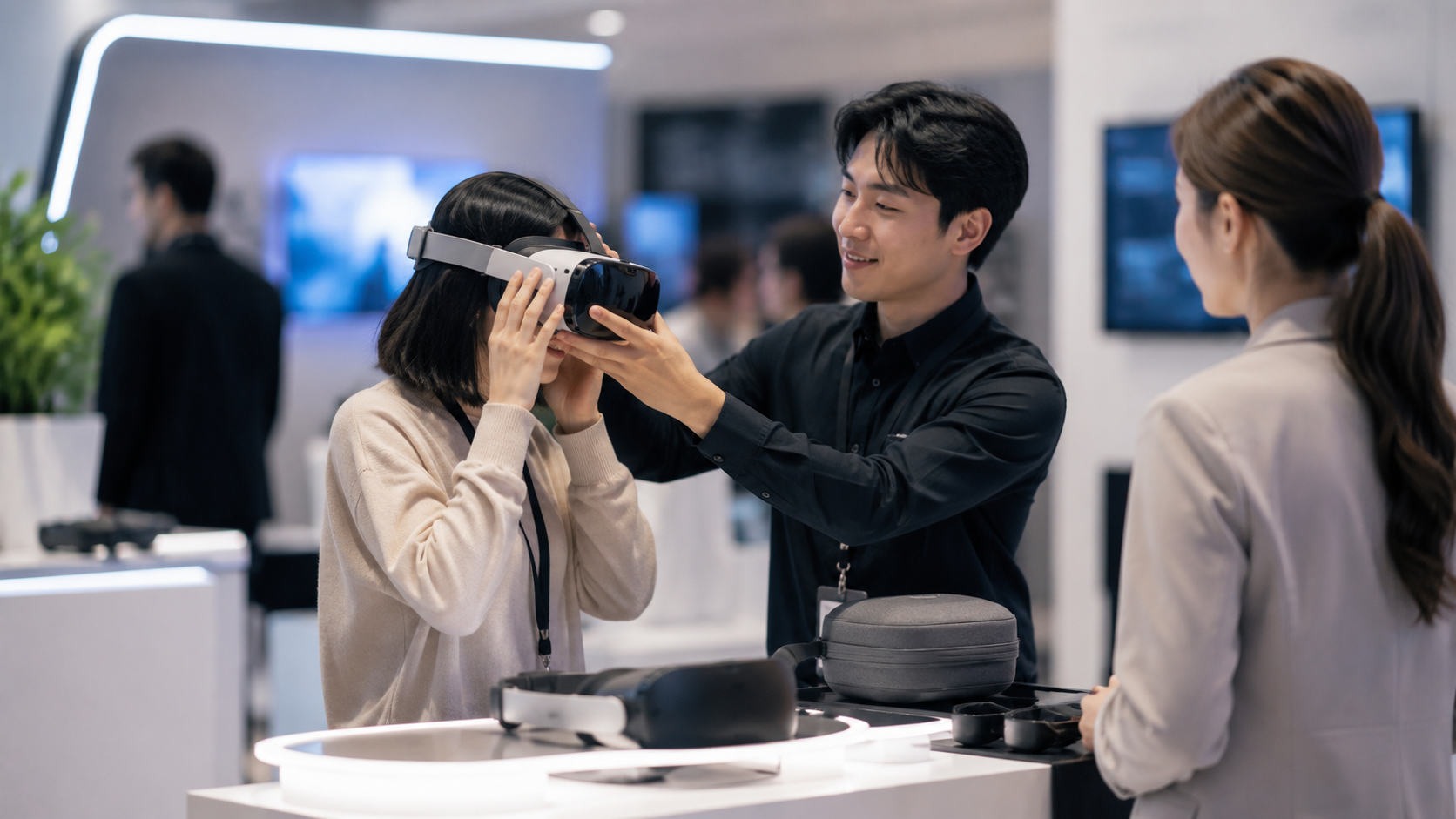
Guest onboarding and comfort adjustments determine first impressions. Professional operators quickly assess each guest’s head size, interpupillary distance, and vision requirements. They adjust straps without messing up hairstyles, accommodate glasses, and recognize signs of discomfort before they become problems. This personal attention reduces motion sickness incidents by 60% compared to self-service stations.
Experience guidance and coaching keeps guests engaged and moving through content efficiently. Operators provide real-time hints without breaking immersion, redirect confused users, and celebrate achievements that encourage social sharing. They recognize when guests need encouragement versus when to let them explore independently.
Queue management and throughput optimization requires constant attention to flow dynamics. Professional operators implement virtual queuing systems, provide accurate wait time estimates, and identify opportunities to add capacity. They make micro-adjustments—shortening experiences during peak times, extending them during lulls—that maximize both throughput and satisfaction.
Real-time troubleshooting separates professionals from volunteers. When tracking fails, operators know whether to restart the headset, recalibrate sensors, or switch to backup equipment. They maintain composure during technical failures, keeping guests engaged while resolving issues that would derail amateur operators.
Hygiene protocols between users have become non-negotiable post-pandemic. Professional operators implement medical-grade cleaning procedures, using appropriate sanitizers that won’t damage equipment. They manage drying times, maintain supplies, and communicate hygiene measures that reassure health-conscious guests.
Post-Event Responsibilities
Professional VR staff responsibilities extend beyond the event’s conclusion, ensuring smooth closeout and valuable insights for future activations.
Equipment breakdown and inventory follows systematic protocols that prevent damage and loss. Operators carefully pack fragile components, account for every cable and accessory, and document equipment condition. This attention to detail reduces damage claims and ensures quick setup at the next event.
Data export and usage reporting transforms raw analytics into actionable insights. Professional operators compile engagement metrics, completion rates, and user feedback into comprehensive reports. They identify technical issues that impacted performance and provide recommendations for future improvements.
Damage assessment and documentation protects both rental companies and event organizers from disputes. Operators photograph any damage, note when issues occurred, and maintain chain-of-custody documentation that clarifies responsibility.
VR Staffing Models and Pricing Structures
VR staffing ranges from single operators for small activations to full teams for large-scale deployments. Understanding different models helps you match staffing levels to your event goals and budget.
Single Operator Model
The single operator model suits smaller activations where personal attention matters more than volume throughput.
This model works best for 1-2 VR stations where a single professional can maintain quality while managing modest guest flow. The operator handles all aspects from setup through breakdown, providing continuity that guests appreciate.
Typical rates range from $50-75 per hour in most markets, with premium pricing in major metropolitan areas or for specialized experience types. Operators with specific platform certifications or extensive event portfolios command higher rates.
Four-hour minimums are industry standard, reflecting setup and breakdown time requirements. Even a two-hour activation requires substantial preparation and closeout work that justifies minimum billing periods.
A skilled single operator handles up to 40 guests per hour through standard VR experiences, though complex or lengthy experiences reduce this throughput. This capacity assumes continuous operation without breaks, making longer events challenging for single operators.
Team Deployment Model
Larger activations benefit from team deployments that divide responsibilities and maintain energy throughout long events.
The lead operator plus assistants structure creates clear accountability while providing surge capacity. Lead operators handle technical troubleshooting and complex guest issues while assistants manage routine operations and queue flow.
Teams effectively scale to 5+ VR stations, with one assistant per 2-3 stations plus a floating lead operator. This ratio maintains service quality while optimizing labor costs.
Team rates ranging from $200-400 per hour reflect the coordinated effort required for large deployments. These rates typically include team coordination, equipment hand-offs, and break coverage that maintains continuous operation.
The model includes dedicated troubleshooter roles that prevent single points of failure. When one station experiences issues, the troubleshooter responds while other operators maintain guest flow, minimizing activation-wide impacts.
Bundled Rental and Staffing Packages
Integrated packages that combine equipment rental with professional staffing offer several advantages over separate procurement.
Equipment plus operator bundles simplify procurement while ensuring compatibility. Operators arrive fully familiar with the specific equipment, eliminating learning curves that delay setup or compromise troubleshooting.
Cost savings versus separate procurement typically range from 15-25% compared to sourcing services independently. Vendors offer package discounts that reflect reduced coordination costs and guaranteed utilization.
Single vendor accountability eliminates finger-pointing when issues arise. The vendor cannot blame operator error or equipment problems when they control both elements, creating stronger incentives for quality delivery.
Guaranteed equipment familiarity means operators know every quirk and workaround for their systems. They bring spare parts, specialized tools, and deep troubleshooting knowledge that rental-only arrangements cannot match.
Sourcing and Vetting VR Event Staff
Finding qualified VR operators requires evaluating both technical skills and event hospitality experience. The best operators combine hardware expertise with guest service capabilities.
Essential Qualifications to Verify
Thorough vetting prevents day-of surprises that compromise your activation’s success.
Platform-specific certifications from Oculus, HTC, Pico, or other manufacturers indicate formal training. These certifications cover troubleshooting procedures, safety protocols, and optimization techniques that improve guest experiences. Request certification numbers and verify them directly with manufacturers when possible.
Previous event portfolios and references demonstrate real-world capability beyond technical knowledge. Look for operators with experience at similar events—trade show operators understand throughput pressure, while corporate event specialists excel at executive engagement. Contact references to verify performance claims and ask about problem resolution.
Troubleshooting capabilities demonstration reveals whether operators can handle pressure. During interviews, present common scenarios: tracking failure, motion sick guests, or network connectivity issues. Strong candidates explain multiple resolution approaches and escalation triggers.
Insurance and liability coverage protects your organization from accidents or equipment damage. Verify operators carry general liability insurance of at least $1 million, with additional coverage for equipment damage. Request certificates of insurance naming your organization as additional insured for event dates.
Red Flags in VR Staffing Proposals
Certain warning signs indicate operators who may struggle with professional event requirements.
No experience with your specific hardware creates unnecessary risk. While VR principles transfer between platforms, each system has unique quirks. Operators unfamiliar with your chosen platform will struggle with optimization and troubleshooting.
Gaming-only backgrounds without event experience often indicate operators who prioritize technology over hospitality. Event VR requires different skills than gaming centers—crowd management, professional presentation, and schedule adherence matter more than gaming expertise.
Inability to explain hygiene protocols suggests outdated or inadequate training. Professional operators should detail specific cleaning products, contact times, and material compatibility. Vague responses about “wiping down equipment” indicate insufficient preparation for health-conscious guests.
No backup plans for equipment failures reveals poor risk management. Professional operators should explain redundancy strategies, spare equipment requirements, and graceful degradation plans that maintain some activation capacity during failures.
Integrating VR Staff with Your Event Team
Successful VR activations require coordination between VR operators and your broader event staff. Clear communication channels and defined responsibilities prevent gaps in the guest experience.
Pre-Event Coordination Requirements
Advance planning prevents day-of confusion that disrupts guest experiences.
Site visits and layout planning identify potential issues before they impact operations. VR operators assess power availability, network infrastructure, and space constraints. They coordinate with venue staff to resolve limitations and plan optimal station positioning for traffic flow.
Power and connectivity requirements mapping ensures infrastructure meets VR demands. Professional operators calculate total power draw, identify circuit distributions, and specify backup power needs. They coordinate with IT teams to guarantee sufficient bandwidth and establish dedicated network segments for VR traffic.
Integration with registration and check-in flow creates seamless guest journeys. Operators work with registration teams to embed VR scheduling, capture necessary waivers, and establish data hand-offs. This coordination enables pre-assignment of VR time slots that reduce wait times.
Emergency procedures and contact protocols prepare teams for crisis scenarios. VR operators participate in event safety briefings, understand evacuation procedures, and establish communication channels with security and medical staff. They know when to pause operations for safety concerns and how to quickly secure equipment during emergencies.
Day-of Communication Protocols
Clear communication structures prevent confusion during high-pressure event operations.
Designated point of contact assignment creates single accountability threads. Each VR operator knows exactly who to contact for different issues—technical problems, guest complaints, or scheduling changes. This clarity prevents duplicate efforts and ensures rapid issue resolution.
Radio or messaging system setup enables real-time coordination without disrupting guest experiences. Professional operators use discrete earpieces and understand radio protocols that maintain professional appearances. They know when text messaging suffices versus when voice communication is essential.
Escalation procedures for technical issues prevent minor problems from becoming major failures. Operators follow defined escalation paths—attempting basic fixes, engaging backup equipment, then calling technical support. They document issues for post-event analysis while maintaining guest engagement.
Guest complaint handling workflows ensure consistent service recovery. VR operators understand when they can resolve issues directly versus when to engage event management. They document complaints, offer appropriate remedies, and follow up to ensure satisfaction.
Calculating ROI on Professional VR Staffing
While VR staffing adds to event costs, professional operators often pay for themselves through increased throughput, reduced equipment damage, and enhanced guest satisfaction scores.
Quantifiable Benefits of Staffed VR Activations
Professional staffing delivers measurable returns that justify the investment.
2-3x higher guest throughput compared to self-service operations directly impacts cost per engagement. Professional operators reduce average session time from 15 minutes to 5-7 minutes while maintaining satisfaction. For a 4-hour activation, this difference means serving 150 guests versus 50, dramatically reducing per-guest costs.
90% reduction in equipment damage claims saves thousands in replacement costs and rental fees. Professional operators prevent guests from stepping on cables, dropping controllers, or colliding with objects. A single prevented headset replacement ($400-1000) covers several hours of operator costs.
Higher NPS scores from smoother experiences translate into improved brand perception and social sharing. Events with professional VR staff average NPS scores 30-40 points higher than self-service activations. These satisfaction gains generate organic social media content and positive word-of-mouth that extends reach beyond attendees.
Better data capture and lead quality improves marketing ROI. Professional operators ensure proper registration, reducing bad data rates from 15-20% to under 3%. They capture additional qualifying information through conversational engagement, improving lead scoring and follow-up effectiveness.
Cost-Benefit Analysis Framework
Systematic analysis helps justify VR staffing investments to stakeholders.
Staffing cost versus potential equipment damage creates clear financial arguments. Calculate potential damage costs based on equipment value and industry-average damage rates (5-10% for self-service). Compare this to staffing costs to demonstrate risk mitigation value.
Throughput gains and revenue per guest calculations quantify opportunity costs. Multiply additional guests served by your average customer lifetime value or lead value. Include social sharing multipliers based on improved satisfaction scores.
Brand risk mitigation value considers reputation impacts from failed activations. Calculate the cost of negative social media mentions, poor event reviews, or lost partnership opportunities. Professional staffing insurance against these risks often justifies the investment alone.
Comparison to alternative activation costs provides context for investment decisions. Compare VR staffing costs to traditional brand activation alternatives—photo booths, celebrity appearances, or product demonstrations. Include engagement duration and memorability metrics that favor VR experiences.
Frequently Asked Questions
How many VR operators do I need for a 200-person corporate event?
For a 200-person corporate event over 4 hours, plan for 2-3 VR operators managing 3-4 stations. This configuration processes 50 guests per hour, allowing everyone to participate while maintaining reasonable wait times. Add an additional operator if you need higher throughput or have VIP guests requiring special attention.
Can venue staff be trained to operate VR equipment instead of hiring specialists?
While basic operation training takes 2-3 hours, venue staff rarely achieve the proficiency needed for smooth event operations. They lack troubleshooting experience, optimization knowledge, and the muscle memory that enables quick problem resolution. Use venue staff for queue management and basic support, but maintain at least one professional operator for technical issues.
What’s the typical hourly rate for VR event staff in major cities?
Major metropolitan areas command premium rates: New York and San Francisco ($75-100/hour), Los Angeles and Chicago ($65-85/hour), and secondary markets ($50-70/hour). Rates increase 20-30% for evening and weekend events. Holiday periods and major conference seasons may see 50% premiums due to high demand.
Do VR operators bring their own equipment or just operate rentals?
Most professional operators work with rental equipment or agency-provided hardware rather than maintaining their own inventory. This model ensures they stay current with multiple platforms and avoid the capital investment and maintenance burden of ownership. Some specialists maintain small equipment inventories for specific niche applications.
How far in advance should I book VR staffing for a trade show?
Book VR staffing 6-8 weeks before major trade shows to ensure availability of quality operators. Peak seasons (CES, E3, major industry conferences) require 10-12 weeks advance booking. Last-minute bookings remain possible but expect 25-50% rush premiums and limited operator selection.
What insurance should VR operators carry for event work?
Professional VR operators should maintain general liability insurance of at least $1 million per occurrence, with $2 million aggregate coverage. They need professional liability (errors and omissions) coverage for technical failures and equipment damage coverage matching the value of hardware they operate. Request certificates listing your organization as additional insured.
Can VR staff help with custom branded experience development?
Experienced VR operators provide valuable input during experience development, identifying technical constraints and user flow issues early. They cannot replace professional developers but offer practical insights about guest behavior, timing requirements, and common friction points that improve final experiences.
Conclusion
Professional VR staffing transforms virtual reality from a risky technical novelty into a reliable engagement powerhouse for events and brand activations. The investment in trained operators pays dividends through increased throughput, reduced equipment damage, and consistently positive guest experiences that amplify your brand message.
The decision to hire professional VR staff ultimately depends on your event’s scale, technical complexity, and risk tolerance. Small, informal gatherings might succeed with self-service stations or volunteer operators. But when your brand reputation, lead generation goals, or guest satisfaction metrics are on the line, professional operators provide the expertise and reliability that ensure success.
As virtual reality technology continues evolving and guest expectations rise, the gap between professional and amateur operation widens. Today’s guests expect seamless, comfortable VR experiences that only trained facilitators can consistently deliver. By investing in proper VR event staffing, you’re not just renting technical support—you’re ensuring every guest leaves with a positive brand impression that extends far beyond your event.
Ready to elevate your next event with professional VR staffing? Start by defining your activation goals, estimating guest throughput requirements, and identifying technical complexities that demand expertise. Then reach out to specialized VR staffing agencies or integrated rental providers at least 6 weeks before your event. Request detailed proposals that include operator qualifications, insurance documentation, and references from similar events. Your guests and your brand will thank you for the investment in professional VR facilitation.