Safety Day is meant to prepare employees for real-world risks—but most training programs never expose workers to the realities they might face. Fires, machinery failures, chemical spills, electrical faults, or emergency evacuations are discussed in theory, yet rarely experienced in practice. The challenge is simple: how do you train people for dangerous situations without putting them in danger?
This is where Virtual Reality (VR) changes the game. VR allows organizations to simulate real hazards safely, transforming Safety Day from a symbolic event into a powerful hands-on learning experience. Instead of telling employees what could happen, VR lets them experience what to do when it does happen, without risk, downtime, or injury.
Why Simulating Real Hazards Matters on Safety Day
Safety Day is not just about awareness, it’s about preparedness. Real incidents don’t follow scripts, and people under pressure rarely remember slides or manuals.
The Gap Between Awareness and Action
Most workplace accidents occur not because employees lack information, but because:
-
They panic under pressure
-
They hesitate at critical moments
-
They’ve never practiced the response in a realistic setting
Simulating hazards bridges this gap by turning safety knowledge into instinctive action.
Limitations of Traditional Hazard Training
Before VR, organizations relied on classroom-based or observational methods to explain hazards. While useful, these approaches fall short when dealing with high-risk environments.
Common Challenges
1. No Safe Way to Recreate Danger
You cannot realistically simulate explosions, fires, or equipment failure during training without real risk.
2. Passive Participation
Employees watch demonstrations instead of actively responding to hazards.
3. Low Emotional Impact
Without stress or realism, training fails to reflect real emergency conditions.
4. Inconsistent Learning Outcomes
Different trainers and locations lead to inconsistent safety standards.
What Does “Simulating Real Hazards with VR” Mean?
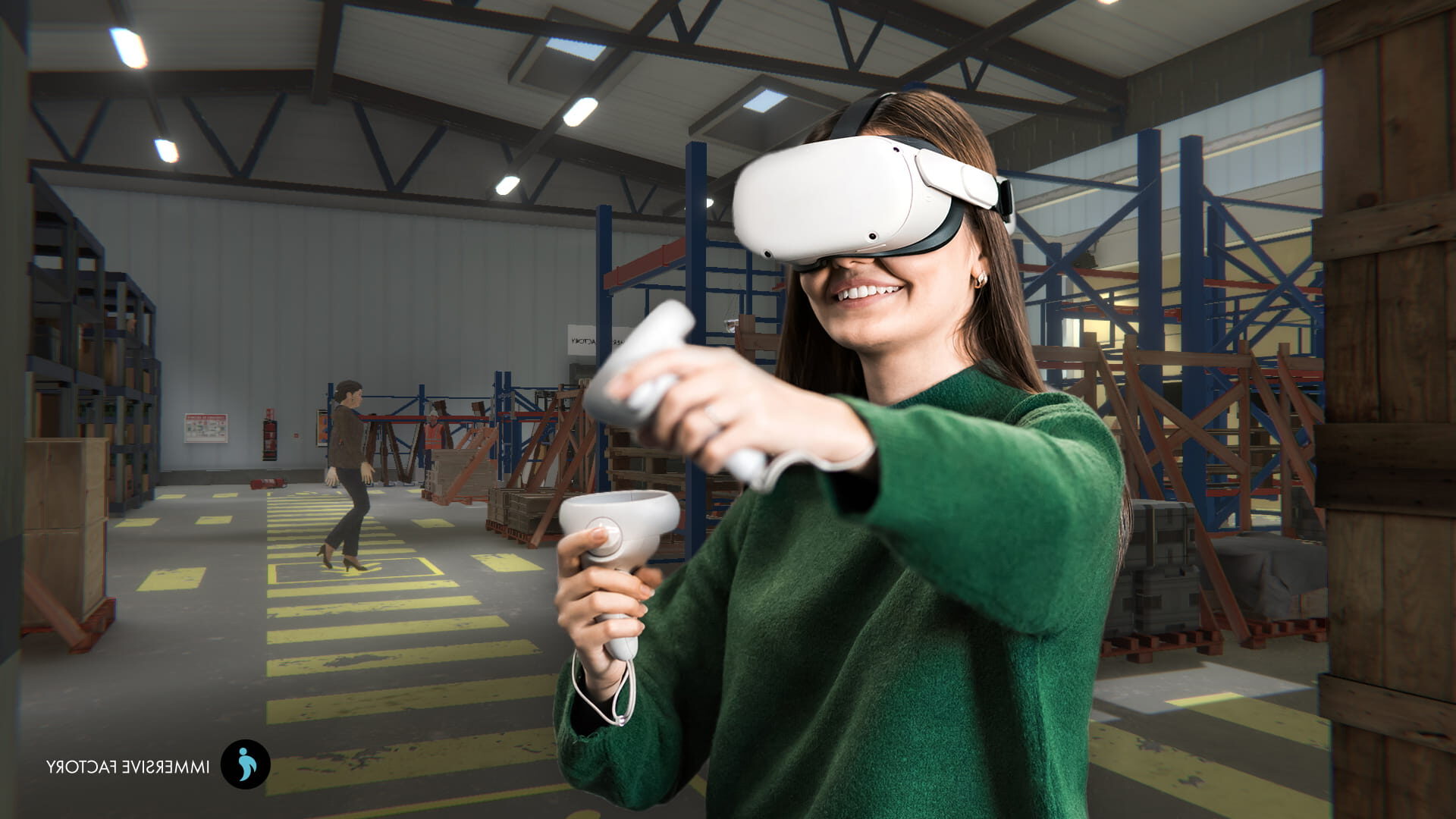
VR hazard simulation places employees inside immersive, interactive environments that mirror their actual workplace conditions. Using VR headsets, trainees can move, react, and make decisions as if the hazard were real.
With platforms like IGIVU, organizations can design Safety Day experiences that replicate:
-
Fire outbreaks
-
Electrical hazards
-
Machine malfunctions
-
Chemical leaks
-
Confined space risks
-
Emergency evacuations
All without exposing employees to real danger.
How VR Simulates Real Hazards Safely
Immersive 3D Environments
Employees are placed in realistic digital replicas of their workspaces, enhancing familiarity and relevance.
Interactive Decision-Making
Trainees must choose actions in real time—just like in real emergencies.
Controlled Risk-Free Failure
Mistakes become learning moments instead of costly accidents.
Repeatable Scenarios
Employees can practice multiple times until correct responses become second nature.
Key Benefits of VR Hazard Simulation on Safety Day
1. Realistic Training Without Real Risk
VR delivers the intensity of real hazards without exposing workers to harm.
2. Higher Engagement and Focus
Immersion removes distractions and increases participation.
3. Better Knowledge Retention
Experiential learning helps employees remember procedures longer.
4. Immediate Feedback
VR systems provide instant performance insights and corrections.
5. Standardized Safety Training
Every employee receives the same high-quality training experience.
Common Hazards That Can Be Simulated Using VR
1. Fire and Evacuation Scenarios
Employees learn evacuation routes, extinguisher usage, and crowd management under pressure.
2. Machinery and Equipment Failures
Workers practice lockout/tagout procedures and emergency shutdowns.
3. Electrical and Chemical Hazards
Safe handling, spill response, and hazard identification are practiced realistically.
4. Working at Heights
Fall risks can be simulated without physical danger.
5. Confined Space Emergencies
VR prepares employees for low-visibility, high-stress situations safely.
Measuring the Impact of VR-Based Hazard Simulation
VR training is not just immersive—it’s measurable.
Organizations can track:
-
Response time
-
Decision accuracy
-
Hazard recognition
-
Compliance with procedures
These insights help safety managers identify gaps and continuously improve training programs beyond Safety Day.
Long-Term Value Beyond Safety Day
While Safety Day is a key moment, VR training delivers value year-round:
-
Reduced workplace incidents
-
Faster onboarding for new hires
-
Continuous skills refreshers
-
Lower accident-related costs
VR turns Safety Day into the starting point of an ongoing safety strategy.
The Future of Safety Training
As workplaces evolve and risks become more complex, traditional safety training alone is no longer enough. The future belongs to immersive, experiential learning that prepares employees for real situations, before they happen.
Simulating real hazards safely with VR is no longer innovative, it’s essential.
Safety Day should do more than raise awareness. It should build confidence, competence, and readiness. VR makes this possible by allowing employees to face realistic hazards, make decisions under pressure, and learn from mistakes, without consequences. When people are trained for reality, they respond better in reality.
Make your next Safety Day unforgettable, and truly effective.
Empower your workforce to experience real hazards safely through immersive VR training.