What Are XR Solutions and Why Rent Instead of Buy
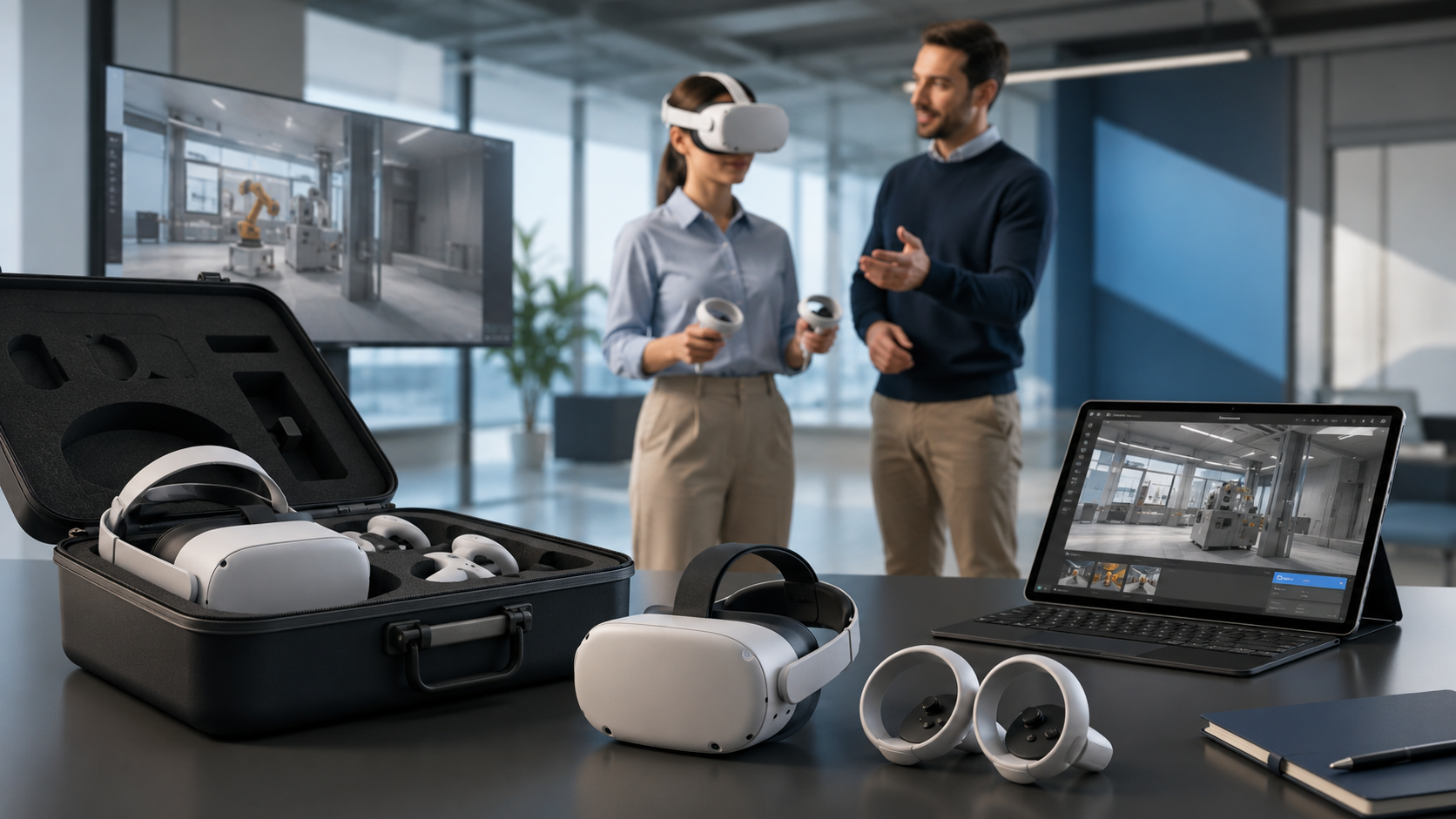
Extended Reality (XR) encompasses virtual reality (VR), augmented reality (AR), and mixed reality (MR) technologies that transform how businesses engage audiences at events, train employees, and showcase products. For most organizations, renting XR equipment delivers better ROI than purchasing, especially when you need curated experiences, setup support, and the flexibility to scale for different event sizes.
Understanding VR, AR, and MR Technologies
Virtual Reality (VR) creates fully immersive digital environments using headsets like Meta Quest 3, PICO 4 Enterprise, or HTC Vive Pro. Users experience complete visual and auditory immersion, disconnected from their physical surroundings. VR excels at transporting users to impossible locations, simulating dangerous scenarios safely, or creating fantastical brand experiences.
Augmented Reality (AR) overlays digital content onto the real world through devices like Microsoft HoloLens 2, Magic Leap 2, or tablet devices. Users maintain awareness of their physical environment while interacting with digital elements. AR works best for visualizing products in real spaces, providing contextual information, or enhancing physical exhibits with digital content.
Mixed Reality (MR) blends physical and digital elements, allowing users to interact with both simultaneously. Devices like Apple Vision Pro enable users to manipulate virtual objects that respond to real-world surfaces and lighting. MR bridges the gap between AR and VR, offering the most versatile but technically complex experiences.
Each technology serves different event and enterprise objectives. VR dominates training simulations and immersive storytelling. AR enhances real-world interactions and product visualization. MR enables advanced collaboration and spatial computing applications.
The Business Case for XR Rental vs Purchase
Capital costs for XR hardware range from $3,000 to $15,000 per headset, with enterprise-grade devices commanding premium prices. A 10-headset VR setup for events could require $30,000-50,000 in initial investment, not including accessories, software licenses, or maintenance.
Rental solutions eliminate these upfront costs while providing access to the latest hardware. Technology refresh cycles in XR average 18-24 months, making purchased equipment obsolete quickly. Renting ensures you always deploy current-generation devices without managing depreciation or disposal.
Scaling presents another rental advantage. A product launch might need 20 headsets for opening week but only 5 for ongoing demonstrations. Purchasing locks you into fixed capacity, while rental allows dynamic scaling based on actual needs.
Professional XR rental packages include setup support, content curation, and technical assistance — services that would require dedicated staff if managing owned equipment. For organizations running quarterly training sessions or annual trade shows, the total cost of ownership typically exceeds rental expenses within 18 months.
Testing XR initiatives through rental also reduces risk. Pilot programs using rented equipment validate ROI before committing to purchase. Many organizations discover their actual usage patterns differ significantly from initial projections, making rental flexibility invaluable.
XR Rental Solutions for Events and Brand Activations
Trade shows, product launches, and brand activations increasingly rely on XR to create memorable experiences that convert passive booth visitors into engaged participants. The right rental package combines hardware, content, and support to ensure smooth execution without technical complexity.
Trade Show Booth XR Experiences
VR product demonstrations eliminate the logistics of transporting physical samples to trade shows. Automotive companies showcase entire vehicle lineups in a 10×10 booth using VR headsets. Industrial equipment manufacturers let prospects operate million-dollar machinery virtually. Software companies provide hands-on training without installing complex systems.
AR visualization brings large-scale products into confined booth spaces. Architecture firms display building designs at full scale using HoloLens 2 rentals. Medical device companies demonstrate internal mechanisms through AR overlays on physical models. Furniture retailers let visitors place virtual products in photographed spaces using tablet AR.
Queue management becomes critical with limited headsets and high booth traffic. Professional rental packages include booking systems, session timers, and spectator displays. Multiple headsets running synchronized experiences accommodate groups while individual stations serve steady visitor flow.
Branded content creation distinguishes your booth from competitors using generic demos. Rental partners offer customization ranging from logo placement to fully bespoke experiences. Lead capture integration automatically collects participant information during XR sessions, eliminating manual data entry and improving follow-up rates.
Corporate Event and Conference Applications
Virtual venue tours extend event reach beyond physical attendees. Remote participants explore conference spaces, visit sponsor booths, and network in virtual lounges using rented VR headsets shipped to their locations. Hybrid events combining physical and virtual attendance maximize engagement across distributed audiences.
Interactive presentations transform passive keynotes into participatory experiences. Speakers manipulate 3D data visualizations using AR while audiences view through rented tablets. Complex concepts become tangible when attendees examine molecular structures, architectural plans, or financial models in mixed reality.
Team building activities using multiplayer VR create shared experiences regardless of physical location. Racing simulations, escape rooms, and collaborative puzzles run on networked rental headsets. Professional facilitators guide activities while IT staff manage technical operations, all included in comprehensive rental packages.
Keynote enhancement with mixed reality demonstrations captivates large audiences. Presenters wearing HoloLens 2 manipulate virtual objects visible on projection screens. Product reveals happen through synchronized AR experiences on hundreds of rental smartphones distributed to attendees.
Marketing Campaign Activations
Pop-up XR experiences in retail locations drive foot traffic and brand awareness. Mall activations using portable VR stations require minimal setup space. Rental packages include branded kiosks, staff training, and daily equipment refresh for multi-week campaigns.
Product launch demonstrations with AR try-before-you-buy functionality reduce return rates. Cosmetics brands offer virtual makeup testing through tablet rentals. Fashion retailers enable virtual fitting rooms using body-tracking AR. Home improvement stores let customers visualize renovations through smartphone AR apps on rental devices.
Social media integration amplifies XR activation reach. Rental packages include mixed reality capture systems that record participants within virtual environments. Branded sharing stations upload videos directly to social platforms. QR codes link physical experiences to digital campaigns.
Multi-city tour logistics become manageable with rental equipment shipping coordination. Devices arrive pre-configured at each venue with location-specific content loaded. Local technical support handles setup while centralized management maintains consistency across markets.
Enterprise XR Rental for Training and Development
Organizations increasingly adopt XR for employee training, safety simulations, and skills development. Rental solutions let HR and L&D teams pilot programs, run periodic training sessions, or deploy XR across multiple locations without managing hardware inventories.
VR Training Program Implementation
Safety training simulations for high-risk environments reduce workplace accidents without exposing trainees to danger. Construction companies rent VR systems for fall protection training. Chemical plants simulate hazmat responses. Manufacturing facilities practice lockout/tagout procedures. Rental packages include industry-specific content libraries validated by safety professionals.
Soft skills development through VR role-playing scenarios improves customer service, sales performance, and leadership capabilities. Retail employees practice difficult customer interactions. Healthcare workers develop empathy through patient perspective experiences. Managers navigate challenging conversations with virtual employees. Multi-user capabilities enable trainer observation and real-time coaching.
Technical skills training with haptic feedback controllers adds tactile dimension to virtual learning. Surgeons practice procedures feeling resistance and texture. Mechanics learn repair sequences with virtual tools providing torque feedback. Assembly line workers perfect techniques without wasting materials. Specialized controllers included in rental packages match specific training requirements.
Multi-user training sessions with instructor oversight scale knowledge transfer efficiently. Trainers guide multiple participants simultaneously through shared virtual environments. Real-time analytics track individual progress and identify struggling learners. Session recordings enable asynchronous review and quality assurance.
Progress tracking and assessment integration quantifies training effectiveness. Rental platforms capture performance metrics, completion rates, and skill progression. Data exports integrate with existing Learning Management Systems. Compliance reporting demonstrates regulatory requirement fulfillment.
AR for On-Site Technical Support
Remote expert assistance through AR glasses connects field technicians with specialists anywhere globally. Rental HoloLens 2 or Magic Leap 2 devices enable hands-free video calls with annotation capabilities. Experts see technician viewpoints and provide visual guidance overlaid on equipment. Temporary rental during equipment installations or seasonal maintenance peaks provides cost-effective expertise access.
Step-by-step repair instructions overlaid on equipment reduce error rates and training time. AR applications recognize equipment models and display relevant procedures. Animated arrows guide technicians through complex assemblies. Digital checklists ensure compliance with maintenance protocols. Rental packages include content creation tools for documenting institutional knowledge.
Quality control inspection with AR measurement tools improves accuracy and consistency. Digital calipers measure tolerances without physical contact. Color-coded overlays highlight defects or wear patterns. Automated reporting captures inspection data with photographic evidence. Rental solutions scale for periodic audits or certification processes.
Field service training with real-world AR guidance accelerates technician onboarding. New hires learn equipment layouts through AR identification exercises. Experienced technicians create training content by recording actual repairs. Rental programs support distributed training across multiple service territories.
Selecting the Right XR Equipment Rental Package
Choosing XR rental equipment requires matching technology capabilities to your specific use case, audience size, and venue constraints. IGIVU’s curated packages simplify this process by bundling compatible hardware, content, and support based on common event and enterprise scenarios.
VR Headset Rental Options
Meta Quest 3 delivers standalone wireless experiences without external computers or cables. The 4K+ display resolution provides sharp visuals while inside-out tracking eliminates external sensors. Hand tracking capabilities enable controller-free interactions. Battery life supports 2-3 hours of continuous use with hot-swappable battery packs extending operation. Ideal for trade shows, training sessions, and consumer activations requiring mobility.
PICO 4 Enterprise focuses on business deployments with centralized device management, kiosk mode, and enhanced privacy controls. The lightweight design reduces fatigue during extended sessions. Eye tracking enables foveated rendering and attention analytics. Enterprise features include single sign-on integration and custom launcher configurations. Best suited for corporate training, employee onboarding, and B2B demonstrations.
HTC Vive Pro provides room-scale tracking for experiences requiring precise movement within defined spaces. External base stations enable sub-millimeter tracking accuracy. Full-body tracking accessories capture entire body movements. Wireless adapters eliminate tethers while maintaining PC-powered graphics quality. Recommended for location-based entertainment, motion capture applications, and high-fidelity simulations.
Apple Vision Pro represents premium mixed reality with breakthrough display technology and spatial computing capabilities. Eye and hand tracking eliminate controllers entirely. Spatial audio creates immersive soundscapes. Seamless transitions between VR and AR modes adapt to use cases. Pass-through cameras maintain environmental awareness. Reserved for executive demonstrations, high-value client experiences, and cutting-edge showcases.
Headset quantity planning depends on concurrent users, session duration, and hygiene protocols. Events typically need 1 headset per 10-15 attendees for 5-minute experiences. Training sessions require 1 headset per participant plus spares. Cleaning time between users adds 2-3 minutes per session.
AR Device Rental Considerations
Microsoft HoloLens 2 enables hands-free AR experiences with gesture recognition and voice commands. The flip-up visor accommodates glasses while maintaining 52-degree field of view. Industrial design withstands workplace environments. Windows integration simplifies enterprise deployment. Optimal for technical training, field service, and industrial applications.
Magic Leap 2 offers the widest AR field of view at 70 degrees with industry-leading dimming capabilities for outdoor use. Lightweight design improves comfort during extended wear. Controller provides precise input for complex interactions. Enterprise focus includes HIPAA compliance and security certifications. Preferred for medical training, architecture visualization, and manufacturing quality control.
iPad Pro and tablet fleets democratize AR experiences without specialized hardware. LiDAR sensors enable accurate depth sensing and occlusion. Large screens accommodate multiple viewers simultaneously. Familiar interfaces reduce training requirements. Managed deployment through mobile device management platforms. Suitable for retail experiences, education programs, and marketing activations.
Smartphone AR scales to hundreds of participants using attendee devices or rental fleets. Web-based AR eliminates app installation requirements. QR codes trigger location-specific experiences. Cloud rendering enables complex graphics on modest hardware. Perfect for large conferences, stadium events, and consumer campaigns.
Supporting Equipment and Accessories
Hygiene covers and cleaning supplies maintain sanitation standards for shared headsets. Disposable face cushions prevent skin contact. Antibacterial wipes sanitize surfaces between users. UV-C sanitization stations provide deep cleaning overnight. Rental packages include sufficient supplies for event duration.
Charging stations and battery packs ensure continuous operation during all-day events. Multi-device charging carts accommodate entire headset fleets. Portable power banks extend untethered usage. Cable management systems prevent tripping hazards. Redundant charging equipment prevents single-point failures.
Boundary markers and safety equipment define VR play spaces preventing collisions. Retractable barriers create defined areas. Floor mats provide tactile boundaries. Overhead cable management systems prevent entanglement. Safety briefings and signage communicate guidelines.
Display screens for spectator viewing multiply experience impact beyond headset wearers. Large monitors mirror VR perspectives for audiences. Mixed reality capture systems composite users into virtual scenes. Streaming equipment broadcasts to remote viewers. Professional audio systems enhance immersion.
Network equipment for multi-user experiences requires robust connectivity. Dedicated WiFi 6 access points handle multiple headsets. Ethernet connections provide stable PC connections. Local servers reduce latency for synchronized experiences. Network isolation ensures security and performance.
XR Content Strategy and Experience Design
Hardware is only half the equation — compelling XR content determines whether your rental investment delivers meaningful engagement. Work with rental partners who provide content curation, customization options, and experience design guidance tailored to your objectives.
Pre-Built vs Custom XR Content
Libraries of ready-to-deploy experiences cover common use cases across industries. Virtual showrooms display product catalogs. Safety training modules address OSHA requirements. Team building activities encourage collaboration. Data visualization templates accept spreadsheet imports. Pre-built content deploys immediately at lower cost than custom development.
Custom branded experiences require 4-8 week development timelines depending on complexity. Initial concepts progress through storyboards, prototypes, and testing phases. Brand guidelines ensure consistent visual identity. Interactive elements align with marketing objectives. Voice-overs and sound design enhance immersion. Custom content provides differentiation but requires planning lead time.
Content licensing for commercial use varies by source and application. Stock content includes single-event or unlimited-use licenses. Custom development transfers ownership or provides exclusive use periods. Music and asset licensing requires separate clearances. Rental partners navigate licensing complexities ensuring compliance.
Hybrid approaches mix stock and custom elements balancing cost and uniqueness. Branded wrappers customize generic experiences. Logo placement and color schemes personalize standard content. Custom introductions frame stock training modules. Modular content systems enable rapid customization.
Content testing and quality assurance prevents event-day surprises. Rental partners verify content compatibility with specific hardware. Load testing ensures stable performance with concurrent users. Accessibility testing confirms compliance with ADA requirements. User testing validates experience flow and timing.
Audience-Appropriate Experience Selection
Beginner-friendly experiences for first-time XR users prioritize comfort and simplicity. Stationary experiences eliminate motion sickness risk. Clear instructions guide users through interactions. Short durations maintain engagement without fatigue. Familiar environments reduce cognitive load. Gentle difficulty curves build confidence.
Professional simulations for B2B audiences emphasize accuracy and detail. Industry-specific scenarios reflect actual workflows. Realistic physics and behaviors maintain credibility. Performance metrics enable benchmarking. Certification programs validate competency. Integration with enterprise systems captures results.
Multiplayer experiences for team engagement foster collaboration and competition. Synchronized objectives require coordination. Leaderboards motivate performance. Spectator modes include non-participants. Cross-platform compatibility accommodates different devices. Private rooms maintain session exclusivity.
Accessibility features ensure inclusive experiences for all participants. Subtitle options assist hearing-impaired users. High-contrast modes aid visual impairments. Seated experiences accommodate mobility limitations. One-handed controls support physical disabilities. Comfort settings reduce motion sensitivity.
Duration planning for event flow management balances engagement and throughput. Trade show demos typically run 3-5 minutes. Training modules last 15-20 minutes. Entertainment experiences extend 30-45 minutes. Queue entertainment maintains interest during waits. Flexible timing accommodates crowd variations.
XR Rental Logistics and Event Execution
Successful XR deployments require careful planning around shipping, setup, staffing, and technical support. Professional rental services include logistics coordination to ensure equipment arrives configured, tested, and ready for immediate use.
Pre-Event Planning and Preparation
Site surveys assess space and technical requirements before equipment selection. Venue dimensions determine headset quantities and tracking systems. Power availability influences charging station placement. Internet connectivity affects multi-user capabilities. Lighting conditions impact AR device selection. Environmental factors guide equipment protection needs.
Equipment shipping timelines require 3-5 business days for standard delivery. International shipments need 7-10 days plus customs clearance. Next-day shipping accommodates urgent requests at premium rates. Return shipping labels simplify post-event logistics. Tracking information enables shipment monitoring.
Staff training on XR operation and troubleshooting prevents event disruptions. Video tutorials cover basic operations. Live remote sessions address specific questions. On-site training precedes event opening. Quick reference guides provide instant assistance. Escalation procedures handle complex issues.
Content preloading and configuration eliminates day-of downloads. Devices arrive with experiences installed and tested. Account credentials provide immediate access. Network settings match venue requirements. Kiosk modes prevent unauthorized access. Backup devices include identical configurations.
Rehearsal sessions and technical run-throughs identify potential issues early. Full-scale setup tests all equipment simultaneously. Staff practice standard procedures and troubleshooting. Content flow validates timing assumptions. Contingency plans address identified risks. Documentation captures lessons learned.
On-Site Setup and Support Options
Professional setup service ensures optimal configuration without client involvement. Technicians arrive before event opening. Equipment placement follows approved floor plans. Cable routing maintains safety standards. System testing verifies full functionality. Handoff briefings transfer operational control.
DIY setup with remote guidance reduces costs for technically capable teams. Detailed instructions guide assembly processes. Video calls provide real-time assistance. Remote desktop access enables troubleshooting. Phone support remains available throughout events. Clear escalation paths handle emergencies.
Dedicated XR technician staffing provides continuous on-site expertise. Technicians manage equipment operation allowing client focus on engagement. Immediate troubleshooting minimizes downtime. Participant coaching improves experience quality. Equipment rotation maintains freshness. End-of-day reports summarize performance.
Equipment swap protocols handle hardware failures without disruption. Spare devices remain configured and ready. Hot-swapping minimizes service interruption. Failure documentation supports damage claims. Overnight replacements restore full capacity. Redundancy planning prevents single points of failure.
Post-event breakdown and return logistics simplify conclusion activities. Technicians handle equipment packing. Inventory checks ensure complete returns. Shipping labels expedite returns. Cleaning protocols prepare for next deployment. Damage assessment documents equipment condition.
XR Rental Pricing Models and Budget Planning
XR rental costs vary based on equipment type, rental duration, quantity, and included services. Understanding pricing structures helps you budget effectively and compare options across rental providers.
Rental Duration and Volume Pricing
Daily rates for VR headsets typically range $150-500 depending on model specifications. Meta Quest 3 rentals average $200/day. HTC Vive Pro commands $350/day with tracking equipment. Apple Vision Pro reaches $500/day for premium experiences. AR devices like HoloLens 2 rent for $400/day. Tablet AR solutions cost $75-150/day.
Weekly rentals provide 20-30% discounts over daily rates. Month-long rentals reduce costs by 40-50%. Quarterly agreements offer maximum savings for extended deployments. Flexible terms accommodate event schedule changes. Early termination options protect against cancellations.
Volume pricing for 10+ unit deployments reduces per-unit costs significantly. 10-20 units typically receive 15% discounts. 20-50 units earn 25% reductions. 50+ unit orders negotiate custom pricing. Package deals bundle different device types. Enterprise agreements establish preferential rates.
Multi-event packages for touring activations streamline logistics and reduce costs. Sequential event discounts recognize continued partnership. Centralized billing simplifies accounting. Equipment refresh between events maintains quality. Consistent pricing aids budget planning.
Damage waiver and insurance options protect against unexpected costs. Basic coverage includes normal wear. Comprehensive protection covers accidental damage. Theft protection secures high-value equipment. Liability insurance protects against participant injuries. Self-insurance through deposits provides alternatives.
Service Add-Ons and Total Cost Considerations
Setup and technical support fees vary by service level and event complexity. Basic setup assistance adds $500-1,000. Full professional setup ranges $2,000-5,000. On-site technicians cost $1,500-2,500/day. Remote support includes $250-500/event. Training sessions run $500-1,000.
Content licensing and customization costs depend on experience complexity. Stock content licenses range $100-500 per title. Simple branding adds $1,000-2,500. Custom experience development starts at $10,000. Complex simulations reach $50,000-100,000. Ongoing content updates require maintenance agreements.
Shipping and logistics charges scale with equipment quantity and destination. Domestic ground shipping averages $50-150 per headset. Express shipping doubles standard rates. International shipping adds customs fees. White glove delivery includes inside placement. Return shipping typically matches outbound costs.
Consumables like hygiene covers add $5-10 per participant. Cleaning supplies cost $50-100 per event. Batteries and charging cables require periodic replacement. Branded materials enhance professional appearance. Signage and instructions improve user experience.
Total cost comparisons reveal significant differences between equipment-only and full-service quotes. Equipment-only rentals appear cheaper but require internal resources. Hidden costs include staff time, shipping coordination, and troubleshooting. Full-service packages provide predictable total costs. Value-added services often justify premium pricing.
Frequently Asked Questions
What’s the difference between XR, VR, AR, and MR technologies?
XR (Extended Reality) serves as the umbrella term encompassing all immersive technologies. VR (Virtual Reality) creates entirely digital environments that replace your physical surroundings. AR (Augmented Reality) overlays digital content onto the real world you can still see. MR (Mixed Reality) blends physical and digital elements, allowing interaction with both simultaneously.
How much does it cost to rent XR equipment for an event?
Basic VR headset rentals start around $150-200 per day for devices like Meta Quest 3. Premium equipment like Apple Vision Pro reaches $500 per day. Weekly rentals typically provide 20-30% discounts. Full event packages including multiple headsets, setup support, and content range from $5,000-25,000 depending on scale and duration.
What XR headsets are best for trade show demonstrations?
Meta Quest 3 provides the best balance of performance, portability, and cost for most trade show applications. The wireless design eliminates trip hazards in busy booths. PICO 4 Enterprise offers superior device management for B2B focused events. Apple Vision Pro creates premium impressions for high-value prospects when budget permits.
Can we customize XR content with our company branding?
Yes, most rental providers offer branding options ranging from simple logo placement to fully custom experiences. Basic branding typically adds $1,000-2,500 to your rental package. Custom experience development requires 4-8 weeks lead time and starts around $10,000 for simple applications.
How many VR headsets do we need for a 3-day conference?
Calculate based on expected attendance, experience duration, and operating hours. For 500 attendees with 5-minute experiences over 24 hours of operation, you need approximately 10-12 headsets to minimize wait times. Include 20% spare capacity for equipment rotation and potential failures.
What technical requirements are needed for XR rentals?
Basic requirements include adequate space (minimum 6×6 feet per VR station), standard power outlets, and WiFi for content updates. Room-scale VR needs 10×10 feet clear space. AR devices require consistent lighting. Multi-user experiences need dedicated WiFi networks. Rental providers conduct site surveys to verify compatibility.
Do XR rental packages include setup and technical support?
Service levels vary by provider and package selection. Basic rentals may include remote setup guidance only. Professional packages typically include on-site setup, staff training, and event-day support. Clarify what’s included versus additional cost services when comparing quotes.
How far in advance should we book XR equipment rentals?
Book at least 4-6 weeks ahead for standard equipment and experiences. Custom content development requires 8-12 weeks lead time. Large quantities or specific equipment models may need longer reservation periods. Holiday seasons and major conference periods book earlier.
What happens if XR equipment fails during our event?
Professional rental packages include spare equipment and swap protocols. Hot-swappable devices minimize downtime to minutes. Remote technical support resolves software issues. On-site technicians handle immediate replacements. Comprehensive service agreements define response times and remediation procedures.
Can we rent XR equipment for multiple locations simultaneously?
Yes, enterprise rental providers coordinate multi-location deployments. Equipment ships directly to each venue with location-specific configurations. Centralized billing simplifies accounting. Remote management enables consistent experiences across locations. Volume discounts typically apply to multi-site rentals.
Conclusion: Maximizing XR Rental ROI for Your Organization
XR solutions rental provides organizations with flexible, cost-effective access to transformative technologies without the burden of ownership. Whether creating memorable brand activations at trade shows, implementing enterprise training programs, or enhancing corporate events, the right rental partner ensures successful deployment through curated hardware selection, compelling content, and comprehensive support.
The key to maximizing XR rental value lies in matching technology capabilities to specific objectives. VR excels at immersive training and product demonstrations. AR enhances real-world interactions and technical support. MR enables advanced visualization and collaboration. Understanding these distinctions guides optimal equipment selection.
Professional rental services extend beyond equipment provision to include experience design, technical support, and logistics coordination. This comprehensive approach eliminates the complexity that often derails XR initiatives, allowing organizations to focus on achieving business objectives rather than managing technology.
As XR technologies continue evolving rapidly, rental solutions provide sustainable access to innovation. Rather than committing capital to equipment that becomes obsolete within 18-24 months, organizations can continuously deploy current-generation hardware while maintaining budget flexibility.
Ready to transform your next event or enterprise initiative with XR solutions? Contact IGIVU’s rental specialists for a customized package recommendation based on your specific objectives, audience, and budget. Our curated approach ensures you receive the right combination of hardware, content, and support for successful XR deployment. Request a consultation today to explore how extended reality rental services can elevate your organization’s engagement strategy.