Virtual reality has evolved from gaming novelty to powerful marketing tool. Today’s branded VR experiences deliver measurable business results from 3x higher memory retention to 27% increase in purchase intent. This guide explores how custom VR experiences transform brand engagement, implementation strategies with proven ROI, and practical steps to launch your first immersive campaign.
What Are Branded VR Experiences
Branded VR experiences are custom-designed immersive environments that transport customers directly into your brand story. Unlike generic VR content that simply showcases technology, branded experiences integrate your unique value proposition, product features, and brand personality into interactive narratives that customers actively participate in rather than passively watch.
These experiences range from virtual product demonstrations where customers can explore features at their own pace, to gamified brand adventures that reward engagement with exclusive content or offers. The defining characteristic is purposeful design that aligns every interaction with specific marketing objectives—whether that’s increasing brand awareness, driving product consideration, or accelerating purchase decisions.
Beyond Traditional Marketing: The Immersive Advantage
Research from Stanford’s Virtual Human Interaction Lab demonstrates that VR experiences create memories with the same neural pathways as real experiences. This translates to memory formation rates 3x higher than video content and 2.5x higher than static imagery. When customers feel present in your brand environment, they form emotional connections impossible through traditional media.
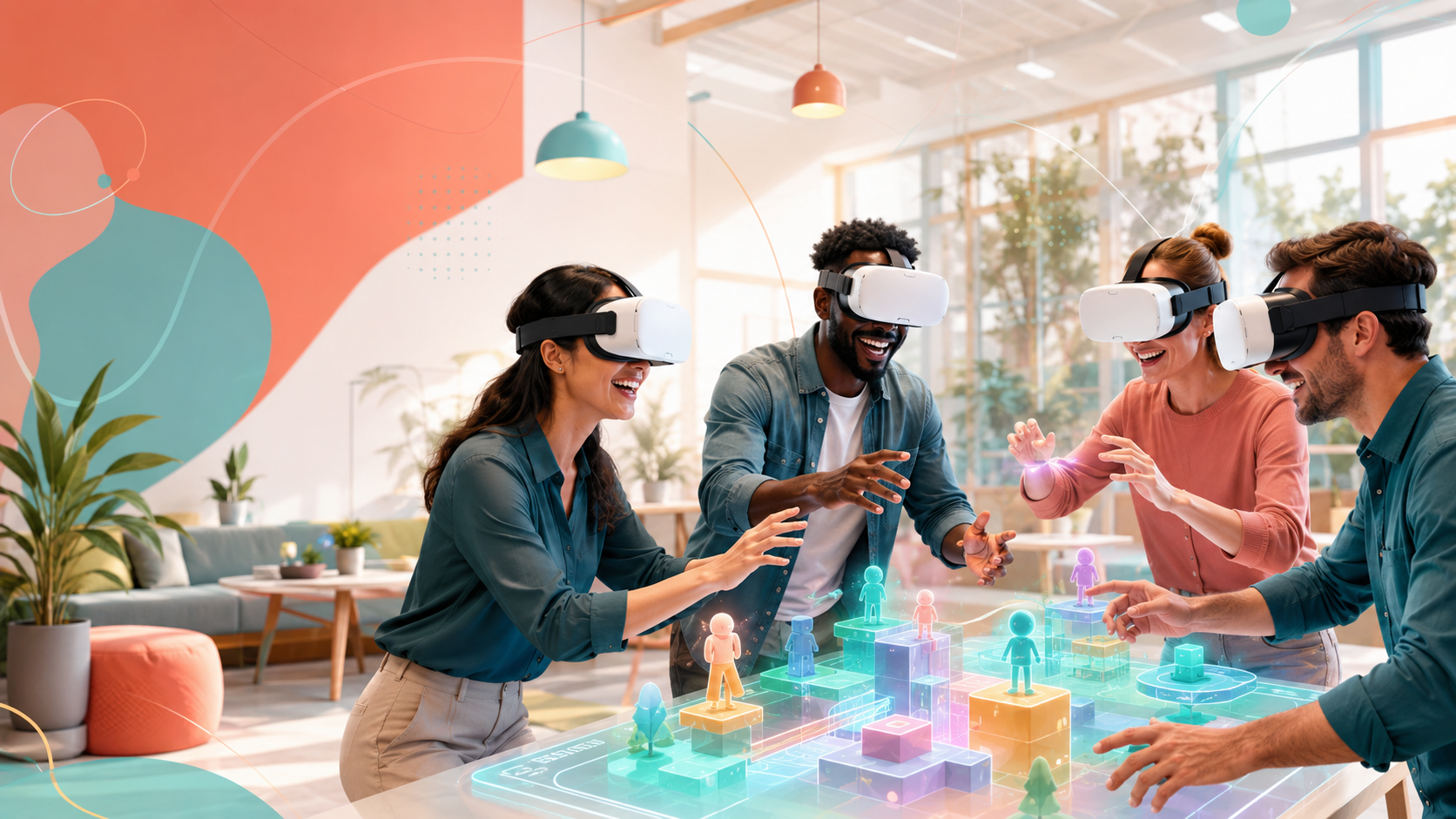
Active participation fundamentally changes engagement dynamics. Instead of scrolling past an ad or half-watching a video, users make conscious choices within your brand narrative. They explore products by picking them up and examining them from every angle. They solve challenges using your solutions. They share discoveries with others in social VR spaces. This agency transforms customers from audience members into protagonists of your brand story.
The neuroscience is compelling: VR triggers the same emotional and physiological responses as real-world experiences. Heart rates increase during exciting moments. Stress hormones spike during challenges. Dopamine releases during achievements. These biological markers of genuine experience create lasting impressions that influence future purchase decisions.
Key Components of Effective Branded VR
Brand Narrative Integration
Successful branded VR weaves brand values and messaging naturally into the experience architecture. Rather than interrupting gameplay with logos or slogans, the environment itself communicates brand attributes. A luxury automotive brand might emphasize precision through interaction mechanics that reward careful attention to detail. A sustainability-focused company could visualize environmental impact through cause-and-effect relationships within the virtual world.
Interactive Product Demonstrations
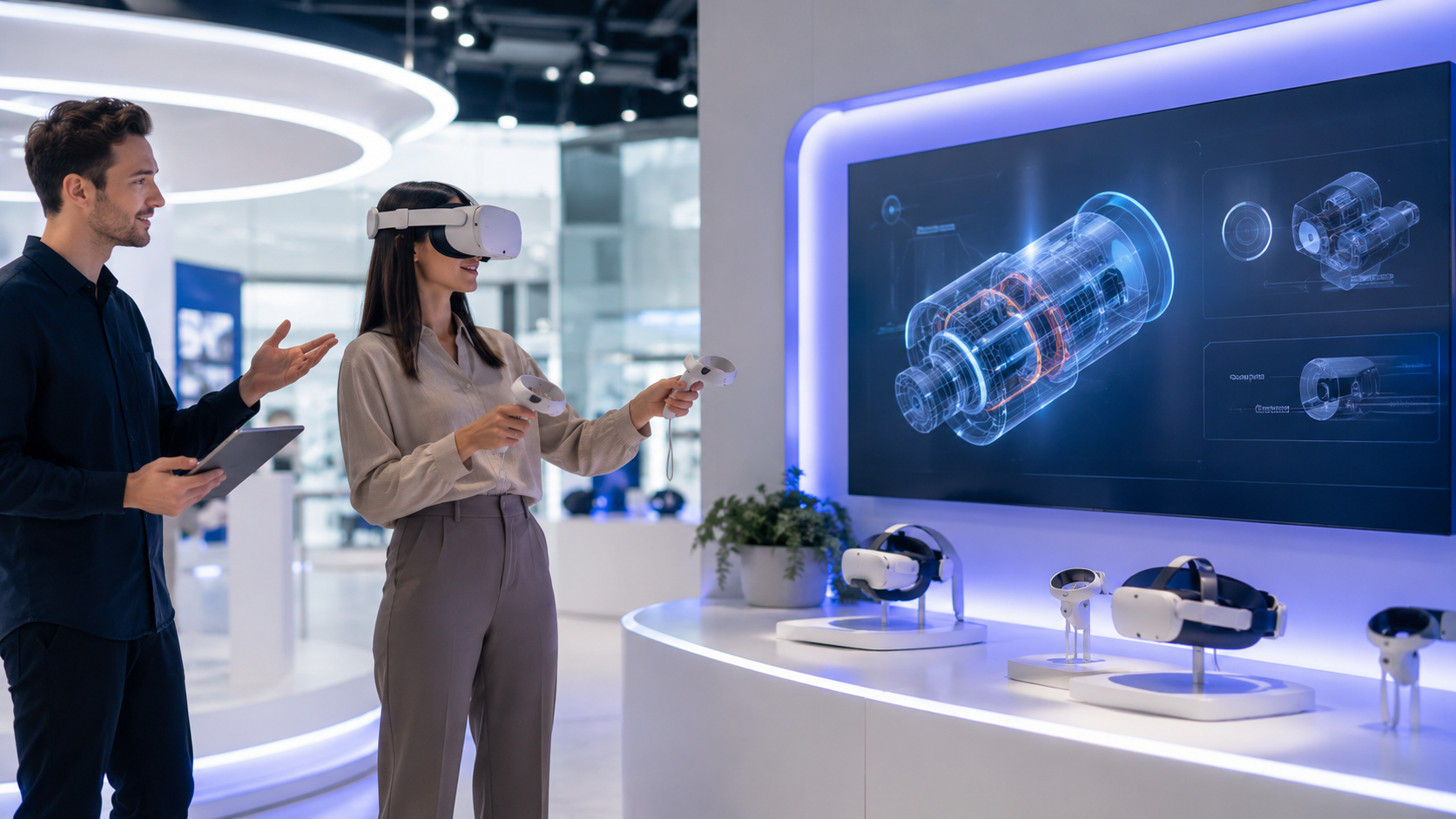
VR enables impossible product interactions. Customers can see inside complex machinery, resize products to understand scale, or test products in various environments instantly. A furniture retailer lets customers place items in photorealistic recreations of their actual rooms. A travel company transports users to destinations, letting them experience hotels and attractions before booking.
Gamification Elements
Points, achievements, and challenges transform product education into entertainment. Users earn rewards for exploring features, completing tasks, or sharing experiences. Leaderboards create friendly competition. Progress tracking encourages return visits. These mechanics increase engagement duration from minutes to hours while reinforcing key messages through repetition and reward.
Social Sharing Mechanisms
Built-in capture tools let users record and share memorable moments. Multiplayer modes enable shared experiences with friends or brand ambassadors. Integration with social platforms extends reach beyond VR users through 2D video exports and interactive web previews. Virtual photo opportunities with branded elements become user-generated content that amplifies campaign reach organically.
Strategic Applications for Branded VR
Branded VR delivers measurable impact across the customer journey—from awareness through advocacy. The key is matching experience design to specific business objectives and deployment contexts.
Product Launches and Demonstrations
Virtual Showrooms for Complex Products
B2B companies selling industrial equipment, enterprise software, or technical solutions use VR to demonstrate capabilities impossible to showcase physically. Customers explore oil rigs, data centers, or manufacturing lines without travel costs or safety concerns. Interactive annotations explain technical specifications. Simulation modes demonstrate performance under various conditions.
Interactive Feature Exploration
Consumer brands let customers discover product benefits through hands-on interaction. Automotive companies enable virtual test drives where users experience acceleration, handling, and safety features. Electronics manufacturers let customers test cameras, displays, and interfaces in realistic scenarios. Cosmetics brands show product effects through AR mirrors integrated into VR environments.
Pre-Launch Buzz Generation
VR experiences generate media coverage and social sharing before products reach market. Exclusive VR previews reward loyal customers and influencers. Time-limited access creates urgency. Behind-the-scenes content showing product development builds anticipation. Launch countdown experiences unlock new content as release dates approach.
Remote Access for Global Audiences
Cloud-streamed VR eliminates geographic barriers to product experiences. International buyers attend virtual launch events simultaneously. Regional teams access training content in local languages. Distributed sales forces demonstrate products consistently worldwide. This democratization of access expands market reach while reducing event and travel costs.
Trade Shows and Events
Booth Traffic Drivers
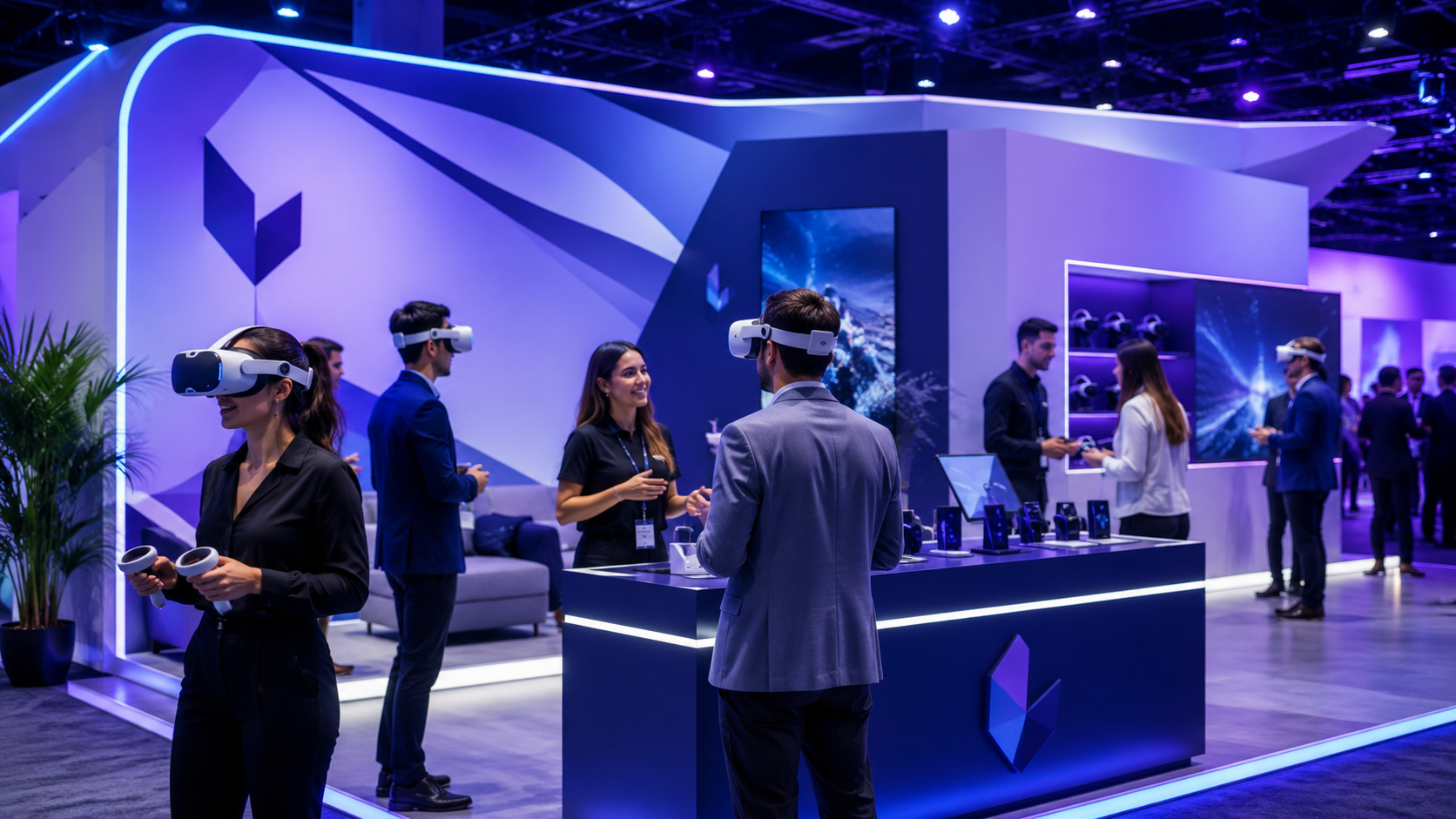
VR experiences create must-see destinations within crowded exhibition halls. Attendees line up for immersive brand experiences that stand out from traditional displays. The novelty factor attracts curious visitors who might otherwise walk past. Social proof builds as crowds gather, creating momentum that sustains throughout event duration.
Lead Capture Through Engagement
Registration requirements for VR experiences provide qualified contact information. Interaction data reveals interest levels and preferences. Post-experience surveys capture immediate feedback while impressions are fresh. Integration with CRM systems triggers automated follow-up sequences based on engagement patterns.
Post-Event Follow-Up Assets
Portable VR experiences extend event impact beyond physical attendance. Sales teams bring headsets to customer meetings. Downloadable experiences reach prospects who couldn’t attend. Web-based versions provide broader access. This multiplier effect maximizes return on event investment.
Cost Savings on Physical Displays
VR replaces expensive physical prototypes, reducing shipping and setup costs. One headset showcases unlimited product variations. Digital environments update instantly without reconstruction. Booth footprints shrink while experience capacity expands. These efficiencies redirect budget from logistics to experience quality.
Retail and E-commerce Integration
Virtual Try-Before-You-Buy
Fashion retailers enable virtual fitting rooms where customers see items on photorealistic avatars matching their measurements. Furniture stores let shoppers place products in scanned rooms. Beauty brands show makeup effects under different lighting. These experiences reduce return rates while increasing purchase confidence.
In-Store VR Stations
Physical retailers install VR stations that expand inventory without floor space. Customers explore extended product lines, customize options, and access expert consultations. Store associates use VR to demonstrate features and answer questions. This hybrid approach combines digital convenience with human service.
Online Shopping Enhancement
WebXR technology brings VR experiences directly to browsers without app downloads. Product pages include “View in VR” buttons that launch immersive explorations. Social shopping features let friends join virtual shopping sessions. These enhancements increase time on site and average order values.
Conversion Rate Optimization
VR experiences increase purchase probability through psychological ownership—the feeling of already possessing items experienced virtually. Customization options let customers create perfect products. Virtual ownership experiences like decorating spaces or styling outfits strengthen purchase intent. A/B testing optimizes experience elements for maximum conversion impact.
Training and Onboarding
Employee Brand Immersion
New hires experience company history, values, and culture through interactive narratives. Virtual facility tours familiarize remote employees with physical locations. Role-playing scenarios practice customer interactions. Gamified assessments verify comprehension. This immersive onboarding accelerates time-to-productivity while ensuring consistent brand representation.
Customer Education Programs
Complex products require extensive education that VR delivers engagingly. Medical device companies train healthcare providers on proper usage. Software companies guide users through advanced features. Financial services explain investment strategies through interactive visualizations. These programs reduce support costs while improving customer success.
Partner Enablement Tools
Channel partners access virtual training centers that maintain brand standards globally. Resellers practice sales presentations in realistic customer environments. Installers learn procedures through step-by-step guidance. Certification programs verify competency. This scalable enablement ensures consistent brand experience across partner networks.
Compliance and Safety Training
Regulated industries use VR to ensure procedure adherence without real-world risks. Employees practice emergency responses in hazard-free environments. Compliance scenarios test decision-making under pressure. Detailed analytics verify training completion and competency. This approach reduces incidents while satisfying regulatory requirements.
Building Your Branded VR Experience with IgivU
Our proven methodology transforms brand objectives into immersive experiences that drive measurable results. Each project follows a structured process refined through hundreds of successful deployments across industries.
Discovery and Strategy Phase
Brand Audit and Objective Alignment
We begin by understanding your brand essence—values, personality, visual identity, and market position. Stakeholder interviews reveal internal perspectives. Competitive analysis identifies differentiation opportunities. Customer research uncovers unmet needs. This foundation ensures every experience element reinforces brand strategy.
Audience Persona Mapping
Detailed personas guide experience design decisions. Demographics inform platform selection. Psychographics shape narrative tone. Behavioral patterns determine interaction mechanics. Technical proficiency influences complexity levels. This user-centered approach maximizes engagement across target segments.
Platform and Distribution Strategy
Hardware fragmentation requires strategic platform prioritization. Standalone headsets like Quest offer widest reach. PC-tethered systems enable highest fidelity. Mobile AR extends access to smartphone users. WebXR provides instant access without downloads. We recommend platform mix based on audience preferences and campaign objectives.
Success Metrics Definition
Clear KPIs guide development priorities and measure campaign effectiveness. Engagement metrics track user behavior within experiences. Business metrics connect VR activity to revenue impact. Brand metrics measure perception changes. Learning metrics verify knowledge transfer. This measurement framework justifies investment and guides optimization.
Creative Development Process
Storyboarding and Narrative Design
Visual scripts map user journeys through experiences. Key moments receive detailed treatment. Branching paths accommodate different user preferences. Emotional arcs build toward climactic brand revelations. This planning ensures coherent experiences that maintain engagement throughout.
Visual Identity Translation to VR
2D brand guidelines adapt to 3D environments. Colors adjust for headset displays. Typography scales for readability at distance. Logos integrate naturally into virtual spaces. Materials and lighting reinforce brand attributes. This translation maintains brand consistency while leveraging VR’s unique capabilities.
Interaction Design and User Flow
Intuitive controls minimize learning curves. Progressive disclosure prevents overwhelming new users. Feedback systems confirm successful actions. Comfort options accommodate different tolerance levels. Accessibility features ensure inclusive experiences. This thoughtful design maximizes completion rates.
Prototype Testing and Iteration
Rapid prototypes validate concepts before full production. User testing reveals usability issues. Stakeholder reviews ensure brand alignment. Performance testing optimizes frame rates. Iterative refinement polishes rough edges. This agile approach reduces risk while improving quality.
Technical Implementation
Platform Optimization
Each platform requires specific optimization strategies. Mobile VR demands aggressive polygon reduction. PC VR enables advanced graphics features. Standalone headsets balance quality with performance. Cross-platform experiences maintain consistency while leveraging platform strengths.
Performance Benchmarking
Smooth performance ensures comfortable experiences. Frame rate monitoring identifies bottlenecks. Load testing verifies scalability. Battery consumption optimization extends session duration. Network bandwidth optimization enables streaming. These technical foundations support positive user experiences.
Analytics Integration
Custom analytics track granular user behavior. Heatmaps reveal attention patterns. Funnel analysis identifies drop-off points. Cohort analysis compares user segments. Real-time dashboards enable rapid response. This data infrastructure transforms VR from black box to transparent channel.
Deployment and Distribution Setup
App store submissions follow platform guidelines. Enterprise deployment uses MDM systems. Event installations include backup hardware. Cloud infrastructure ensures reliable delivery. Update mechanisms enable content refresh. This operational excellence ensures smooth launches.
Measuring ROI of Branded VR Experiences
Track engagement, conversion, and brand lift metrics that justify VR investment and guide optimization. Comprehensive measurement frameworks connect VR experiences to business outcomes.
Engagement Metrics
Session Duration and Completion Rates
Average session duration indicates content quality and user interest. Completion rates reveal whether experiences maintain engagement throughout. Drop-off analysis identifies problem areas requiring improvement. Comparative benchmarks contextualize performance against industry standards.
Interaction Heatmaps
3D heatmaps visualize where users look and what they touch. Attention patterns reveal effective design elements. Interaction frequency indicates feature importance. Path analysis shows navigation patterns. These insights guide iterative improvements.
Repeat Usage Patterns
Return visitor rates indicate lasting value. Session frequency reveals habit formation. Content exploration depth shows continued discovery. Social invitation rates demonstrate advocacy. These loyalty indicators predict long-term impact.
Social Sharing Analytics
Share rates measure virality potential. Platform distribution reveals audience preferences. Engagement with shared content extends reach. Influencer amplification multiplies impact. User-generated content provides authentic endorsements.
Business Impact Metrics
Lead Generation and Qualification
Contact capture rates measure top-funnel impact. Lead quality scores indicate purchase readiness. Conversion rates track pipeline progression. Sales cycle acceleration demonstrates efficiency gains. Attribution modeling connects VR to revenue.
Purchase Intent Lift
Pre/post surveys measure intent changes. Control group comparisons isolate VR impact. Product consideration increases indicate effectiveness. Brand preference shifts reveal competitive advantages. Longitudinal studies track lasting effects.
Brand Recall and Awareness
Aided and unaided recall rates measure memorability. Message retention verifies communication effectiveness. Brand attribute association strengthens positioning. Awareness lift extends beyond direct participants. Word-of-mouth amplification multiplies reach.
Cost Per Engagement vs Traditional Media
Total experience cost divided by engaged users provides CPE baseline. Quality-adjusted engagement accounts for duration and depth. Conversion value calculations determine ROI. Comparative analysis reveals channel efficiency. Portfolio optimization balances media mix.
Case Studies: Branded VR in Action
Real-world examples of brands leveraging VR to achieve specific business objectives demonstrate proven approaches and measurable results.
Automotive: Virtual Test Drives
Configuration and Customization
Luxury automotive brand deployed VR experiences in dealerships enabling customers to configure vehicles with unlimited options. Real-time visualization showed color combinations, interior materials, and optional features. Customers spent average 23 minutes exploring configurations, 3x longer than traditional configurators. Configuration data fed directly to production systems, reducing order errors by 67%.
Feature Education
Safety technology demonstrations in VR increased feature comprehension by 84% compared to video explanations. Customers experienced emergency braking, lane assistance, and parking automation in risk-free virtual environments. Post-experience surveys showed 91% felt confident using demonstrated features. This education reduced delivery time by eliminating lengthy feature walkthroughs.
Dealer Traffic Generation
VR test drive experiences at shopping malls generated 2,400 qualified leads over 6 weekends. 34% scheduled dealership visits within 7 days. 12% completed purchases within 30 days. Cost per lead decreased 58% compared to traditional mall displays. Portable setup enabled rapid deployment across multiple locations.
Real Estate: Property Tours
Remote Buyer Engagement
International property developer created VR tours of luxury developments, enabling overseas buyers to explore properties without travel. Photorealistic environments included day/night lighting, furnished/unfurnished options, and view simulations from different floors. Remote VR tours converted at 8.3% compared to 2.1% for traditional virtual tours. Average transaction value increased 23% as buyers felt confident purchasing higher-value units.
Pre-Construction Sales
Residential developer sold 78% of units before groundbreaking using VR experiences showing finished spaces. Buyers walked through apartments, customized finishes, and explored amenities. Emotional connection to unbuilt spaces reduced cancellation rates by 61%. Construction loan costs decreased through accelerated pre-sales.
International Market Reach
Commercial real estate firm expanded into Asian markets using VR tours of US properties. Local agents hosted VR sessions for prospective tenants. Language localization and cultural customization increased engagement. International leasing increased 340% year-over-year. Travel costs decreased $1.2M annually.
CPG: Product Experience Centers
Brand Story Immersion
Beverage brand created origin story experience transporting consumers to ingredient sources. Users explored coffee plantations, met virtual farmers, and learned sustainable practices. Brand affinity scores increased 31% among experience participants. Social sharing generated 2.3M organic impressions. Retail partners reported 18% sales lift in stores featuring VR stations.
Usage Scenarios
Home goods manufacturer demonstrated product versatility through lifestyle vignettes. Users decorated virtual spaces for different occasions. Recipes and entertaining tips integrated naturally. Average basket size increased 42% when VR users purchased. Product return rates decreased 29% due to better expectation setting.
Retail Partner Tools
CPG company equipped retail partners with VR training modules for seasonal promotions. Store associates learned product benefits, merchandising guidelines, and sales techniques. Consistent training across 3,000 locations improved compliance 67%. Mystery shopper scores increased 24 points. Seasonal sales exceeded targets by 15%.
Getting Started with Your Branded VR Project
Practical steps to launch your first branded VR experience and common pitfalls to avoid ensure successful implementation.
Budget and Timeline Considerations
Project Scope Factors
Experience complexity drives cost more than duration. Simple 360° videos with hotspots start at $25,000. Interactive experiences with custom assets range $75,000-$250,000. Enterprise deployments with analytics integration exceed $500,000. Ongoing content updates add 20-30% annually.
Development Phases and Milestones
Discovery and strategy: 2-3 weeks
Concept and storyboarding: 2-3 weeks
Asset creation and development: 6-10 weeks
Testing and optimization: 2-3 weeks
Deployment and launch: 1-2 weeks
Total timeline: 3-5 months for standard projects. Complex experiences require 6-9 months. Rushed timelines increase costs and reduce quality.
Distribution and Hardware Costs
Consumer headsets: $299-$999 per unit
Enterprise hardware: $1,500-$3,500 per station
Cloud streaming: $0.50-$2.00 per session
App store distribution: 30% revenue share
Event rentals: $500-$1,500 per headset per day
Ongoing Content Updates
Seasonal refreshes maintain engagement. New product additions extend lifecycle. Performance optimizations improve user experience. Analytics-driven improvements increase conversion. Budget 20-30% of initial development for annual updates.
Platform and Distribution Strategy
Standalone Headsets vs PC-Tethered
Standalone headsets like Meta Quest offer portability and ease of use. No external hardware required. Lower graphics quality acceptable for most branded experiences. $299-$499 price point enables consumer adoption. 72% of VR users own standalone headsets.
PC-tethered systems deliver maximum visual fidelity. Complex simulations require processing power. Location-based installations justify infrastructure investment. Higher barrier to entry limits consumer reach. Choose based on deployment context and quality requirements.
Web-Based VR Options
WebXR enables instant access through browsers. No app downloads reduce friction. Progressive enhancement supports various devices. Limited graphics capabilities constrain complexity. Ideal for awareness campaigns requiring maximum reach.
App Store Deployment
Oculus Store, SteamVR, and Viveport provide distribution channels. App store featuring drives organic discovery. Reviews and ratings build credibility. Revenue sharing models impact monetization. Platform exclusivity agreements offer promotional benefits.
Event and Location-Based Setups
Trade shows require portable configurations. Retail installations need robust hardware. Museums and attractions demand commercial-grade equipment. Hygiene protocols ensure safe sharing. Staff training ensures smooth operation. Consider managed services for complex deployments.
Conclusion
Branded VR experiences represent a fundamental shift in how brands connect with audiences. The technology has matured beyond novelty to deliver measurable business results—from 3x memory retention to 27% purchase intent lift. Success requires strategic alignment between brand objectives and experience design, thoughtful platform selection, and comprehensive measurement frameworks.
The opportunity is clear: early adopters are seeing competitive advantages through differentiated customer experiences, improved engagement metrics, and operational efficiencies. As hardware costs decrease and adoption accelerates, branded VR will transition from innovative differentiator to table stakes for customer engagement.
Ready to transform your brand with immersive experiences? IgivU specializes in branded VR solutions that drive measurable results. Our proven methodology, technical expertise, and creative excellence ensure your VR investment delivers maximum impact. Contact our team to discuss your objectives and explore how custom VR experiences can elevate your brand above the competition.
FAQs
What’s the typical cost range for a branded VR experience?
Branded VR experiences range from $25,000 for simple 360° videos to $500,000+ for enterprise solutions. Most interactive brand experiences cost $75,000-$250,000. Factors affecting price include experience duration, interaction complexity, number of platforms, custom asset requirements, and analytics integration. Consider total cost of ownership including hardware, distribution, and updates when budgeting.
How long does it take to develop a custom VR experience?
Standard branded VR experiences require 3-5 months from concept to launch. Simple 360° experiences can deploy in 6-8 weeks. Complex simulations may need 6-9 months. Timeline phases include discovery (2-3 weeks), design (2-3 weeks), development (6-10 weeks), testing (2-3 weeks), and deployment (1-2 weeks). Rushed timelines increase costs and compromise quality.
Do users need expensive VR headsets to access our experience?
No. Modern distribution strategies ensure broad accessibility. Standalone headsets like Quest 2 cost $299. WebXR experiences run in browsers on computers and phones. 360° videos play on YouTube and Facebook. Mobile AR extends reach to billions of smartphones. Platform strategy should match target audience capabilities and campaign objectives.
Can branded VR experiences work on mobile devices?
Yes. Mobile VR using phone-based viewers provides basic immersion. WebXR enables browser-based experiences without apps. Mobile AR overlays virtual elements on real environments. 360° videos stream to any device. Progressive enhancement ensures optimal experience across devices. Mobile-first strategies maximize reach while dedicated headsets deliver premium experiences.
How do we measure the success of a VR campaign?
Success measurement combines engagement, business, and brand metrics. Engagement metrics include session duration, completion rates, and social sharing. Business metrics track leads, conversions, and revenue attribution. Brand metrics measure recall, preference, and advocacy. Analytics platforms provide real-time dashboards. Pre/post surveys isolate VR impact. ROI calculations compare performance against traditional channels.
What industries benefit most from branded VR?
Automotive, real estate, travel, retail, education, healthcare, and B2B technology see strongest ROI. Any industry with complex products, emotional purchase decisions, or geographic barriers benefits. VR excels at making intangible tangible, complex simple, and distant present. Success depends more on strategic implementation than industry vertical.
Can existing marketing assets be repurposed for VR?
Yes, with adaptation. 3D product models import directly. Marketing copy provides narrative foundation. Brand guidelines inform visual design. Video footage becomes 360° content. However, direct translation rarely works. VR requires spatial thinking, interactive design, and user agency consideration. Budget 30-40% of development cost for asset optimization and creation.