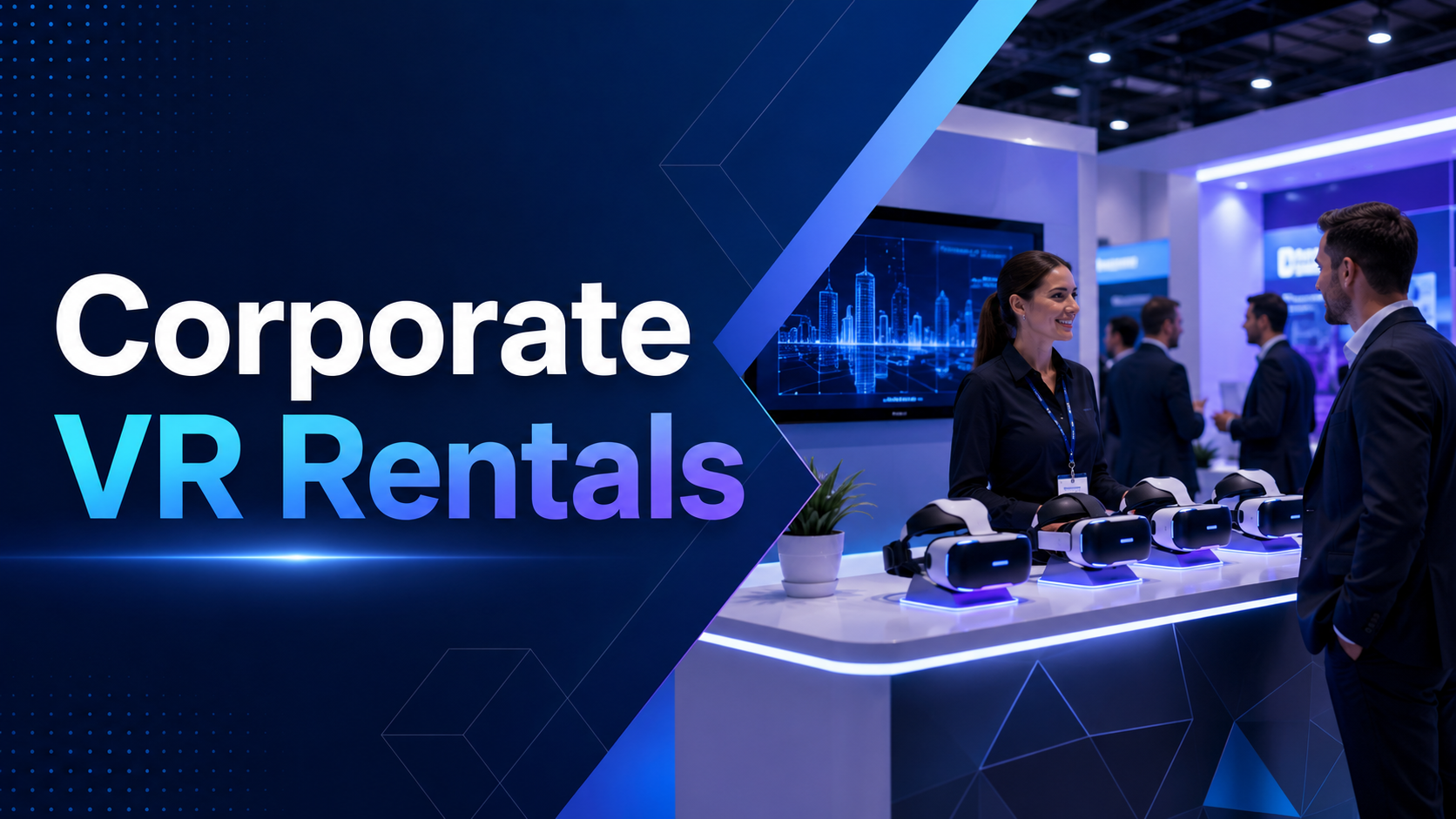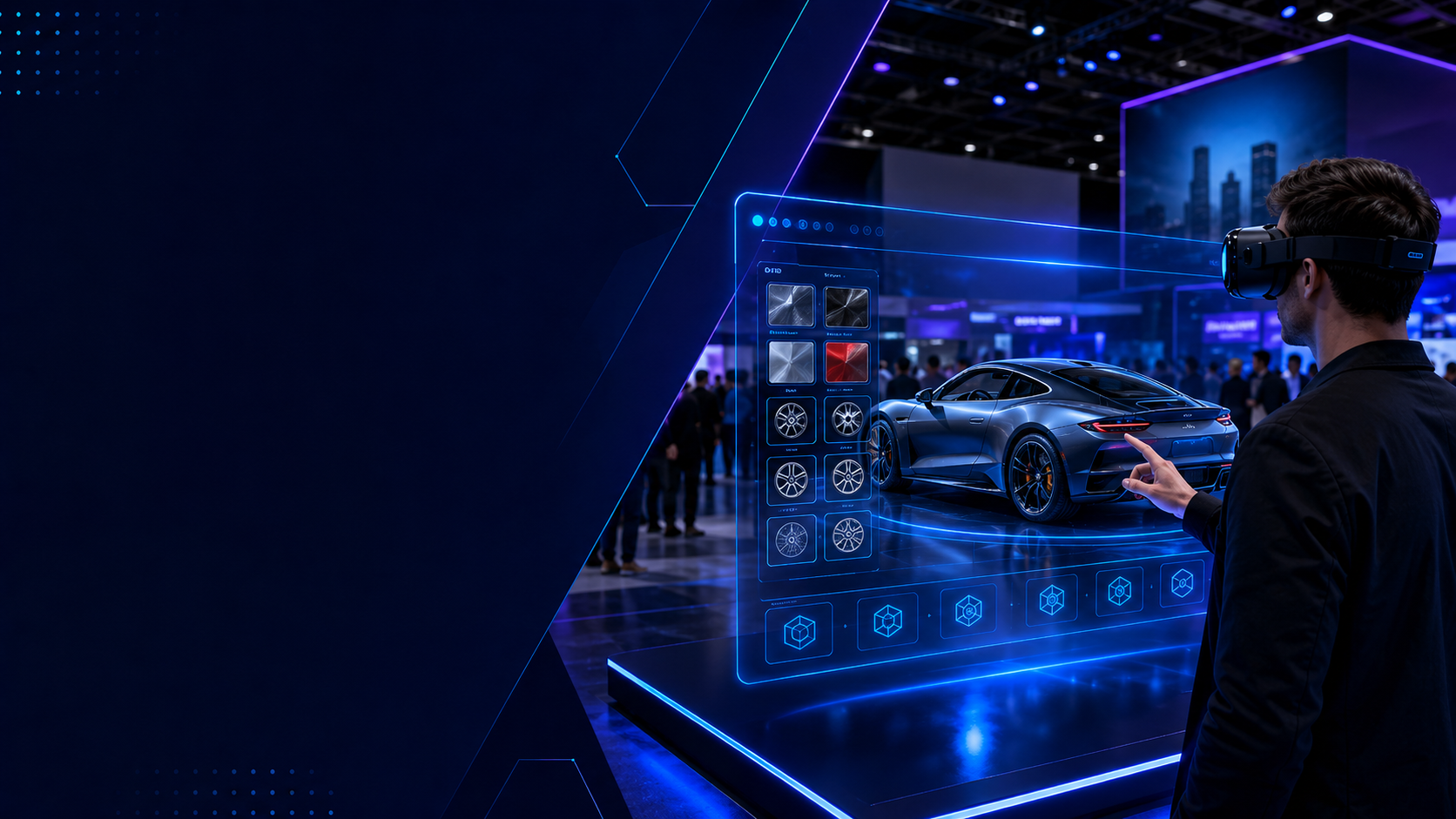
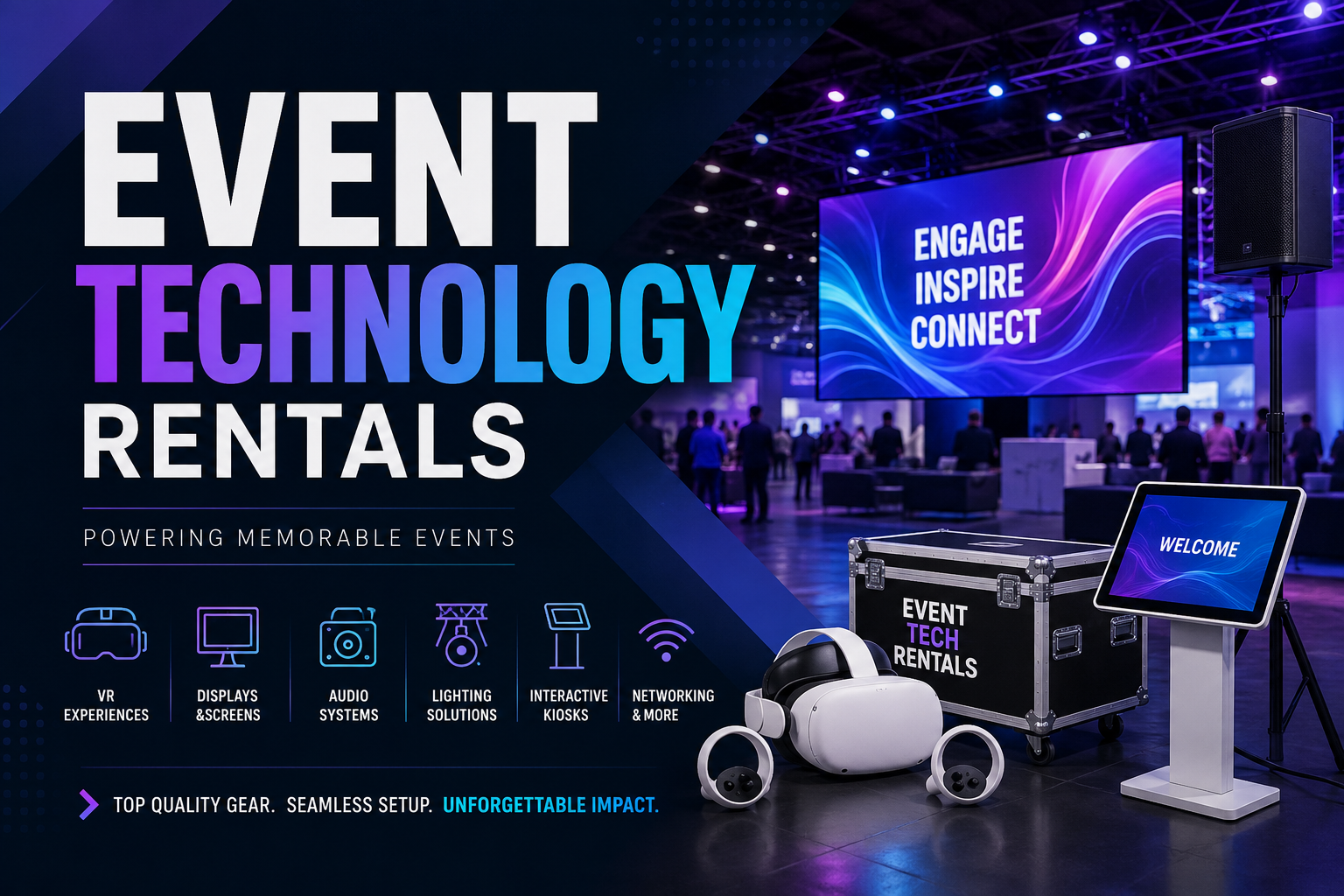
The landscape of corporate events has transformed dramatically. Where once a projector and microphone sufficed, today’s attendees expect interactive experiences that blur the lines between physical and digital worlds. Event technology rentals now encompass everything from wireless VR headsets that transport users to virtual showrooms, to AR glasses that overlay real-time data onto physical products. This shift isn’t just about novelty—it’s about measurable engagement, retention, and ROI that traditional presentations simply can’t match.
Event Technology Rental Categories: From Traditional AV to Immersive Experiences
Event technology rentals have evolved beyond projectors and microphones. Today’s corporate events leverage VR headsets for product demos, AR glasses for guided experiences, and mixed reality stations for training simulations. Understanding which technology serves your event goals determines whether you need traditional AV equipment or specialized immersive technology packages.
The decision between traditional and immersive technology shapes everything from your budget allocation to your staffing requirements. While a standard AV setup might handle 500 attendees simultaneously through a keynote presentation, immersive technology creates personalized experiences that attendees remember months later. The trade-off isn’t just about cost—it’s about choosing between broad reach and deep impact.
Traditional AV vs. Immersive Technology Rentals
Traditional AV rentals—LED walls, projection systems, audio equipment—excel at one-to-many communication. A single presenter can address thousands simultaneously, with setup typically requiring 2-4 hours for a standard conference room and rental costs averaging $2,000-5,000 per day for a complete package.
Immersive technology operates on a different paradigm. VR experiences see 75% higher engagement rates compared to video presentations, according to industry data from corporate training deployments. Users spend an average of 8-12 minutes in VR experiences at trade shows, versus 30-60 seconds at traditional display booths. This engagement translates to 3x higher brand recall rates measured 30 days post-event.
Setup complexity varies significantly between categories. Traditional AV typically requires:
- 2-3 technicians for installation
- 1 operator during the event
- Standard power and minimal network requirements
Immersive technology deployments need:
- 3-5 specialists for multi-station setup
- 1 facilitator per 2-3 VR stations during operation
- Dedicated network bandwidth (minimum 50 Mbps for cloud-based experiences)
- Climate-controlled environments for equipment optimization
Audience capacity presents distinct challenges. Traditional AV scales linearly—double the screens, double the audience. Immersive technology requires calculating throughput: with 5-minute experiences and 30-second transitions, a single VR station serves approximately 10 users per hour, or 80 per 8-hour event day.
Cost per attendee analysis reveals the crossover point. For events under 50 attendees, immersive technology often provides lower per-person costs when factoring in engagement metrics. Traditional AV becomes more economical above 200 attendees, unless the event spans multiple days where equipment costs amortize.
When Immersive Technology Delivers Better Event ROI
Product visualization without physical inventory transforms trade show logistics. A medical device company can demonstrate a $500,000 MRI machine through a $400/day VR rental, eliminating shipping costs exceeding $20,000. Attendees manipulate 3D models, explore internal components, and witness operational procedures impossible with physical displays.
Training scenarios requiring spatial understanding show 40% better retention rates in VR versus video-based training. Forklift operators trained in VR environments demonstrate 70% fewer safety violations in their first month compared to traditional training methods. These metrics justify the premium rental costs for high-stakes training applications.
Brand activations at trade shows face increasing pressure to cut through noise. Immersive experiences generate 5x more social media shares than traditional booth displays. Attendees wait in lines averaging 15 minutes for VR experiences, providing extended brand exposure and conversation opportunities for sales teams.
Sales enablement for complex technical products benefits from interactive exploration. Industrial equipment manufacturers report 35% shorter sales cycles when prospects experience VR demonstrations versus traditional CAD presentations. The ability to showcase equipment in the prospect’s actual facility through AR overlays accelerates decision-making and reduces site visit requirements.
VR and AR Rental Equipment for Business Events
Selecting the right immersive technology starts with matching equipment capabilities to your event format. Standalone VR headsets work for distributed booth experiences, while tethered systems enable higher-fidelity demonstrations. AR glasses suit guided tours and overlay information, while mixed reality stations combine physical and digital elements.
Equipment selection impacts every aspect of your event execution. Battery life determines rotation schedules. Processing power defines experience complexity. Tracking systems affect space requirements. Understanding these specifications prevents day-of surprises and ensures smooth operations.
VR Headset Rental Packages
Meta Quest 3 packages dominate corporate rentals with their $300-400 daily rate per unit and wireless operation. The 2-hour battery life supports continuous use with hot-swappable battery packs. These units handle room-scale experiences up to 25×25 feet without external sensors. Standard packages include:
- 10-unit minimum rentals with volume discounts
- Preloaded enterprise applications
- Device management dashboard for remote monitoring
- Kiosk mode to prevent user access to settings
Pico 4 Enterprise units offer comparable specifications at $250-350 daily rates with superior device management tools. The enterprise platform enables:
- Remote content deployment to 100+ devices simultaneously
- Usage analytics and heat mapping
- Automatic updates and troubleshooting
- Integration with corporate MDM systems
HTC Vive Pro setups command premium rates of $500-700 daily for applications requiring precise tracking and high visual fidelity. These systems need:
- 10×10 foot minimum play space per station
- Dedicated gaming laptops or workstations ($200-300 additional daily)
- External lighthouse sensors and cable management
- Specialized technician support for calibration
Preloaded content options range from off-the-shelf training modules ($50-100 per device) to custom brand experiences ($5,000-50,000 development costs). Most rental companies maintain libraries of industry-specific applications:
- Manufacturing: Equipment operation and safety procedures
- Healthcare: Surgical simulations and patient education
- Retail: Virtual showrooms and product configurators
- Real Estate: Property tours and architectural visualization
AR Glasses and Mixed Reality Systems
Microsoft HoloLens 2 rentals at $800-1,200 daily serve enterprise training and visualization needs. The device’s 2-3 hour battery life and 52-degree field of view support:
- Hands-free operation with gesture and voice control
- Multi-user shared experiences in the same physical space
- Integration with Azure cloud services for remote assistance
- Industrial-grade build quality for factory floor deployments
Magic Leap 2 targets medical and manufacturing demonstrations at $1,000-1,500 daily rates. Key differentiators include:
- 70-degree field of view for improved immersion
- 3.5-hour battery life with external compute pack
- Medical-grade cleaning compatibility
- Dynamic dimming for varied lighting conditions
Nreal Light glasses provide consumer-friendly AR at $200-300 daily rates, ideal for:
- Guided museum or facility tours
- Retail try-on experiences
- Translation and navigation assistance
- Lightweight wear for extended periods
Setup requirements vary significantly across AR platforms. HoloLens 2 operates independently after initial WiFi configuration. Magic Leap 2 requires companion computing devices and specialized software deployment. Nreal glasses need compatible smartphones or dedicated streaming devices.
Content deployment methods affect event logistics:
- Cloud streaming requires robust network infrastructure (100+ Mbps per device)
- Local storage needs pre-event loading and testing (2-3 hours for 10 devices)
- Hybrid approaches balance performance and flexibility
Supporting Equipment and Infrastructure
Charging stations prevent the 40% of technical issues related to power management. Professional setups include:
- 10-port USB-C charging hubs ($50-75 daily rental)
- Labeled cable management systems
- Battery banks for untethered backup power
- Charging schedules synchronized with experience rotation
Hygiene supplies have become non-negotiable, adding $5-10 per user to rental costs:
- Disposable face masks (VR hygiene barriers)
- Antibacterial wipes rated for electronics
- UV-C sanitization stations for quick turnaround
- Replacement foam inserts for multi-day events
Network infrastructure determines experience quality. Requirements include:
- Dedicated 5GHz WiFi network separate from attendee access
- Minimum 50 Mbps per VR device for cloud content
- Ethernet connections for base stations and tracking systems
- Network monitoring tools to identify bottlenecks
Backup equipment typically adds 20% to rental costs but prevents event disasters:
- 1 spare unit per 5 active devices
- Redundant tracking sensors for room-scale setups
- Backup laptops for tethered experiences
- Spare batteries and charging cables
Rental Logistics: From Quote to Event Day
Successful immersive technology deployment requires coordination beyond traditional AV rentals. Equipment arrives preloaded with your content, technicians handle setup and calibration, and support staff manage the experience during your event. Understanding this process helps you plan timelines and allocate resources.
The logistics timeline typically spans 4-6 weeks from initial inquiry to event execution. This extended timeline compared to traditional AV rentals (1-2 weeks) accounts for content preparation, equipment configuration, and rehearsal requirements. Each phase has specific deliverables and decision points that impact event success.
Pre-Event Planning and Content Preparation
Content review timelines dictate the entire rental process. Custom experiences require:
- Week 6-4: Initial content development and iteration
- Week 3: Final content approval and device testing
- Week 2: Content loading and quality assurance
- Week 1: Final rehearsal and contingency planning
Space requirements extend beyond square footage. Consider:
- Ceiling height (minimum 8 feet for room-scale VR)
- Lighting conditions (AR requires controlled ambient light)
- Power outlet distribution (one outlet per 2 VR stations)
- Traffic flow patterns to prevent cable hazards
- Emergency exits remaining accessible
Staff training transforms equipment into experiences. Allocate:
- 2-hour initial training for experience facilitators
- 30-minute daily briefings during multi-day events
- Written troubleshooting guides for common issues
- Direct technician contact for escalation
Testing protocols prevent day-of surprises:
- Full setup rehearsal 24 hours before the event
- Network stress testing with maximum device load
- Content playthrough on every device
- Backup system verification
- Battery life validation under event conditions
Delivery, Setup, and On-Site Support
Delivery windows vary by equipment volume and location:
- Local delivery (within 50 miles): Day before event
- Regional delivery (50-500 miles): 2 days prior
- National shipping: 3-5 days advance arrival
- International logistics: 7-10 days with customs clearance
Setup duration depends on experience complexity:
- 5 standalone VR stations: 2-3 hours
- 10-station networked deployment: 4-6 hours
- Mixed reality with physical props: 6-8 hours
- Multi-room distributed setup: 8-12 hours
Technician support levels match event requirements:
- Basic support ($500-750/day): Remote troubleshooting, setup guidance
- Standard support ($1,000-1,500/day): On-site technician during setup, on-call during event
- White-glove service ($2,000-3,000/day): Dedicated technician throughout event, immediate issue resolution
Common issues and resolution times:
- Tracking loss: 2-5 minutes (recalibration)
- Network connectivity: 5-10 minutes (device restart)
- Content loading errors: 10-15 minutes (reinstall)
- Hardware failure: 15-20 minutes (unit replacement)
End-of-event breakdown typically requires 50% of setup time. Proper procedures include:
- Device inventory and inspection
- Data wiping for security compliance
- Packing in original cases with padding
- Documentation of any damage or issues
- Scheduling return shipping or pickup
Pricing Models and Budget Planning
Event technology rental pricing varies by equipment type, rental duration, support level, and content requirements. VR headset packages typically run $150-500 per unit per day, while AR glasses command premium rates of $500-1500 daily. Understanding these models helps you budget effectively and negotiate volume discounts.
Pricing transparency remains challenging in the immersive technology rental market. Unlike traditional AV with standardized rate cards, immersive technology pricing fluctuates based on availability, technical requirements, and service levels. Building accurate budgets requires understanding both visible and hidden cost factors.
Rental Rate Structures
Daily rates form the baseline pricing model:
- Consumer VR headsets (Quest 2): $150-250/day
- Business VR headsets (Quest 3/Pico 4): $300-400/day
- Premium VR systems (Vive Pro/Varjo): $500-800/day
- AR glasses (HoloLens/Magic Leap): $800-1,500/day
Weekly rates typically offer 20-30% savings:
- 5-day week: 4x daily rate
- 7-day week: 5x daily rate
- Extended weekly: Negotiable based on volume
Monthly rates provide maximum value for long-term deployments:
- Standard monthly: 15x daily rate (50% discount)
- Quarterly contracts: 12x daily rate per month
- Annual agreements: 10x daily rate per month
Volume discounts scale with quantity:
- 10-25 units: 10% discount
- 26-50 units: 15% discount
- 51-100 units: 20% discount
- 100+ units: Custom pricing
Geographic factors add 15-30% to base rates:
- Major metropolitan areas: Premium pricing due to demand
- Secondary markets: Standard rates with longer lead times
- Remote locations: Significant delivery surcharges
- International: 50-100% premium plus customs/duties
Hidden Costs and Budget Considerations
Insurance requirements protect both parties but add costs:
- Standard damage waiver: 10-15% of rental value
- Comprehensive coverage: 20-25% of rental value
- Self-insurance option: Security deposit of 2x rental value
- Third-party event insurance: Varies by provider
Overtime charges accumulate quickly:
- Standard support hours: 8 AM – 6 PM
- Evening overtime: 1.5x hourly rate
- Weekend rates: 2x standard daily rate
- Holiday premiums: 2.5x standard rates
Content licensing varies by application:
- Generic training modules: $50-100 per device
- Branded experiences: $500-5,000 per event
- Custom development: $10,000-100,000 project cost
- Platform licenses: $100-500 per device per event
Shipping costs depend on equipment volume and urgency:
- Standard ground (5-7 days): $50-100 per headset
- Express shipping (2-3 days): $100-200 per headset
- Next-day delivery: $200-400 per headset
- International shipping: $300-600 per headset plus duties
Additional services impact total budget:
- Pre-event venue survey: $500-1,000
- Custom branded hardware skins: $50-100 per device
- Professional photography/videography: $2,000-5,000 per day
- Post-event analytics report: $500-1,500
Use Case Playbooks: Proven Deployment Strategies
Different event formats require distinct approaches to immersive technology integration. Trade show booths benefit from quick-rotation experiences under 5 minutes, while training workshops can leverage 30-minute modules. These playbooks outline proven strategies for common business event scenarios.
Success patterns emerge from hundreds of deployments across industries. The most effective implementations share common characteristics: clear objectives, appropriate technology selection, proper staffing, and measurable outcomes. These playbooks distill best practices into actionable frameworks.
Trade Show and Conference Activations
Booth traffic flow optimization starts with strategic VR station placement:
- Position 2-3 stations at booth corners to create gathering points
- Maintain 6-foot clearance around each station for safety
- Install overhead displays showing the VR user’s view
- Create queuing areas with brand messaging
The optimal trade show experience runs 3-4 minutes:
- 30-second introduction and headset fitting
- 2-3 minute core experience
- 30-second conclusion and lead capture
- 30-second sanitization between users
Lead capture integration multiplies ROI:
- Pre-experience badge scanning links sessions to attendees
- In-VR interactions track engagement metrics
- Post-experience surveys capture qualification data
- Automated follow-up triggers based on behavior
Competitive differentiation strategies that work:
- “Transport” visitors to factory floors or remote locations
- Demonstrate products too large/expensive for trade shows
- Gamify experiences with leaderboards and prizes
- Create shareable moments for social media amplification
Post-event follow-up leveraging experience data:
- Send personalized videos of their VR session
- Share configuration options they explored
- Provide detailed product information based on interests
- Schedule virtual follow-up demonstrations
Corporate Training and Team Building Events
Simultaneous multi-user experiences enable cohort learning:
- 20-person classroom setups with synchronized content
- Breakout sessions for hands-on practice
- Instructor overview dashboard showing all participants
- Real-time assistance for struggling learners
Progress tracking integrates with learning management systems:
- Pre-assessment to establish baselines
- Module completion tracking with time stamps
- Skill demonstration recording for certification
- Post-training evaluation after 30/60/90 days
Hybrid event strategies combine modalities:
- In-person participants use rental equipment
- Remote attendees join via shipped headsets
- Shared virtual spaces for collaboration
- Recorded sessions for asynchronous learning
Safety training delivers measurable compliance improvements:
- Hazard recognition improves 45% after VR training
- Procedure adherence increases 60% versus video training
- Incident rates decrease 35% in the first quarter
- Certification time reduces by 50%
Team building activities that leverage immersive technology:
- Collaborative puzzle-solving in virtual escape rooms
- Creative workshops in 3D design spaces
- Virtual travel experiences to build cultural awareness
- Competitive challenges with team leaderboards
Product Launches and Sales Demonstrations
Virtual showroom experiences eliminate physical constraints:
- Display entire product lines in limited booth space
- Show products in customer-specific environments
- Demonstrate scale and proportions accurately
- Enable side-by-side comparisons instantly
Configuration tools accelerate purchase decisions:
- Real-time pricing updates based on selections
- Visual feedback for compatibility issues
- Save and share configured products
- Generate quotes directly from VR experience
Remote sales enablement scales beyond events:
- Ship headsets directly to prospect locations
- Conduct guided demonstrations via screen sharing
- Leave equipment for extended evaluation periods
- Track usage and interest metrics remotely
Analytics and engagement measurement provides insights:
- Heat maps showing areas of highest interest
- Dwell time on specific features or benefits
- Configuration patterns revealing preferences
- Comparison data between options explored
Implementation timelines for product launches:
- Week 8-6: Product model preparation and optimization
- Week 5-4: Experience design and user flow
- Week 3-2: Testing and refinement
- Week 1: Final deployment and staff training
Vendor Selection Criteria
Choosing an event technology rental partner extends beyond equipment availability. Successful deployments depend on content expertise, support quality, and industry experience. Evaluate vendors based on their ability to deliver turnkey solutions rather than just hardware.
The immersive technology rental landscape includes three vendor categories: pure equipment rental companies, full-service event technology providers, and specialized immersive experience agencies. Each brings different strengths and limitations that affect event outcomes.
Technical Capabilities and Equipment Quality
Equipment age significantly impacts reliability and features:
- Current generation devices (less than 1 year): Premium pricing, latest features
- Previous generation (1-2 years): Balanced price/performance
- Legacy equipment (2+ years): Budget option with limitations
- Refurbished units: 30-40% savings with warranty considerations
Inventory depth determines scalability:
- Minimum 20% overhead for equipment failures
- Ability to source additional units within 24 hours
- Geographic distribution for faster deployment
- Partnerships for overflow capacity
Content development capabilities separate vendors:
- In-house development teams for customization
- Library of pre-built industry experiences
- Rapid prototyping for proof of concepts
- Post-event iteration based on analytics
Platform compatibility affects flexibility:
- Multi-platform content deployment
- Cross-device synchronization capabilities
- Cloud and local hosting options
- Integration with enterprise systems
Quality assurance processes ensure reliability:
- Pre-event testing protocols
- Equipment maintenance schedules
- Firmware update management
- Performance benchmarking standards
Service and Support Differentiators
On-site technician qualifications impact event success:
- Certified technicians for specific platforms
- Experience with similar event types
- Problem-solving skills for unexpected issues
- Professional presentation for client interaction
Response time guarantees provide peace of mind:
- 15-minute response for critical issues
- 1-hour resolution for equipment failures
- 4-hour replacement for defective units
- 24/7 support hotline for multi-day events
Pre-event consultation adds strategic value:
- Venue assessment and recommendations
- Experience design consultation
- Content strategy development
- Risk mitigation planning
Post-event analytics demonstrate ROI:
- Comprehensive usage statistics
- Engagement heat maps and patterns
- Comparative analysis against benchmarks
- Actionable recommendations for future events
Vendor evaluation criteria weighting:
- Equipment quality and availability: 25%
- Technical support capabilities: 25%
- Content development expertise: 20%
- Price competitiveness: 15%
- Industry experience and references: 15%
Measuring Success: KPIs and ROI Metrics
Immersive technology rentals require different success metrics than traditional AV. While traditional events measure attendance and satisfaction, immersive experiences generate granular engagement data that directly correlates with business outcomes.
Key performance indicators for immersive events:
- Engagement Duration: Average time in experience (target: 5-8 minutes for trade shows, 20-30 minutes for training)
- Completion Rate: Percentage finishing the full experience (target: 80%+)
- Interaction Depth: Number of features explored or actions taken
- Social Amplification: Shares, photos, and mentions generated
- Lead Quality: Conversion rate of captured leads versus traditional methods
- Learning Retention: Knowledge assessment scores 30 days post-training
- Cost Per Engaged Attendee: Total rental cost divided by meaningful interactions
ROI calculation frameworks:
- Trade Shows: (Qualified leads × conversion rate × average deal size) – total rental investment
- Training: (Reduction in training time × hourly rate × number of employees) + (reduced incident costs)
- Product Launches: (Accelerated sales cycle days × daily revenue impact) + (reduced travel costs)
- Brand Activation: (Social media reach × engagement rate × value per engagement) + (brand lift metrics)
Future-Proofing Your Event Technology Strategy
The immersive technology landscape evolves rapidly. New hardware releases every 12-18 months bring improved resolution, wider field of view, and longer battery life. Software advances enable more sophisticated experiences with AI-driven personalization and real-time collaboration features.
Emerging trends shaping event technology rentals:
- Hybrid Reality Events: Seamless blending of physical and virtual attendees
- AI-Powered Personalization: Experiences that adapt to user behavior and preferences
- 5G-Enabled Streaming: Cloud-based rendering eliminating local hardware constraints
- Haptic Feedback Integration: Touch and force feedback for enhanced realism
- Biometric Analytics: Emotion and attention tracking for deeper insights
Building vendor relationships for long-term success:
- Establish preferred partner agreements for consistent pricing
- Participate in beta programs for early access to new technology
- Co-develop custom experiences that become competitive advantages
- Share event data to improve future recommendations
- Negotiate multi-event contracts for volume benefits
Frequently Asked Questions
How far in advance should I book event technology rentals?
Book VR and AR equipment 4-6 weeks before your event for the best selection and pricing. High-demand periods like major trade show seasons require 8-12 weeks advance booking. Last-minute rentals (less than 2 weeks) typically incur 25-50% rush charges and limited equipment options.
Can rental equipment be shipped internationally for global events?
Yes, but international shipping adds complexity and cost. Factor in 7-10 business days for customs clearance, 50-100% premium on rental rates, and potential import duties of 10-25% of equipment value. Some vendors maintain international inventory to avoid shipping delays.
What happens if rental equipment fails during my event?
Professional rental companies include backup equipment (typically 20% spare units) and on-site technical support in their packages. Standard service level agreements guarantee replacement within 15-30 minutes for critical failures. Document any issues immediately for potential rate adjustments.
Do I need special insurance for VR and AR equipment rentals?
Most rental agreements require either purchasing damage waiver coverage (10-25% of rental value) or providing proof of event insurance covering rental equipment. Corporate general liability policies may not cover specialized technology. Verify coverage limits match equipment replacement values.
Can rental companies provide custom branded experiences?
Yes, most full-service providers offer custom experience development starting at $10,000 for basic branding and reaching $100,000+ for fully custom applications. Development typically requires 6-8 weeks. Some vendors offer template-based customization for faster, more affordable options.
What’s the minimum rental period for immersive technology?
Single-day rentals are standard, though some premium equipment requires 3-day minimums. Weekly rates offer better value for multi-day events. Consider setup and breakdown days when calculating rental periods—equipment typically arrives one day early and returns one day after your event.
How many attendees can use one VR headset during an event day?
Calculate 10-12 users per hour for 5-minute experiences with transition time. An 8-hour event day yields 80-96 users per headset. Longer training experiences (20-30 minutes) reduce throughput to 15-20 users per day. Factor in break times and peak period clustering.
Are rental rates negotiable for multi-event contracts?
Volume commitments unlock significant discounts. Annual contracts for 10+ events typically receive 20-30% discounts. Quarterly commitments earn 15-20% reductions. Even committing to 3-5 events within six months provides negotiating leverage for 10-15% savings.
Conclusion: Elevating Events Through Immersive Technology
The evolution from traditional AV to immersive technology rentals represents more than a equipment upgrade—it’s a fundamental shift in how businesses engage audiences, train employees, and showcase products. The data speaks clearly: VR experiences generate 3x higher brand recall, AR training reduces incident rates by 35%, and interactive product demonstrations accelerate sales cycles by weeks.
Success with immersive technology rentals requires careful planning, appropriate vendor selection, and clear success metrics. The 4-6 week planning timeline may exceed traditional AV requirements, but the resulting engagement and ROI justify the additional preparation. Whether deploying 5 VR headsets for a trade show booth or 100 AR glasses for enterprise training, the principles remain consistent: match technology to objectives, prioritize user experience, and measure meaningful outcomes.
The rental market continues maturing with standardized pricing, improved equipment reliability, and comprehensive support services. Costs that seemed prohibitive just two years ago now compete favorably with traditional event technology when measured by engagement rather than simple attendance.
Ready to transform your next corporate event with immersive technology? IGIVU specializes in VR, AR, and mixed reality rentals that deliver measurable business impact. Our turnkey solutions include premium equipment, custom content development, and white-glove support throughout your event.
Contact IGIVU’s event technology specialists today for a consultation and discover how immersive experiences can elevate your brand, accelerate training, and create unforgettable moments that drive real business results.