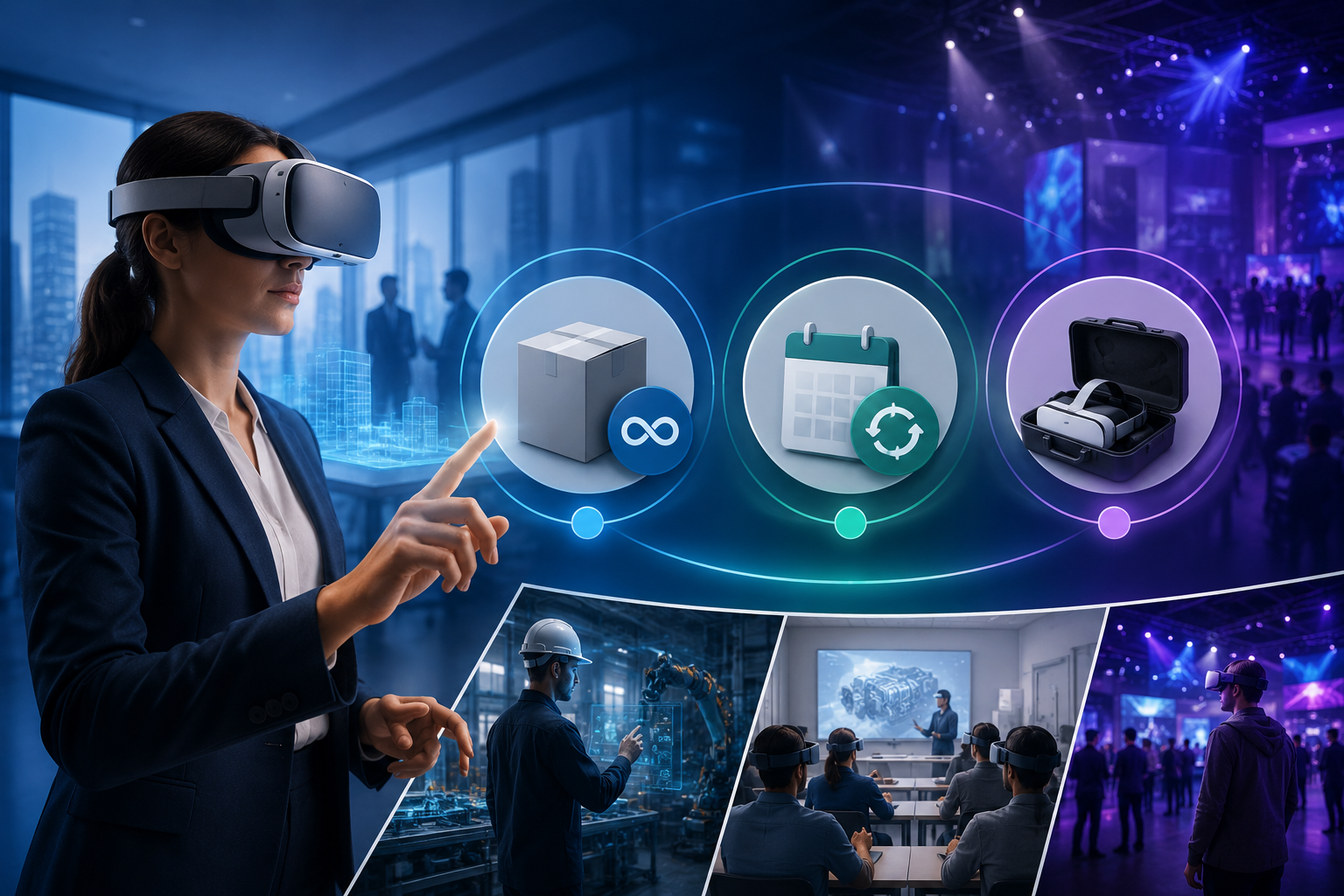
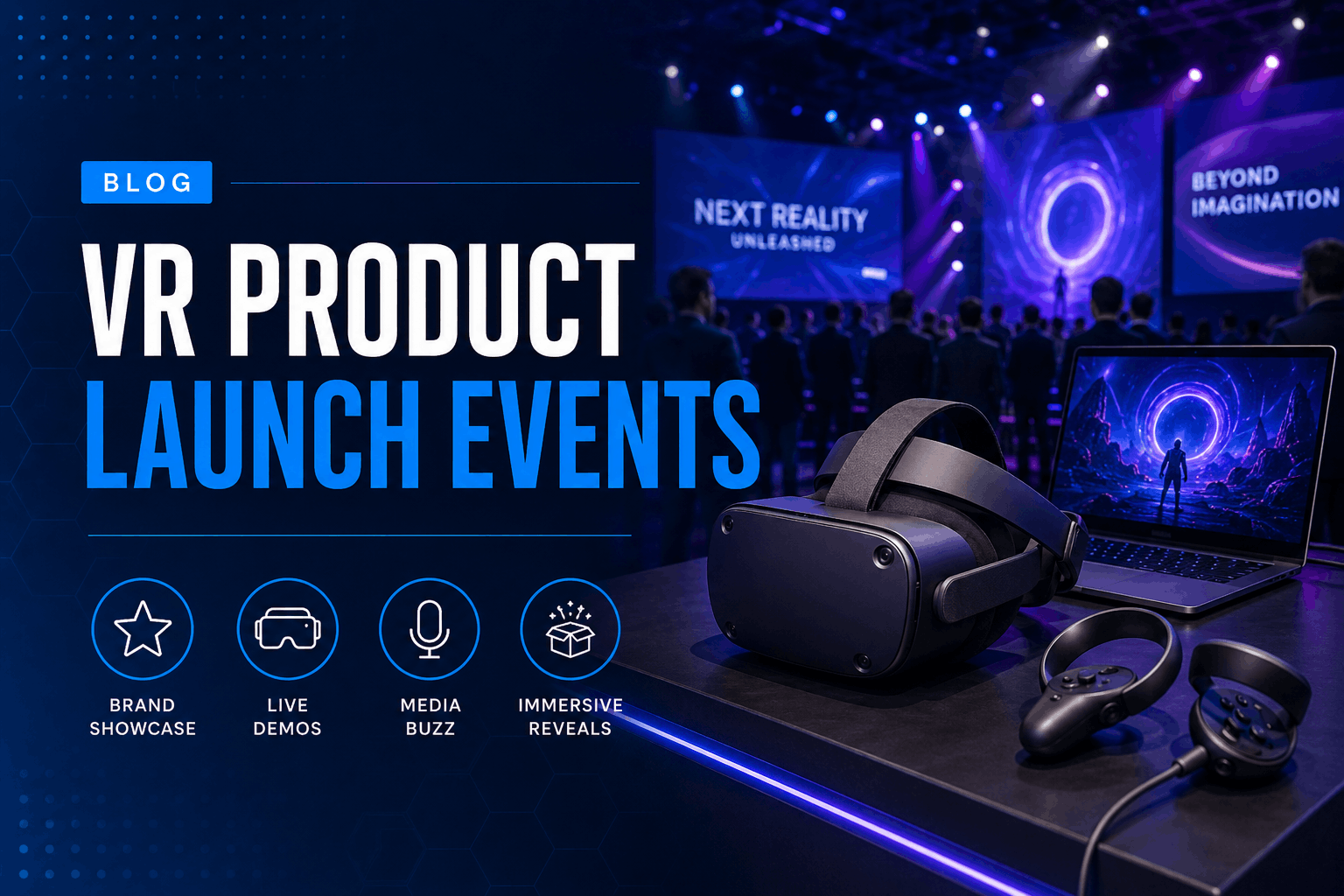
In a media landscape saturated with endless content, product launches face an uphill battle for attention. Traditional presentations and digital keynotes often fail to create the memorable, shareable moments needed to cut through the noise. This is where Virtual Reality (VR) emerges as a transformative tool, offering brands a way to captivate audiences, create lasting impressions, and orchestrate globally synchronized events with unprecedented impact.
This comprehensive guide serves as a blueprint for marketers and product teams looking to harness the power of VR. We’ll explore the strategic planning, technical execution, and event-day operations required to deliver a flawless VR product launch, grounding our recommendations in the practical economics of equipment rental and real-world activation scenarios.
Why VR Transforms Product Launches: Beyond Traditional Reveal Events
Virtual reality shifts the dynamic of a product launch from a passive viewing to an active, lived experience. Instead of watching a product on a screen, attendees can step inside a virtual environment to interact with it, explore its features, and understand its value in a deeply personal way. This level of immersion fosters a stronger emotional connection and leaves a more lasting impression than any slide deck or video ever could.
VR Launch Advantages Over Screen-Based Presentations
- Simultaneous Multi-Location Reveals: VR enables brands to host synchronized launch events across multiple cities or countries. By preloading identical experiences onto rental headsets, every location gets the same high-impact reveal at the exact same moment, ensuring a consistent global message. This approach transforms a logistical challenge into a powerful, unified brand moment.
- Media and Influencer Exclusive Previews: VR provides a secure and compelling way to offer exclusive previews to key media and influencers. Brands can create virtual showrooms or embargoed preview rooms where journalists can explore a new product without the need for physical prototypes or costly shipping. This strategy has been used effectively for everything from virtual car test drives to interactive fashion shows.
- Product Interaction Without Physical Prototypes: For complex, large, or not-yet-manufactured products, VR is a game-changer. It allows audiences to interact with digital twins, customize features, and understand functionality in a realistic 3D environment, overcoming the limitations of physical logistics.
- Social Media Amplification: VR events are inherently shareable. The sight of attendees wearing headsets and reacting to virtual worlds is compelling content. Brands can leverage this by creating designated areas for capturing photos and videos, encouraging user-generated content that amplifies the event’s reach far beyond the physical attendees.
Launch Event Types That Benefit From VR
VR technology is versatile and can be adapted to a wide range of launch event formats.
- Global Product Reveals: Host a headline event in one city while local activation events in other key markets share the core VR reveal simultaneously.
- Press Conferences: Augment traditional presentations by allowing journalists to take virtual walkthroughs of a new product or facility.
- Dealer and Distributor Previews: Use VR to train and excite your sales channel partners, giving them hands-on experience with a new product before it hits the market.
- Consumer Launch Parties: Set up VR stations at retail locations or dedicated event spaces to let customers experience the new product in a fun, interactive way.
- Internal Employee Reveals: Engage and energize your own team by giving them the first look at a new product through a company-wide VR celebration.
VR Launch Experience Design: Content Strategies for Different Audiences
The success of a VR product launch hinges on the quality and relevance of the virtual content. A one-size-fits-all approach is rarely effective; the experience must be tailored to the specific audience you’re trying to engage.
Media and Influencer VR Experiences
For journalists and influencers, the goal is to provide a compelling story and exclusive access. They need information and unique content that will form the basis of their articles, videos, and posts.
- 360-Degree Studio Tours: Take them “behind the curtain” with virtual tours of the design studio, manufacturing facility, or R&D labs.
- Interactive Feature Exploration: Allow them to virtually handle the product, with annotation layers and expert voice-overs explaining key features and design choices.
- Comparison Experiences: Showcase the product’s evolution by letting them compare the new model side-by-side with previous versions in VR.
- Exclusive Preview Rooms: Create password-protected virtual spaces where media can access embargoed information and assets, fostering a sense of exclusivity.
Customer Launch Experiences
For customers, the focus is on creating desire and demonstrating personal value. The experience should be intuitive, engaging, and emotionally resonant.
- Product Customization: Let customers configure a product to their own specifications—changing colors, materials, and features—to create a sense of ownership before they buy.
- Virtual Test Drives or Simulations: Allow users to experience the product in action, whether it’s driving a new car, testing a piece of software, or using a new kitchen appliance.
- Lifestyle Context: Place the product in a beautiful, aspirational virtual environment that shows how it fits into the customer’s desired lifestyle.
- Gamified Feature Discovery: Turn the learning process into a game, rewarding users for discovering and interacting with new features.
Internal Team Launch Experiences
For employees, a VR launch is an opportunity for training, alignment, and celebration. The content should be informative, motivational, and reinforce the company’s vision.
- Sales Training Modules: Integrate VR training into the launch event, allowing sales teams to practice pitching the new product’s features in realistic, simulated customer conversations.
- Manufacturing and Engineering Deep Dives: Create detailed, interactive 3D models that allow technical teams to explore the product’s inner workings in a way that 2D diagrams cannot.
- Competitive Positioning: Develop VR experiences that walk the team through the competitive landscape, highlighting the new product’s key advantages.
- Company Vision Presentations: Use the immersive power of VR to communicate the company’s future roadmap and how the new product fits into that larger vision.
VR Launch Equipment Planning: Rental Packages and Quantities
Executing a VR launch event requires careful planning of hardware logistics. Renting VR equipment is almost always more practical and cost-effective than purchasing, especially for one-time or infrequent events. Rental providers offer access to the latest technology without the high upfront investment and can provide crucial setup and support services.
Headset Quantity Calculations for Launch Events
Determining the right number of headsets is crucial for managing attendee flow and avoiding long queues.
- Station-Based Calculation: A common formula is to divide the number of attendees you want to experience VR by the number of experiences you can run per hour, per station. For example, if an experience lasts 5 minutes (allowing for 1 minute of cleaning and setup), one headset can serve 10 people per hour. For a 3-hour event with 200 attendees, you would need approximately 7-8 stations to ensure everyone gets a turn (200 people / 3 hours = ~67 people per hour. 67 people / 10 experiences per hour = 6.7 headsets).
- Simultaneous Reveal Requirements: If the launch involves a synchronized moment where all attendees experience the reveal at once, you will need one headset per attendee.
- Backup Units: Always plan for technical issues. A good rule of thumb is to have 10-15% of your total headset count as backup units, ready to be swapped in immediately.
- Staff Demo Units: Don’t forget to allocate separate headsets for staff to use for demonstrations, training, and troubleshooting.
Launch-Specific Rental Package Components
A comprehensive rental package should include more than just the headsets.
- Standalone Wireless Headsets: Models like the Meta Quest 3 are ideal for events due to their ease of use and lack of tethering cables, allowing for flexible and safe venue layouts.
- Preloaded Content Management: The rental provider should be able to preload your custom launch content onto the entire fleet of devices, ensuring a consistent and seamless experience for every user.
- Charging Stations and Battery Backups: For all-day events, multi-device charging stations or cabinets are essential. For standalone headsets with a battery life of around 2.5 hours, having a supply of charged backup batteries is critical.
- Hygiene Supplies: High-volume events require a robust hygiene protocol. Your rental package should include disposable face masks, alcohol-free disinfectant wipes, and potentially a UV-C sanitation system to ensure user safety and trust.
- Transport Cases: Durable, professional transport cases are necessary for protecting the equipment, especially for multi-venue launches.
Multi-Location Launch Coordination: Simultaneous VR Reveals
One of VR’s most powerful applications is the ability to orchestrate a synchronized global product launch. This requires meticulous coordination to ensure every location delivers the same flawless experience at the same moment.
Content Synchronization Across Locations
- Preloading Identical Experiences: The core strategy is to have the VR content preloaded onto all rental units before they are shipped to the various event locations. This eliminates the risk of network failures or slow download speeds on the day of the event.
- Time Zone Coordination: A detailed run-of-show plan must be created that accounts for all relevant time zones, ensuring that the “play” button is hit at the exact same coordinated universal time.
- Local Language Versions: If the launch spans multiple countries, ensure that localized versions of the content (with translated text and audio) are preloaded onto the headsets designated for each region.
- Bandwidth Requirements: While preloading is preferred, if any part of the experience relies on streaming, you must confirm that each venue has sufficient and reliable internet bandwidth to support it.
Remote Support and Troubleshooting
- On-Site Technical Staff: It’s highly recommended to have at least one trained technical support person at each event location. This individual is the first line of defense for troubleshooting any hardware or software issues.
- Remote Monitoring Systems: Some VR device management platforms allow a central team to remotely monitor the status of every headset across all locations, providing a real-time overview of battery life, connectivity, and device health.
- Contingency Plans: Have a clear communication plan in place for all locations. If one site experiences a major technical failure, how will the other sites be notified? What is the backup plan? These scenarios must be rehearsed.
- Post-Event Equipment Collection: Coordinate with your rental provider on a clear and efficient process for collecting all equipment from the various locations after the events have concluded.
Launch Day Operations: Setup, Flow, and Experience Management
The success of a VR activation on launch day depends on a well-designed operational plan that prioritizes safety, efficiency, and a positive user experience.
VR Station Layout and Flow Design
- Entry Briefing Areas: Designate a space where first-time VR users can receive simple instructions from a staff member before they put on the headset. This reduces anxiety and ensures a smoother experience.
- Station Spacing: Ensure there is adequate physical space around each VR station for safety. Users can become fully immersed and may move unexpectedly. A minimum of a 3×3 meter clear space per user is a good guideline for experiences that involve movement.
- Queue Management: For station-based experiences, a clear and well-managed queue is essential to prevent crowding and manage expectations. Consider using a reservation system for high-demand events.
- Exit Areas: Create a comfortable area where attendees can readjust after their VR experience and where staff can capture feedback or guide them to the next part of the event.
Staff Roles and Responsibilities
A successful VR launch requires a dedicated and well-trained event team.
- VR Guides: These staff members are responsible for assisting attendees in and out of the headsets, ensuring a proper fit, and providing basic instructions. They are the human face of the experience.
- Technical Support: This role is focused on managing the hardware: swapping batteries, troubleshooting tracking issues, and replacing any malfunctioning units with backups.
- Content Managers: If the event involves different VR experiences for different people, this person ensures the correct content is launched for each user.
- Data Collectors: Stationed at the exit area, these team members can use tablets or surveys to gather qualitative feedback and quantitative data from attendees.
Measuring VR Launch Impact: Analytics and ROI
To justify the investment in a VR launch, you need to measure its impact with clear, relevant metrics. VR experiences can generate unique and valuable data about user engagement that goes far beyond simple view counts.
VR-Specific Launch Metrics
- Experience Completion Rates: What percentage of users who started the experience completed it? High drop-off rates can indicate content that is too long, confusing, or uncomfortable.
- Feature Interaction Heat Maps: Track where users are looking and what they are interacting with inside the virtual environment. This can provide invaluable insights into which product features are most compelling.
- Dwell Time: Measure how long users spend looking at specific elements of the product or the virtual scene. Longer dwell times often correlate with higher interest.
- Social Sharing and Content Creation: Monitor social media for mentions, hashtags, and user-generated content related to the VR experience.
ROI Calculation for VR Launch Events
- Cost Comparison: Compare the cost of the VR launch activation against more traditional formats, such as multi-city physical tours or building numerous physical prototypes. VR can often be a more cost-effective solution for achieving global reach.
- Media Coverage and PR Value: Track the quantity and quality of media coverage generated by the event. The novelty and visual appeal of VR can often lead to increased press interest.
- Lead Generation: Integrate a lead capture mechanism into the event flow. Track how many qualified leads were generated from attendees who participated in the VR experience.
- Long-Term Content Asset Value: The VR experience created for the launch can often be repurposed for future marketing efforts, such as trade show demos, sales presentations, or online web-based viewers, extending its value long after launch day.
Frequently Asked Questions (FAQs)
Q: How many VR headsets do I need for a 200-person launch event?
A: This depends on the format. For a synchronized reveal where everyone participates at once, you’d need 200 headsets. For a station-based approach, a common estimate is that one headset can serve about 10-11 people per hour for a 5-minute experience. For a 3-hour event, you would likely need 7 to 8 stations, plus backup units.
Q: Can VR launch content be updated during the event?
A: While it’s technically possible with certain device management platforms, it’s not recommended. The best practice is to have all content finalized and preloaded onto the rental headsets to minimize the risk of technical failures during the live event.
Q: What’s the typical rental period for product launch VR?
A: Rental periods are flexible. For a single launch event, rentals might range from a few days to a week to allow for shipping, setup, and testing. For multi-city roadshows, rentals can extend for several weeks.
Q: How do you handle hygiene for high-volume launch events?
A: A strict hygiene protocol is essential. This includes using disposable sanitary masks, having staff wipe down headsets between each use with non-abrasive, alcohol-free antibacterial wipes, and providing hand sanitizer. For large events, UV-C cleaning cabinets can sanitize multiple headsets quickly.
Q: Can VR launches include live streaming components?
A: Yes. You can live stream a “spectator view” of what a user is seeing in VR to large screens at the event or to online platforms. This allows a wider audience to share in the experience.
Q: What’s the setup time for a 20-station VR launch experience?
A: This can vary, but you should plan for at least half a day. This includes unboxing, setting up charging stations, defining safe play areas for each station, taping down cables, and conducting a full technical run-through of the experience on every device.
Q: How do you manage different experience versions for different attendee types?
A: The best approach is to have dedicated sets of headsets for each audience group (e.g., media, customers). The content manager on-site is then responsible for ensuring that each attendee receives a headset with the correct preloaded experience.
Q: What happens if VR equipment fails during the launch?
A: This is why having on-site technical support and backup units is critical. The tech support staff should be able to quickly swap a malfunctioning headset with a pre-tested backup, ensuring minimal disruption to the attendee flow.
Q: Can launch VR experiences be repurposed for post-launch marketing?
A: Absolutely. The 3D models and environments created for the launch can be used to create traditional videos, interactive web experiences, or adapted for use at future trade shows and sales meetings, maximizing the return on your content investment.
Conclusion: The Future of Launches is Immersive
Virtual Reality is more than just a novel technology; it is a powerful platform for creating unforgettable product launches that drive engagement, generate buzz, and deliver measurable business results. By moving beyond passive presentations and inviting audiences to step inside your brand’s world, you create a level of connection and understanding that is simply not possible with traditional media.
By carefully planning your content strategy, equipment logistics, and on-site operations, you can mitigate the challenges and unlock the immense potential of VR. Whether you’re orchestrating a simultaneous global reveal or creating an exclusive media preview, a well-executed VR launch event will set your product apart and leave a lasting impression that resonates long after the headsets come off.
Ready to create a product launch that your audience will never forget? Contact a VR rental specialist today to plan your immersive event and explore the latest hardware and software solutions.