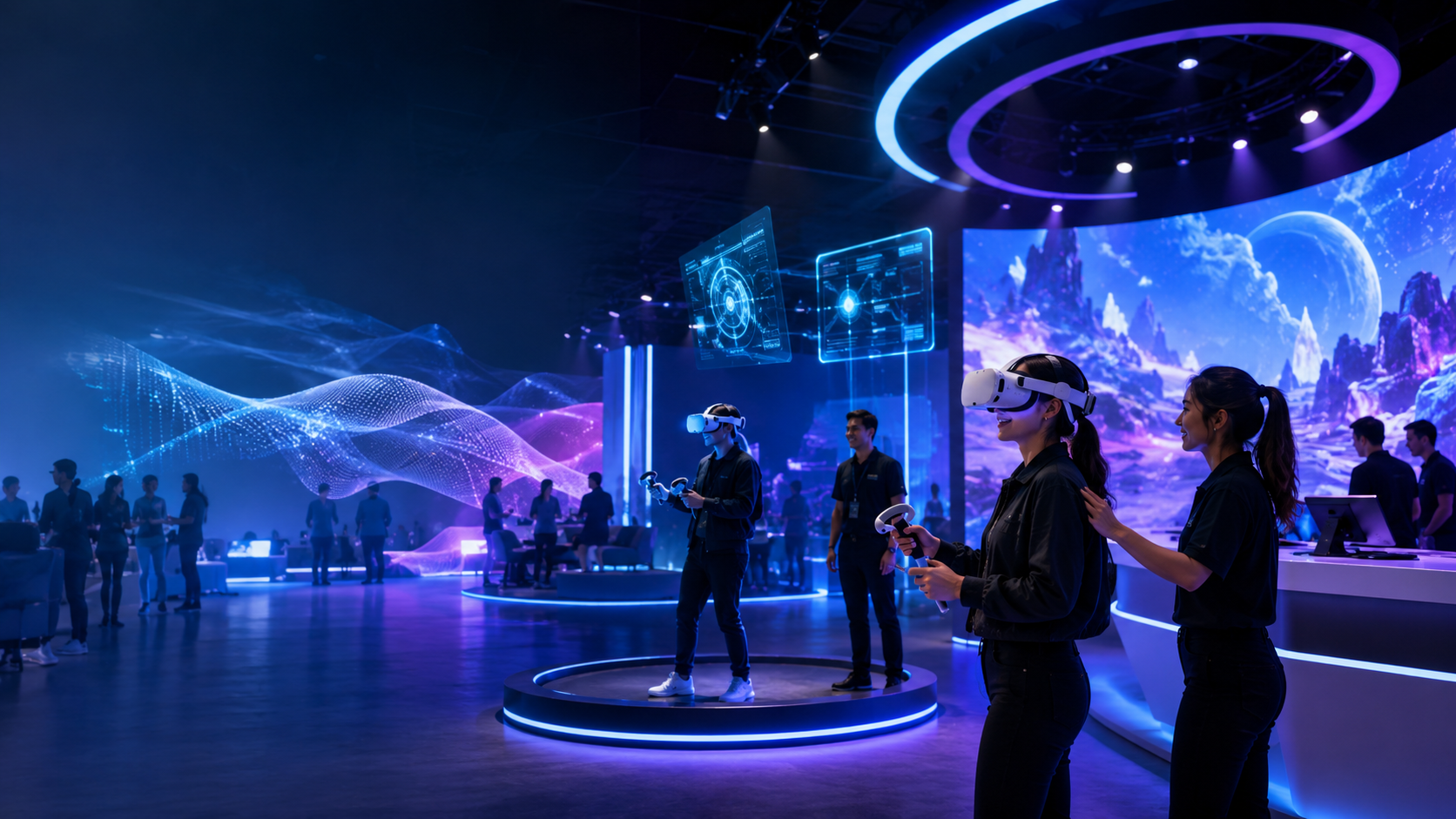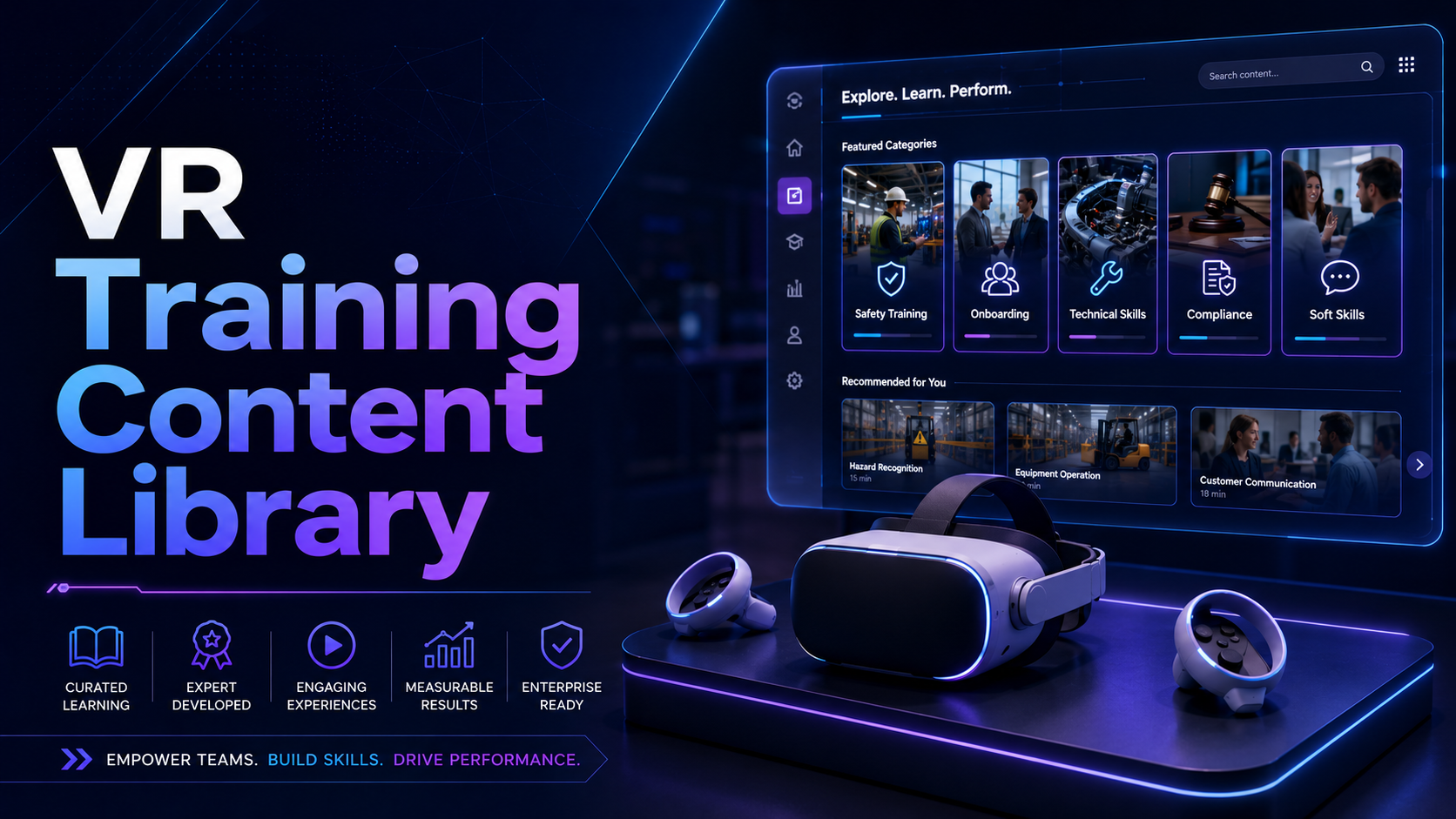
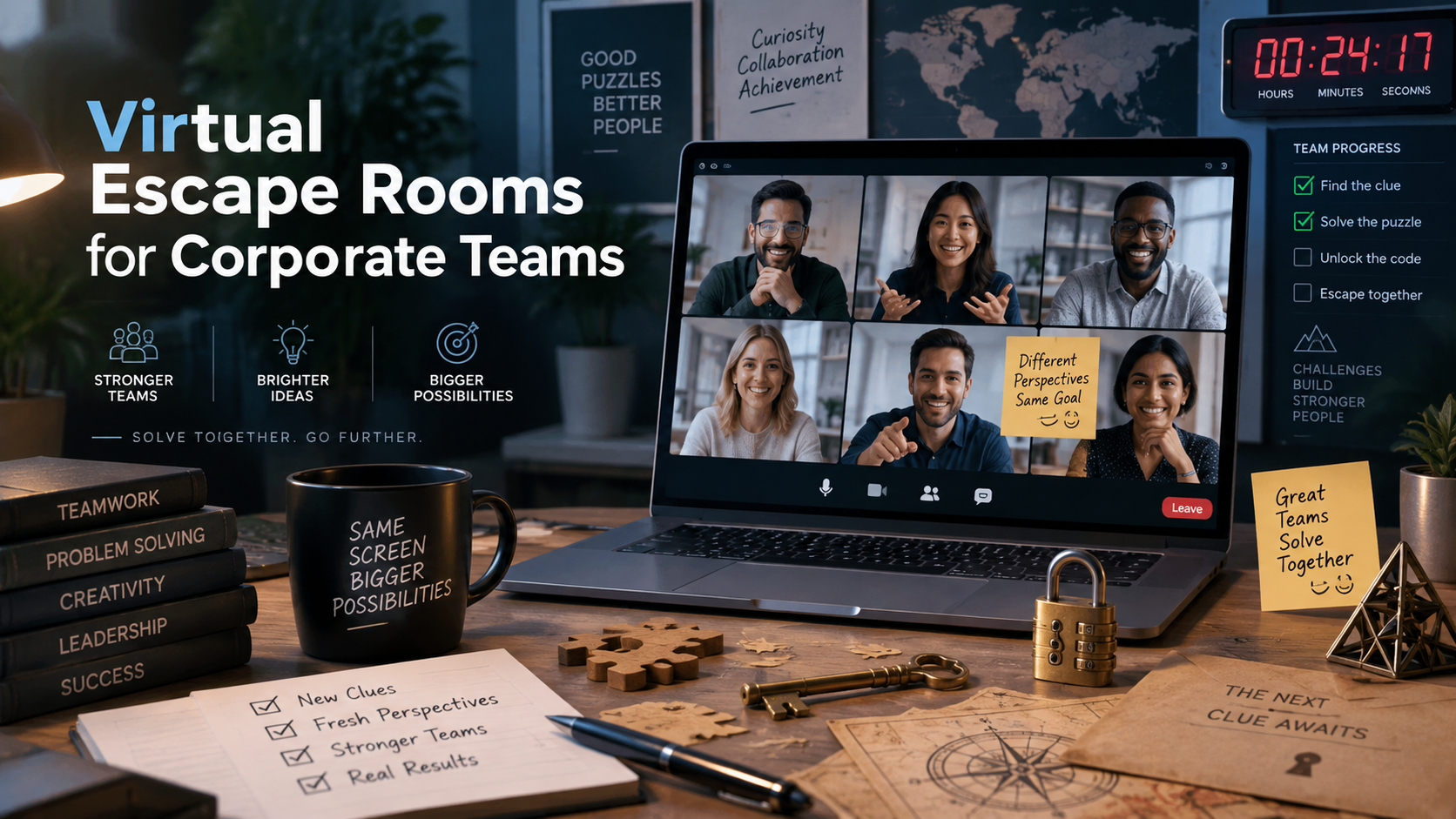
As corporate event planners and HR leaders seek more engaging and memorable team-building activities, virtual reality (VR) has emerged as a powerful tool. A well-executed VR escape room can transform a standard company offsite into an unforgettable shared experience, fostering communication, collaboration, and problem-solving in a uniquely immersive environment.
However, the term ‘virtual escape room’ is broad, and the logistics of deploying VR for a corporate audience can seem daunting. This guide provides a clear, comprehensive overview for buyers evaluating VR escape room rentals for their next corporate event. It cuts through the hype to offer a realistic look at what a business-grade VR experience entails, its best-fit use cases, the logistical realities, and how to choose the right vendor for a seamless, high-impact event.
What a Corporate Virtual Escape Room Actually Is (and What It Isn’t)
The term ‘virtual escape room’ covers a wide range of experiences—from browser-based puzzle games played over Zoom to fully immersive VR environments run on standalone headsets at a physical venue. For corporate event planners, the distinction matters enormously. A business-grade VR escape room is a preloaded, wireless headset-based experience that a group completes together in the same physical space. This setup requires no gaming PCs, no tethering cables, and no consumer booking platforms, making it a turnkey solution for corporate events.
VR Escape Room vs. Online Escape Room: The Core Difference
The most critical distinction for event planners to understand is the difference between an online escape room and an in-person VR escape room.
- Online escape rooms are screen-based activities, typically run over video conferencing platforms like Zoom. Participants are in separate locations, interacting through their computers. While collaborative, these experiences are not physically immersive.
- VR escape rooms use standalone headsets (like the Meta Quest series) to place participants inside a shared, 3D environment. Though in a virtual world, the participants are physically co-located in the same room, able to speak and interact in real-time. This shared physical presence creates a social energy and level of collaborative immersion that screen-based formats cannot replicate.
For corporate events, a rental-based model is common. A vendor like IGIVU ships the hardware directly to the event venue, preloaded and configured for the specific group and experience. This eliminates the need for the event organizer to own, manage, or troubleshoot any of the technology.
Why ‘Virtual’ Doesn’t Mean Remote
A common misconception is that “virtual” implies a remote or hybrid event solution. While some VR platforms are designed for this, the primary corporate team-building application is the opposite: it is an activity designed to enhance in-person gatherings.
The use of standalone, wireless headsets is a key logistical advantage. It untethers the experience from dedicated gaming spaces or complex technical infrastructure. A VR escape room can be deployed almost anywhere—a hotel ballroom, a conference room, or even an outdoor tent—offering event planners significant flexibility across different venue types.
Corporate Use Cases: When a VR Escape Room Is the Right Choice
While not every team event calls for virtual reality, there are specific corporate contexts where the format’s unique benefits deliver measurable value and a high return on engagement.
Company Offsites and Team-Building Days
VR escape rooms are an excellent fit as a structured activity block within a larger offsite agenda. They have a defined start and end, require no prior experience, and naturally spark conversation for a post-activity debrief. The collaborative problem-solving format surfaces team dynamics—communication styles, leadership emergence, and strategic thinking—in a low-stakes, high-fun environment. This provides a perfect springboard for L&D leaders to facilitate discussions on team effectiveness.
Compared to alternatives, VR offers distinct advantages. It is more interactive than passive events like dinners, more accessible to participants with varying physical abilities than activities like go-karting, and is completely weather-independent.
Corporate Retreats and Annual Kickoffs
For large-group events, VR escape rooms are highly scalable. The experience can be run in rotations across multiple headset stations, allowing groups of 20 to 100+ to participate over a few hours without needing a single, massive venue space.
The novelty factor is a significant draw. For most employees, this will be their first time using a modern VR headset, making the activity highly memorable and shareable. This is especially useful for bringing together cross-functional teams who may not interact regularly; the shared, novel challenge provides a neutral ground for building rapport.
Employee Appreciation Events and Milestone Celebrations
Deploying a VR escape room signals a genuine investment in the employee experience. It shows a willingness to go beyond the standard corporate party and offer something truly different and exciting. As a reward for high-performing teams, a highlight of a sales kickoff, or an end-of-year celebration, a VR activity creates a peak moment that resonates long after the event.
Furthermore, some vendors can support custom branding or preload specific scenarios. This allows the experience to be themed around a company milestone, a new product launch, or a campaign narrative, adding another layer of relevance and impact.
How VR Escape Room Rentals Work: Logistics from Delivery to Debrief
For many event planners, the primary hesitation around VR is logistical uncertainty. This section demystifies the process, walking through the end-to-end mechanics of a typical corporate VR rental.
Hardware Delivery and Setup
A professional rental service handles the core technology logistics. The process generally looks like this:
- Direct Shipping: Standalone wireless headsets are shipped in durable cases directly to the event venue. This model eliminates the need for tethered cables or powerful gaming PCs.
- Pre-Configuration: Headsets arrive fully charged, preloaded with the selected escape room experience, and configured for the specific group size and format. The on-site organizer should not need to download apps or manage software updates.
- Minimal Setup: On-site setup is typically fast, often taking less than 30 minutes for a standard package. The organizer’s main responsibilities are designating a clear, safe space for play and ensuring the equipment is secure.
- On-Site Support: For larger or higher-stakes events, most vendors offer the option of an on-site technician or facilitator to manage the entire process, from setup to execution and teardown.
Running the Experience: Facilitator Guidance
Most corporate VR escape rooms are designed to be intuitive and self-guided. However, a human facilitator (either from the vendor or the client’s team) plays a crucial role.
- Facilitator’s Role: This person manages headset distribution, provides a brief orientation for first-time users, monitors for comfort, keeps track of time, and leads the post-activity debrief.
- Orientation: A 5-minute pre-flight briefing is essential, especially for those new to VR. This should cover how to put on the headset, use the controllers, and move within the virtual space.
- Motion Sensitivity: This is a common concern, but most modern corporate VR experiences are designed to minimize disorientation. They typically use “room-scale” tracking (where players physically walk in a small area) or teleportation-based movement, which are far more comfortable than older, high-intensity VR games.
Group Rotation and Timing
Efficiently managing group flow is key to a successful large-scale event.
- Duration: A typical VR escape room experience lasts between 15 and 30 minutes per group.
- Rotation Planning: The schedule is a simple calculation. For example, with 10 headsets and 50 attendees, running a 20-minute experience would require 5 rotations, totaling approximately 1 hour and 40 minutes of program time.
- Buffer Time: It’s critical to build in 5-10 minutes of buffer time between each rotation. This allows for headset sanitization, checking battery levels, and smoothly transitioning participants in and out of the activity area.
- Large Groups: For groups of 100 or more, the most effective strategy is to run parallel stations in adjacent rooms or partitioned sections of a larger hall.
Choosing the Right VR Escape Room Experience for Your Team
The specific scenario and format of the VR escape room have a major impact on its success. A thoughtful selection ensures the experience aligns with your team’s culture and the event’s objectives.
Scenario Types and Themes
The narrative of the escape room sets the tone for the entire experience. Common themes for corporate audiences include:
- Mystery & Investigation: Solving a crime or historical puzzle.
- Sci-Fi Adventure: Repairing a spaceship or exploring a new planet.
- Heist: Working together to bypass security and retrieve a valuable object.
- Survival Challenge: Escaping a deserted island or a post-apocalyptic scenario.
The theme should match the event’s context. A high-energy sales kickoff might call for a competitive space mission, while a leadership retreat may be better served by a more cerebral, collaborative mystery. Advanced vendors like IGIVU can also support preloading industry-specific or branded content, allowing for a narrative that ties directly into your company’s world.
Competitive vs. Collaborative Formats
You can structure the activity to be either competitive or purely collaborative.
- Competitive Format: Multiple teams (each in their own virtual instance of the room) race against the clock and each other. This format generates high energy and is excellent for debriefing different team strategies.
- Collaborative Format: A single team works together to solve one shared challenge. This is ideal for smaller groups or in organizational cultures where direct competition might be counterproductive.
- Hybrid Format: Teams can compete on time but come together for a unified debrief, sharing learnings and celebrating top performers.
The choice should reflect your team’s dynamics. A competitive format can be highly motivating, but it can also exacerbate existing tensions if not managed carefully.
Experience Difficulty and Accessibility
Corporate audiences are not hardcore gamers. The chosen experience must be accessible to complete beginners.
- Intuitive Design: Opt for experiences designed for first-time VR users, featuring simple controls and clear in-game guidance.
- Low Physicality: Avoid scenarios that require fast reaction times, intense physical dexterity, or aggressive movement. The focus should be on communication and problem-solving, not physical prowess.
- Accessibility Features: Modern standalone headsets can be easily adjusted to accommodate glasses. Most corporate experiences are designed to be completed while standing or sitting in a small area, making them accessible to a wide range of physical abilities.
Always ask a potential vendor for a video walkthrough or a live demo of the experience before you commit. A business-grade provider like IGIVU includes this type of pre-event consultation as part of their implementation guidance.
What to Look for in a Corporate VR Escape Room Rental Vendor
The success of your VR event hinges on the reliability and expertise of your rental partner. Corporate planners should evaluate vendors on a different set of criteria than they would a consumer-facing VR arcade.
Hardware Quality and Configuration
The quality and preparation of the equipment are paramount.
- Headset Standard: Standalone wireless headsets like the Meta Quest series are the industry standard for corporate events. Avoid vendors proposing older, PC-tethered setups, which are logistically cumbersome.
- Pre-Event Configuration: Insist that headsets arrive fully charged, preloaded, and pre-configured. You should not be downloading apps, pairing controllers, or troubleshooting Wi-Fi on the day of your event.
- Battery Plan: Confirm the headsets have sufficient battery life for the full event duration. For all-day events, ask about external battery packs or a battery-swapping strategy.
- Redundancy: A professional vendor will include at least one backup headset in the shipment to mitigate any risk of hardware failure during the event.
Nationwide Delivery and Logistics Support
Reliable logistics are non-negotiable for corporate events.
- Shipping Footprint: Confirm the vendor can deliver to your event location. A provider with nationwide delivery, such as IGIVU, is essential for companies hosting events in various cities.
- Support Options: Ask about the availability and cost of on-site technical support. For a large or high-stakes event, having an expert technician present provides invaluable peace of mind.
- Return Process: Clarify the return logistics. The vendor should provide clear instructions and pre-paid shipping labels for sending the equipment back after the event.
Experience Curation and Pre-Event Consultation
A true partner does more than just ship hardware; they provide expertise.
- Consultative Approach: A business-grade vendor should act as a consultant, helping you select the right experience based on your team’s profile, group size, and objectives.
- Implementation Guidance: Look for vendors that offer implementation guidance as part of their service. This consultative relationship is a key differentiator compared to general AV rental companies that treat VR headsets as a commodity.
- Corporate References: Ask for case studies or references from events similar to yours. A vendor experienced in corporate team-building deployments will understand the unique requirements of your use case.
Planning Checklist: Running a VR Escape Room at Your Corporate Event
Use this checklist to navigate the planning process and ensure a smooth, successful execution.
Six to Eight Weeks Before the Event
-
Confirm your final attendee count and group composition. This will determine the number of headsets you need.
-
Consult with your vendor to select the escape room scenario and format (competitive vs. collaborative).
-
Verify your venue space. You’ll need a safe, open area with a minimum square footage per participant (typically a 5×5 ft or 1.5×1.5m space per person is sufficient).
-
Book your rental package. Confirm the delivery date, on-site support needs, and payment terms.
One to Two Weeks Before the Event
-
Triple-check the delivery address, on-site contact person, and any specific venue instructions (e.g., loading dock access).
-
Finalize the group rotation schedule and assign a dedicated facilitator for each headset station.
-
Send out pre-event communications to attendees. Briefly explain what to expect, suggest comfortable attire, and mention considerations for glasses or motion sensitivity.
-
If you haven’t already, request a final walkthrough or demo of the experience from your vendor.
Day of the Event
-
Allow at least 30-45 minutes for setup, headset checks, and facilitator orientation before the first group is scheduled to start.
-
If possible, run a quick test rotation with event staff before attendees arrive.
-
Have a designated point of contact for communicating with the vendor’s remote or on-site support team.
-
Plan for a structured debrief immediately following the experience. Even 10 minutes of facilitated reflection can dramatically increase the team-building impact and perceived value of the activity.
Conclusion: An Unforgettable Investment in Your Team
In a world of predictable corporate events, a VR escape room offers a genuinely novel and impactful alternative. It combines the immersive power of virtual reality with the proven benefits of collaborative problem-solving to create an experience that is engaging, memorable, and highly effective for team building. By understanding the logistical realities and partnering with an experienced rental vendor, you can confidently deploy this cutting-edge technology to foster communication, strengthen relationships, and give your team a shared victory they’ll be talking about for years to come.
Ready to explore a VR escape room for your next corporate event? Contact a VR rental specialist to discuss your goals and get a curated recommendation for your team.
Frequently Asked Questions (FAQs)
How many VR headsets do I need for a corporate team-building event?
The number depends on your total group size, event duration, and desired format. A common ratio is one headset for every 4-5 attendees, with groups rotating through the experience. For a group of 50, 10-12 headsets would allow everyone to participate within a 2-hour window.
Can a VR escape room experience be customized with our company branding?
Yes, many corporate VR rental providers offer branding options. This can range from simple in-game logos to fully customized narratives or puzzles that align with your company’s themes or products. Discuss these options with your vendor well in advance.
What kind of space do I need to run a VR escape room at a corporate venue?
You need a clear, open indoor space. For standalone headsets, a good rule of thumb is to have at least a 5×5 foot (1.5×1.5 meter) area for each participant to move safely. The space should be free of obstacles. A conference room, small ballroom, or even a sectioned-off trade show floor can work well.
How long does a corporate VR escape room experience typically last?
The in-headset experience for a single group usually lasts between 15 and 45 minutes. When planning your agenda, be sure to add time for orientation, transitions between groups, and a post-activity debrief.
Do participants need any prior VR experience to enjoy a virtual escape room?
No. Experiences designed for corporate events are specifically chosen to be intuitive and accessible for first-time users. A brief 5-minute orientation from a facilitator is all that’s needed to get participants comfortable with the controls.
What happens if a headset malfunctions during the event?
Professional rental vendors mitigate this risk by including backup headsets in your rental package. If you have an on-site technician, they will handle any troubleshooting immediately. If not, the vendor should provide clear instructions and remote support.
Can IGIVU deliver VR escape room equipment to any city in the US?
Leading corporate VR rental companies, including IGIVU, typically offer nationwide delivery, ensuring they can service your event whether it’s in a major metropolitan area or a more remote retreat location.
Is a VR escape room appropriate for large groups of 50 or more people?
Absolutely. VR escape rooms are highly scalable for large groups through a rotation system. With enough headsets and a well-planned schedule, you can accommodate groups of 100 or more by running multiple stations in parallel.