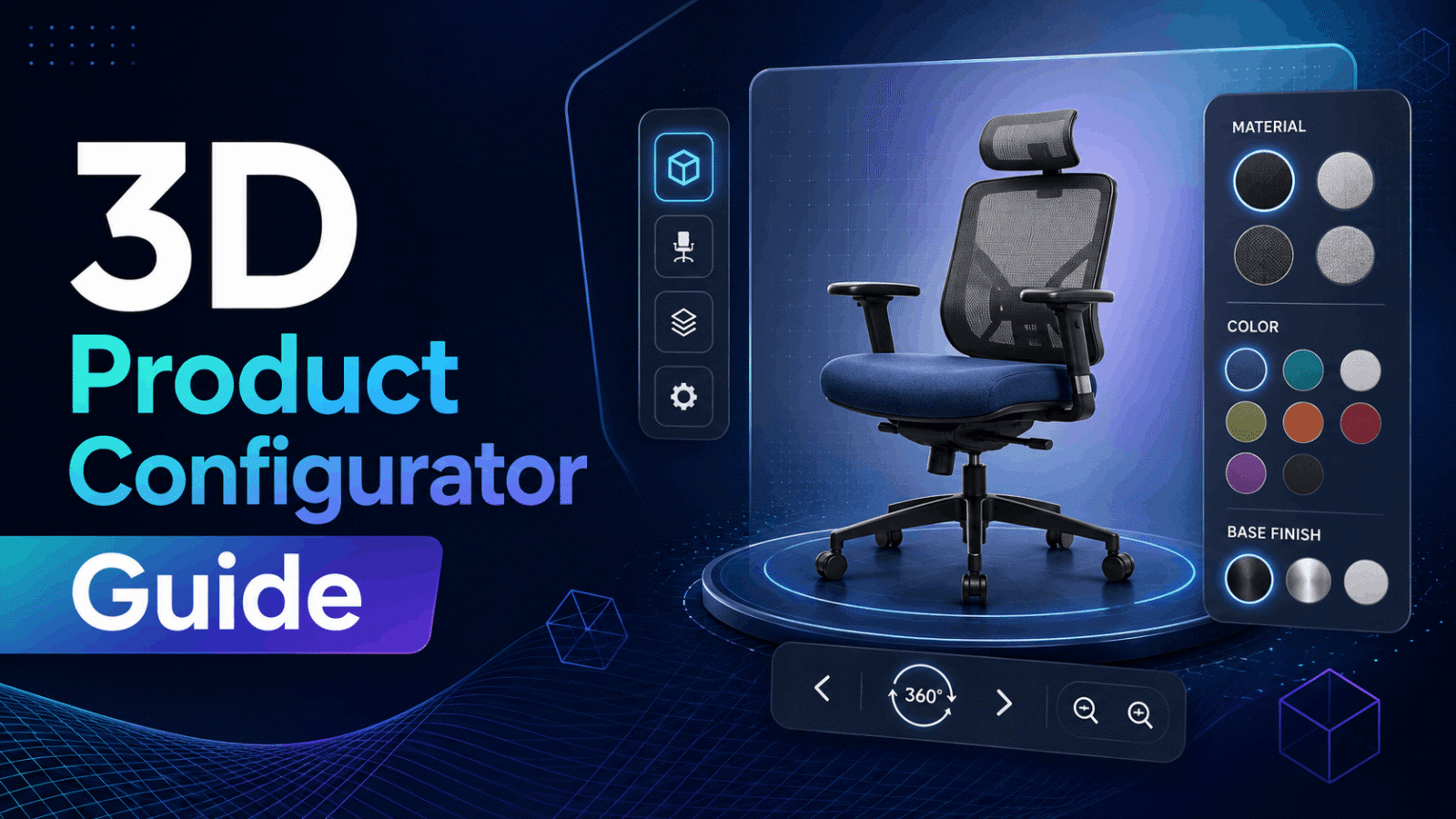
The global market for product customization continues to expand, with 71% of consumers expressing willingness to pay more for personalized products. This demand drives businesses to implement 3D product configurators—interactive tools that let customers visualize and customize products in real-time. However, the choice between web-based and VR-based configurators significantly impacts deployment costs, user reach, and conversion potential.
This guide examines both approaches, helping you determine when to deploy browser-based 3D configurators for scale versus immersive VR experiences for high-impact sales situations.
What Is a 3D Product Configurator and How Does It Differ from VR Customization
3D product configurators let customers customize products in real-time through web browsers, while VR configurators require headsets for immersive manipulation. Understanding this distinction determines your deployment strategy, event setup requirements, and content production costs.
Browser-Based 3D Configurators: Embedded and Scalable
Web-based 3D configurators leverage WebGL technology to render interactive 3D models directly in browsers without plugins or downloads. These tools use frameworks like Three.js or Babylon.js to display products that customers can rotate, zoom, and customize through simple interface controls.
The technology stack typically includes:
- WebGL rendering engine for 3D visualization across devices
- Progressive loading to display base models while loading detailed textures
- Real-time ray tracing alternatives like baked lighting for photorealistic appearance
- Responsive design frameworks ensuring functionality from desktop to mobile
Engagement metrics from web-based configurators show consistent patterns across industries. Users spend 3-5 minutes in configuration sessions, with 40% completing full configurations before requesting quotes. Mobile users demonstrate shorter sessions (2-3 minutes) but higher return rates, often starting on mobile and completing on desktop.
Integration requirements extend beyond the visual interface. Modern 3D configurators connect with Configure, Price, Quote (CPQ) systems to generate accurate pricing based on selected options. They also sync with Enterprise Resource Planning (ERP) platforms to validate manufacturing feasibility and check component availability.
Bandwidth considerations affect deployment strategies. A typical configurator session transfers 15-30MB of 3D assets, requiring optimization strategies:
- Texture compression reducing file sizes by 60-70%
- Level-of-detail (LOD) models loading based on zoom level
- CDN distribution ensuring sub-2-second load times globally
- Lazy loading of configuration options not immediately visible
VR Product Configurators: Immersive but Hardware-Dependent
VR configurators transform product customization into spatial experiences where users manipulate products at real scale using hand controllers. This approach requires VR headsets like Meta Quest 3 or Pico 4, limiting accessibility but dramatically increasing engagement depth.
The immersive nature changes interaction patterns fundamentally. Users physically walk around products, examining details impossible to convey through screen-based interfaces. For industrial equipment or architectural products, this spatial understanding accelerates decision-making and reduces post-purchase modifications.
Session analytics reveal distinct VR engagement patterns:
- 15-20 minute average sessions at trade shows and showrooms
- 85% configuration completion rates when guided by sales staff
- 3x higher recall of product features compared to web viewing
- 45% faster decision-making for complex B2B products
Content preloading becomes critical for rental deployments. VR experiences require 200-500MB of optimized assets loaded onto each headset before events. This includes:
- High-resolution textures for close-up examination
- Multiple LOD models for performance optimization
- Haptic feedback patterns for controller interactions
- Spatial audio files for machinery demonstrations
Staff training requirements add operational complexity. Personnel managing VR stations need competency in:
- Headset hygiene protocols and cleaning procedures
- Troubleshooting common tracking issues
- Guiding first-time VR users through interactions
- Switching between multiple product configurations quickly
3D Configurator Deployment Models: Embedded Web vs. Event Activation
Your deployment context determines whether you need a persistent web-based configurator or a high-impact event experience. Most B2B companies start with web configurators for lead generation, then add VR experiences for qualified prospects at trade shows.
Website and Sales Portal Integration
Embedding configurators directly in product pages increases engagement compared to separate microsite deployment. Integration approaches vary based on existing infrastructure:
Direct iframe embedding works for simple deployments, allowing configurators to load within existing page layouts. This method maintains consistent navigation but limits data exchange between configurator and host page.
API-based integration enables deeper functionality:
- Passing user authentication tokens for saved configurations
- Triggering configurator events based on page interactions
- Synchronizing configuration state with shopping carts
- Capturing detailed analytics within existing tracking systems
Lead capture strategies maximize configurator ROI. Effective touchpoints include:
- Save configuration features requiring email registration
- Request quote buttons capturing complete contact information
- Share configuration tools generating trackable links
- Download PDF summaries gated behind progressive forms
Analytics integration reveals configuration patterns driving product development. Track:
- Most selected option combinations informing inventory planning
- Abandonment points indicating confusing interfaces
- Price sensitivity through configuration downgrades
- Feature discovery rates for new product options
CDN deployment ensures global performance. Distribute 3D assets across edge servers to achieve:
- Sub-100ms latency for asset requests
- Automatic failover during server outages
- Geographic load balancing for international users
- Bandwidth optimization through compression and caching
Trade Show and Showroom Deployment
Physical venues require different configurator deployment strategies accounting for unreliable connectivity and high-touch interactions.
Touchscreen kiosks with 3D configurators enable self-service exploration. Deploy 27-32″ displays at standing height with:
- Anti-glare coatings for bright exhibition halls
- Gesture recognition for hygienic interaction
- Attract loops drawing visitors when idle
- Lead capture forms integrated with CRM systems
Tablet-based configurations support intimate sales conversations. Sales representatives guide prospects through options while maintaining eye contact and reading body language. Tablets should run native apps with:
- Offline mode caching all 3D assets locally
- Bluetooth keyboard support for quick data entry
- Screen mirroring to larger displays for group presentations
- Automatic sync when connectivity returns
The transition from web to VR creates powerful sales moments. After initial configuration on tablets, move high-value prospects to VR stations for immersive exploration. This progression naturally qualifies interest levels while creating memorable experiences.
Bandwidth limitations plague event venues. Prepare contingencies:
- Local servers running configurator instances on-site
- Preloaded devices with complete asset libraries
- Fallback presentations using cached configurations
- Mobile hotspots providing backup connectivity
3D Content Creation and Asset Management for Configurators
Building configurable 3D products requires different workflows than static visualization. You need modular asset structures, texture variants, and real-time rendering optimization whether deploying to web or VR.
CAD to Web-Ready 3D Pipeline
Engineering CAD files contain excessive detail for real-time rendering. The optimization pipeline preserves visual fidelity while achieving performance targets:
Polygon reduction removes invisible geometry and simplifies curved surfaces:
- Web targets: 50,000 polygons for complete products
- VR targets: 200,000 polygons leveraging headset processing power
- Mobile targets: 25,000 polygons for older devices
- Detail preservation through normal maps and displacement textures
Texture optimization balances quality with loading speed:
- 2K textures for primary surfaces (2048×2048 pixels)
- 1K textures for secondary components
- Texture atlasing combining multiple materials
- JPEG compression for diffuse maps, PNG for transparency
Material standardization ensures consistent appearance:
- PBR (Physically Based Rendering) workflows for realistic materials
- Metalness and roughness maps defining surface properties
- Environment maps for realistic reflections
- Subsurface scattering for translucent materials
File format selection impacts compatibility and features:
- GLTF/GLB for web deployment with broad browser support
- USDZ for iOS AR experiences
- FBX for Unity/Unreal Engine VR development
- OBJ as fallback for legacy systems
Version control becomes critical with configurable products. Implement:
- Component libraries with standardized naming conventions
- Branching strategies for variant development
- Automated testing for configuration combinations
- Rollback procedures for problematic updates
Configuration Logic and Rules Engine
Product configuration rules prevent invalid combinations while guiding users toward optimal solutions.
Constraint definition establishes manufacturing limitations:
- Dimensional constraints preventing physical impossibilities
- Material compatibility rules for chemical resistance
- Load calculations for structural components
- Certification requirements for regulated industries
Dependency mapping creates logical relationships:
- Required components automatically added
- Mutually exclusive options properly managed
- Cascading selections updating available choices
- Performance implications displayed real-time
Pricing calculation integrates with business systems:
- Base pricing with option multipliers
- Volume discounts applied automatically
- Regional pricing variations
- Currency conversion for international customers
ERP integration validates configurations against business rules:
- Real-time inventory checking for standard components
- Lead time calculation for custom manufacturing
- Minimum order quantities enforced
- Credit limit verification for B2B customers
Fallback strategies handle edge cases gracefully:
- Alternative suggestions when options unavailable
- Clear messaging explaining constraints
- Sales team notifications for special requests
- Quote requests for non-standard configurations
3D Configurator Software Platforms and Build vs. Buy Decisions
Choose between turnkey configurator platforms, custom development, or hybrid approaches based on your product complexity, budget, and timeline. Factor in both initial setup and ongoing content management requirements.
Turnkey Configurator Platforms
Commercial platforms accelerate deployment through pre-built functionality and established workflows.
Threekit specializes in complex B2B products with sophisticated rule engines:
- Visual configuration studio for non-technical users
- Headless API architecture for custom frontends
- AR visualization included in higher tiers
- Pricing: $2,000-10,000 monthly based on traffic
Zakeke targets e-commerce integration with consumer products:
- Direct integration with Shopify, WooCommerce, Magento
- 2D and 3D configuration options
- Print-on-demand fulfillment connections
- Pricing: $19-299 monthly plus transaction fees
Expivi focuses on furniture and architectural products:
- Parametric modeling for dimensional variations
- Augmented reality room visualization
- B2B portal functionality for dealers
- Pricing: Custom quotes starting at €500 monthly
Platform limitations emerge with complex requirements:
- Customization constraints within platform frameworks
- Performance bottlenecks with extensive product lines
- Vendor lock-in complicating future migrations
- Limited control over rendering quality
Migration planning prevents platform lock-in:
- Export capabilities for 3D assets and configuration data
- API documentation for custom integrations
- Contractual terms for data ownership
- Parallel running during transition periods
Custom Development with 3D Frameworks
Building custom configurators provides complete control over functionality and user experience.
Three.js development for web-based configurators offers:
- Complete customization freedom
- No licensing fees beyond development costs
- Direct WebGL access for performance optimization
- Active community with extensive documentation
Unity development enables cross-platform deployment:
- WebGL export for browser-based configurators
- VR builds for Quest and Pico headsets
- AR deployment to mobile devices
- Visual scripting reducing programming requirements
Development timelines vary by complexity:
- Simple configurators (color/material options): 4-6 weeks
- Moderate complexity (modular products): 2-3 months
- Complex systems (industrial equipment): 4-6 months
- Enterprise deployments (multi-brand platforms): 6-12 months
Ongoing maintenance requirements include:
- Browser compatibility updates as standards evolve
- Security patches for identified vulnerabilities
- Performance optimization for new devices
- Feature additions based on user feedback
Hybrid approaches combine platform benefits with custom development:
- Platform backend with custom frontend
- Custom configurator with platform e-commerce integration
- Platform-based proof-of-concept before custom build
- Gradual migration from platform to custom solution
Measuring ROI: 3D Configurator Performance Metrics
Track both engagement metrics and business outcomes to justify configurator investments. Connect configuration data to sales pipeline progression and identify when to supplement web configurators with VR experiences.
Engagement and Conversion Metrics
Configuration completion rates indicate user experience quality and product-market fit.
Funnel analysis reveals optimization opportunities:
- Landing to interaction: 35-45% begin configuration
- Interaction to completion: 40-50% finish configuration
- Completion to quote: 25-30% request pricing
- Quote to purchase: 15-20% conversion rate
Session analysis identifies user behavior patterns:
- Average options changed: 6-8 per session
- Time to first interaction: 8-12 seconds
- Peak configuration hours align with B2B working hours
- Return visitor rates: 25-30% within 30 days
Device-specific patterns inform optimization priorities:
- Desktop: Longer sessions, higher completion rates
- Mobile: Quick explorations, saved for later completion
- Tablet: Balanced engagement, popular for sales teams
- VR: Deepest engagement, highest conversion rates
Abandonment analysis highlights friction points:
- Loading delays cause 40% of early abandonment
- Complex interfaces increase mid-session drops
- Pricing surprises trigger late-stage abandonment
- Missing options generate quote requests
Sales Impact and Pipeline Acceleration
Configurator-generated leads demonstrate superior quality metrics compared to traditional inquiries.
Lead scoring improvements from configuration data:
- Detailed requirement understanding before first contact
- Budget qualification through configured options
- Urgency indicators from session frequency
- Decision-maker identification through advanced features
Sales cycle compression through pre-qualification:
- 30% reduction in discovery calls
- 25% fewer revision cycles
- 40% faster proposal generation
- 20% higher close rates
Configuration intelligence enhances sales conversations:
- Abandoned configurations reveal price sensitivity
- Feature exploration indicates priority areas
- Comparison patterns show competitive evaluation
- Sharing behavior identifies buying committees
Cost per qualified lead analysis justifies investment:
- Configurator leads: $50-150 for B2B products
- Trade show leads: $200-500 including event costs
- Paid search leads: $100-300 for industrial keywords
- Content marketing leads: $75-200 through gated assets
Scaling from Web Configurators to VR Experiences
Most companies start with web-based 3D configurators for broad reach, then add VR experiences for high-value sales situations. Plan this progression to reuse 3D assets and configuration logic across platforms.
When to Add VR to Your Configuration Strategy
Strategic indicators suggest optimal timing for VR investment.
Deal size thresholds justifying immersive experiences:
- $50,000+ for industrial equipment
- $100,000+ for custom manufacturing
- $250,000+ for capital equipment
- $500,000+ for production systems
Event marketing maturity supporting VR deployment:
- Established trade show presence with dedicated booths
- Experienced booth staff comfortable with technology
- Budget allocation for experience marketing
- Metrics tracking event-generated pipeline
Sales team readiness indicators:
- Comfort with digital sales tools
- Request for differentiation tools
- Longer sales cycles requiring multiple touchpoints
- Customer requests for immersive demonstrations
Customer segment analysis revealing VR opportunities:
- Technical buyers requiring detailed understanding
- Committee decisions benefiting from shared experiences
- International customers unable to visit showrooms
- Innovation-focused companies expecting cutting-edge tools
VR Rental Programs for Configuration Pilots
Testing VR configurators through rental programs validates ROI before capital investment.
Rental package components for successful pilots:
- 4-8 headsets for simultaneous demonstrations
- Preloaded configurator applications
- Charging stations and hygiene supplies
- On-site technical support for events
Content preparation timelines for rental deployments:
- 2 weeks: Asset optimization and VR build
- 1 week: Testing and refinement
- 3 days: Headset provisioning and loading
- 1 day: Staff training and familiarization
Support requirements ensuring smooth operations:
- Technical briefing for booth staff
- Troubleshooting guide for common issues
- Remote support during event hours
- Backup headsets for hardware failures
Success metrics validating VR investment:
- Visitor engagement rates exceeding 60%
- Average session length over 10 minutes
- Qualified lead generation 2x web configurators
- Sales team enthusiasm for continued use
Scaling decisions based on pilot results:
- Purchase headsets for regular use
- Expand VR content to additional products
- Develop custom VR experiences
- Maintain rental model for peak events
Frequently Asked Questions
What’s the difference between a 3D product configurator and a CPQ system?
A 3D product configurator provides visual customization tools allowing customers to see product changes in real-time, while CPQ (Configure, Price, Quote) systems focus on business logic, pricing calculations, and quote generation. Modern deployments often integrate both—the configurator handles visualization and user interaction, while the CPQ manages rules, pricing, and document generation.
How much does it cost to build a 3D product configurator?
Costs vary significantly based on approach and complexity. Turnkey platforms range from $200-10,000 monthly. Custom development projects typically cost $25,000-50,000 for simple configurators, $50,000-150,000 for moderate complexity, and $150,000-500,000 for enterprise solutions. Factor in ongoing costs: content creation ($500-2,000 per product), maintenance (15-20% of development cost annually), and hosting ($100-1,000 monthly).
Can 3D configurators work on mobile devices?
Yes, modern 3D configurators support mobile devices through responsive design and optimized rendering. Mobile considerations include reduced polygon counts (25,000 vs. 50,000 for desktop), simplified interfaces for touch interaction, progressive loading for bandwidth management, and automatic quality adjustment based on device capabilities. Native apps provide better performance than web-based solutions for complex products.
What file formats do 3D configurators support?
Web-based configurators primarily use GLTF/GLB formats for optimal browser compatibility and file size. Most platforms also support FBX, OBJ, and STL imports, converting them internally. CAD formats like STEP, IGES, and SolidWorks require conversion through specialized tools. VR configurators typically use FBX or platform-specific formats like Unity’s prefabs or Unreal’s assets.
How do you handle complex product rules in 3D configurators?
Complex rules require structured approaches: hierarchical rule definitions establishing parent-child relationships, constraint matrices defining valid combinations, conditional logic handling if-then scenarios, and validation APIs checking against external systems. Implement rules engines separate from visualization logic, use decision tables for complex matrices, provide clear error messages for violations, and enable override capabilities for sales teams.
Should we build a configurator in-house or use a platform?
Choose platforms for faster deployment (2-4 weeks), proven functionality, lower initial investment, and standard product types. Build custom for unique requirements, complete control over experience, complex integration needs, and long-term cost optimization. Consider hybrid approaches using platforms for proof-of-concept before custom development or maintaining platform backends with custom frontends.
How do 3D configurators integrate with ecommerce platforms?
Integration methods include iframe embedding for simple deployment, JavaScript SDKs for deeper integration, REST APIs for data exchange, and webhook notifications for events. Major platforms offer native integrations: Shopify through apps and APIs, Magento via extensions, WooCommerce with plugins, and Salesforce Commerce Cloud through cartridges. Custom platforms require API development for cart synchronization, user authentication, order processing, and inventory management.
What’s the typical ROI timeline for 3D configurator investments?
ROI timelines depend on implementation costs and business models. B2C e-commerce typically sees 6-12 month payback through increased conversion rates (20-40% improvement) and reduced returns (25% decrease). B2B companies achieve 12-18 month ROI through shortened sales cycles (20-30% reduction) and higher deal values (15-25% increase). High-value products may see immediate impact, with single sales justifying entire investment.
Conclusion
3D product configurators represent a critical evolution in digital sales tools, bridging the gap between static product catalogs and fully immersive experiences. The choice between web-based and VR configurators isn’t binary—successful companies deploy both strategically, using web configurators for broad market reach and VR experiences for high-value sales situations.
Start with web-based configurators to validate market interest and gather configuration data. This foundation provides insights into customer preferences while building the 3D asset library needed for future VR experiences. As your average deal size grows and sales situations become more complex, introduce VR configurators at trade shows and customer experience centers.
The key to success lies in understanding your deployment context. E-commerce businesses need scalable web solutions integrated with their platforms. B2B companies benefit from sophisticated configurators supporting complex rules and sales workflows. Enterprise manufacturers require both—web configurators for initial engagement and VR experiences for closing deals.
Ready to explore how VR can enhance your product configuration strategy? IGIVU specializes in VR rental solutions for trade shows and events, providing preloaded headsets with your custom configurator content. Our rental programs let you test VR’s impact on your sales process without capital investment, complete with on-site support and performance analytics. Contact us to discuss a pilot program tailored to your next event or schedule a consultation to evaluate whether VR configuration experiences align with your sales objectives.