How VR Training Platforms Transform Enterprise Learning
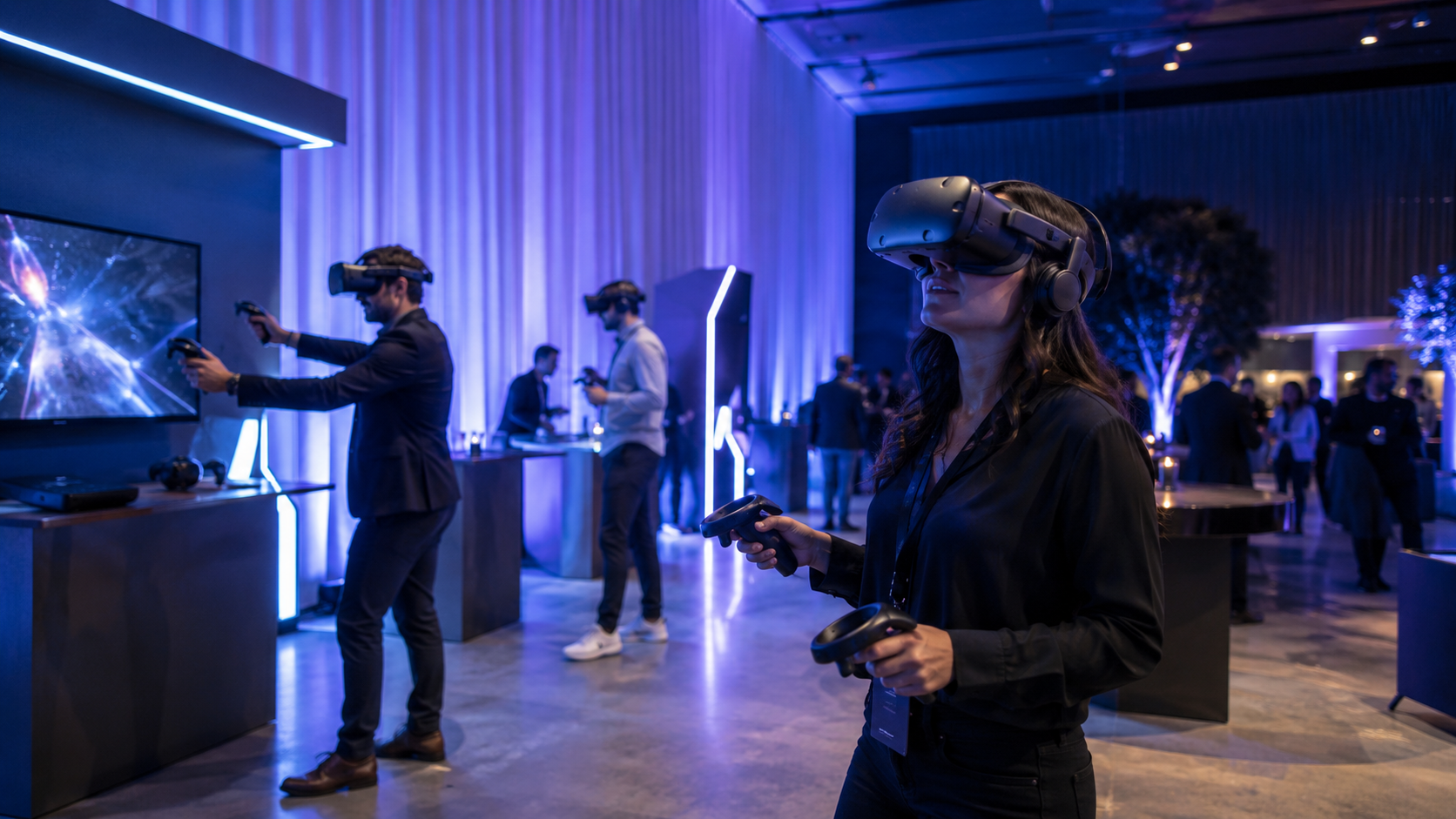
VR training platforms combine content libraries, authoring tools, learning management systems, and analytics dashboards to deliver immersive training at scale. Unlike traditional e-learning, these platforms let employees practice high-stakes scenarios, dangerous procedures, and soft skills in risk-free virtual environments.
Major enterprises report 40% faster training completion rates and 75% higher retention compared to classroom training. Walmart trained over 1 million associates using VR, while UPS reduced driver training time by 50% through virtual delivery simulations. These results stem from VR’s unique ability to trigger muscle memory and emotional responses that reinforce learning.
Core Components Every VR Training Platform Includes
Content library vs. custom authoring capabilities
Enterprise VR platforms offer pre-built content libraries covering common training needs like safety procedures, customer service, and equipment operation. Platforms like Strivr provide 100+ ready-to-deploy modules, while authoring tools like CenarioVR let organizations create custom scenarios without coding expertise.
The build-vs-buy decision impacts total cost of ownership. Pre-built content costs $50-200 per user annually, while custom development ranges from $25,000-100,000 per module depending on complexity and interactivity levels.
LMS integration and SCORM compliance requirements
Modern VR training platforms support SCORM 1.2, SCORM 2004, and xAPI standards for seamless LMS integration. This compatibility enables centralized training records, compliance tracking, and blended learning paths combining VR with traditional courseware.
Key integration features include automated enrollment, progress synchronization, completion certificates, and unified reporting dashboards. Platforms lacking these standards require manual data transfer or parallel tracking systems.
Multi-user session support and instructor tools
Collaborative VR training enables team exercises, role-playing scenarios, and instructor-led sessions. Platforms support 2-50 simultaneous users in shared virtual spaces, with instructors controlling scenarios, spawning challenges, and providing real-time feedback through spectator modes.
Advanced instructor tools include session recording for debriefs, annotation capabilities, student performance overlays, and guided practice modes where instructors demonstrate procedures before students attempt them.
Analytics dashboards and skill assessment features
VR platforms capture granular performance data impossible with traditional training. Metrics include gaze patterns, reaction times, error rates, decision paths, and biometric indicators like stress levels. This data feeds predictive models identifying skill gaps and customizing learning paths.
Dashboard features range from basic completion tracking to advanced analytics showing heat maps of user attention, mistake patterns across cohorts, and correlation between VR performance and real-world outcomes.
Where VR Training Outperforms Traditional Methods
Safety training without physical risk exposure
VR eliminates injury risk during hazardous procedure training. Energy companies train workers on high-voltage equipment maintenance, manufacturers simulate forklift operations in crowded warehouses, and construction firms practice scaffolding assembly at virtual heights.
Traditional safety training relies on videos and written procedures that don’t build muscle memory. VR training creates realistic stress responses and decision-making pressure while maintaining complete safety, resulting in 70% fewer workplace accidents post-training according to industry studies.
Soft skills practice with AI-driven avatars
AI-powered avatars enable unlimited practice of difficult conversations, sales pitches, and leadership scenarios. Unlike role-playing with colleagues, VR provides consistent, unbiased interactions with emotional responses that adapt to user behavior.
Platforms generate thousands of scenario variations, preventing memorization and ensuring skills transfer to real situations. Users practice firing employees, de-escalating angry customers, and delivering presentations to hostile audiences without real-world consequences.
Equipment operation training without production downtime
VR replicates expensive equipment for training without disrupting operations. Airlines train pilots on new aircraft models, manufacturers teach machine operation without stopping production lines, and healthcare providers practice using medical devices before touching actual equipment.
Virtual equipment training reduces wear on physical assets, eliminates scheduling conflicts, and allows mistakes that would damage real machinery. Trainees achieve competency 4x faster than traditional methods by practicing procedures repeatedly without time constraints.
Consistent training delivery across global locations
VR ensures every employee receives identical training regardless of location, instructor quality, or language barriers. Multinational corporations deploy standardized procedures, safety protocols, and compliance training to thousands of sites simultaneously.
Localized VR content maintains consistency while adapting to regional regulations, languages, and cultural contexts. This standardization reduces training variance that causes quality issues and compliance violations in global operations.
Leading VR Training Platforms: Features and Use Cases
The VR training platform market includes specialized vendors for specific industries, general-purpose authoring platforms, and enterprise learning suites with VR modules. Each category serves different organizational needs and technical requirements.
Strivr: Data-Driven Enterprise VR Training
Strivr pioneered enterprise VR training with deployments at Walmart, Verizon, and Bank of America reaching over 2 million employees. The platform emphasizes performance analytics and managed content services for large-scale implementations.
Key features and capabilities:
- Immersive Learning Platform with 100+ pre-built modules
- Advanced biometric data capture including eye tracking and emotional response
- Predictive analytics correlating VR performance with business KPIs
- White-glove content production services with instructional design expertise
Deployment model and pricing:
Strivr operates on annual enterprise licenses starting at $50,000 for 100 users. Pricing includes platform access, standard content library, and basic analytics. Custom content development adds $75,000-250,000 per module depending on complexity.
The platform requires Meta Quest 2/3 or Pico 4 Enterprise headsets managed through Strivr’s proprietary deployment tools. Cloud-based architecture supports global rollouts with regional content delivery networks minimizing latency.
Immerse: Language and Soft Skills Platform
Immerse specializes in language learning and communication skills through AI-driven conversation practice and live instructor-led VR classrooms. The platform serves corporate language programs and business communication training.
Core capabilities:
- AI conversation partners with natural language processing
- Live VR classrooms supporting 20 simultaneous participants
- Business scenario library covering meetings, presentations, and negotiations
- Progress tracking aligned with CEFR language proficiency standards
Integration and deployment:
Immerse integrates with corporate LMS platforms through xAPI and supports single sign-on via SAML 2.0. The platform runs on Meta Quest headsets and desktop VR through web browsers, enabling flexible deployment models.
Pricing starts at $299 per user annually for self-paced learning, with instructor-led programs at $599 per user. Enterprise packages include custom scenario development and dedicated success managers.
PrecisionOS: Medical and Surgical Training
PrecisionOS provides FDA-registered medical device training and surgical procedure simulation with haptic feedback. The platform serves medical device companies, hospitals, and surgical residency programs.
Specialized features:
- Haptic controllers simulating surgical tool resistance and tissue feedback
- Anatomically accurate 3D models from CT/MRI scans
- Procedure recording and assessment against expert benchmarks
- CME credit tracking and certification management
Hardware requirements:
PrecisionOS requires PC-tethered VR systems (HTC Vive Pro or Meta Quest via Link) paired with haptic controllers. The platform supports both single-user training stations and skills labs with multiple simultaneous users.
Medical device companies license the platform for $100,000+ annually, including custom procedure development. Hospital implementations range from $25,000-75,000 based on specialties and user counts.
Transfr: Workforce Development and Career Training
Transfr focuses on career exploration and job skills training for workforce development programs. The platform partners with community colleges, workforce boards, and correctional facilities to provide career pathways training.
Platform components:
- 200+ career simulations across healthcare, manufacturing, and skilled trades
- Skills assessment aligned with O*NET job classifications
- Career exploration mode for students discovering career paths
- Employer partnerships for direct job placement
Deployment and funding models:
Transfr works with government workforce programs, often funded through WIOA grants or state workforce development budgets. The platform deploys through workforce centers, community colleges, and mobile training units reaching underserved communities.
Institutional pricing ranges from $30,000-100,000 annually based on student enrollment. The platform includes headset leasing options and on-site implementation support.
CenarioVR: No-Code VR Content Authoring
CenarioVR enables instructional designers to create VR training without programming skills. The platform serves organizations building custom content libraries for unique procedures and proprietary processes.
Authoring capabilities:
- Drag-and-drop scene builder with asset library
- 360-degree video and photosphere support
- Branching scenarios with conditional logic
- Variable tracking and scoring systems
Export and distribution options:
CenarioVR exports to SCORM packages, xAPI statements, or standalone applications. Content runs on VR headsets, mobile devices, and desktop browsers, maximizing accessibility across device types.
Individual licenses cost $1,800 annually, with team plans at $6,000 for 5 authors. Enterprise agreements include unlimited authoring seats, private cloud hosting, and professional services support.
Platform Selection Criteria for Enterprise Buyers
Choosing a VR training platform requires evaluating technical capabilities, content needs, deployment models, and organizational readiness. These criteria help narrow the vendor list before pilot testing.
Content Strategy: Build, Buy, or Both
Off-the-shelf content library coverage
Evaluate existing content libraries against your training needs inventory. Common scenarios like safety procedures, customer service, and equipment operation often have ready-made modules. Specialized or proprietary processes require custom development.
Map content gaps by categorizing training needs:
- Universal skills (80% library coverage): Leadership, communication, safety basics
- Industry-specific (40% coverage): Sector regulations, standard equipment, common procedures
- Organization-specific (0% coverage): Proprietary processes, custom equipment, company policies
Custom content development costs and timelines
Budget $25,000-50,000 for simple scenarios with linear narratives and basic interactions. Complex simulations with branching paths, physics engines, and multiplayer support cost $75,000-250,000. Development timelines range from 8-24 weeks depending on scope and revision cycles.
Factor ongoing maintenance costs for content updates. Regulatory changes, process improvements, and equipment upgrades require content modifications costing 15-30% of initial development annually.
In-house authoring tool requirements
Organizations creating frequent content updates need authoring capabilities. Evaluate tools based on:
- Technical skill requirements (no-code vs. Unity development)
- Asset library quality and customization options
- Collaboration features for team development
- Version control and approval workflows
Calculate total authoring costs including tool licenses, training time, and dedicated personnel. In-house development typically becomes cost-effective at 10+ custom modules annually.
Content update and versioning processes
Platform version control features impact long-term content management. Key capabilities include:
- Automated update distribution to deployed headsets
- A/B testing for content optimization
- Rollback capabilities for problematic updates
- Granular permissions for content modification
Technical Infrastructure Requirements
Cloud vs. on-premise deployment options
Cloud platforms offer faster deployment, automatic updates, and global accessibility but require reliable internet and may raise data security concerns. On-premise installations provide complete control and offline operation but increase IT overhead and limit remote access.
Hybrid models store sensitive content locally while leveraging cloud analytics and updates. This approach balances security requirements with operational efficiency.
Network bandwidth and latency considerations
VR streaming requires 25-50 Mbps per headset for cloud-based platforms. Local network deployment reduces bandwidth needs to 5-10 Mbps for analytics and updates. Calculate peak concurrent usage to size network capacity appropriately.
Latency above 50ms causes motion sickness in VR. Test network paths between headsets and servers, implementing edge servers or content delivery networks for global deployments.
Device management and provisioning
Enterprise deployments require mobile device management (MDM) capabilities:
- Remote app installation and updates
- User access controls and authentication
- Usage monitoring and compliance reporting
- Remote troubleshooting and support
Platforms with built-in MDM reduce complexity, while third-party tools like ArborXR provide vendor-agnostic management across multiple VR platforms.
Single sign-on and security compliance
Verify platform support for your authentication infrastructure:
- SAML 2.0 for enterprise SSO integration
- Multi-factor authentication requirements
- Role-based access controls
- Audit logging for compliance reporting
Assess data handling against regulatory requirements. Healthcare organizations need HIPAA compliance, while financial services require SOC 2 certification. European operations must ensure GDPR compliance for user data processing.
Scalability and Multi-Site Deployment
Concurrent user licensing models
Platform licensing varies between named users, concurrent seats, and usage-based models:
- Named user licenses: Best for dedicated training roles
- Concurrent licenses: Optimal for shift work and occasional users
- Usage-based: Suitable for seasonal or project-based training
Model your usage patterns to optimize licensing costs. A 100-person organization might need only 20 concurrent licenses if training occurs in scheduled blocks.
Remote deployment and support capabilities
Multi-site rollouts require remote management features:
- Centralized content distribution
- Remote headset configuration
- Automated health monitoring
- Tiered support escalation
Evaluate vendor support coverage across your geographic footprint. Global deployments need 24/7 support or follow-the-sun coverage models.
Localization and multi-language support
International deployments require platform localization beyond simple translation:
- UI language switching
- Localized audio narration
- Cultural adaptation of scenarios
- Regional compliance variations
Budget 20-30% additional cost per language for content localization. Some platforms include major languages, while others charge per translation.
Offline mode for limited connectivity sites
Remote locations often lack reliable internet for cloud-based training. Offline capabilities include:
- Local content caching
- Offline progress tracking
- Periodic synchronization
- Degraded feature graceful handling
Test offline functionality thoroughly, as some platforms lose critical features without connectivity.
Designing a VR Training Platform Pilot Program
Before committing to enterprise licenses, run controlled pilots to validate ROI, test user adoption, and compare platform capabilities. Rental hardware lets you test multiple platforms without capital investment.
Pilot Program Structure and Timeline
8-12 week pilot duration recommendations
Week 1-2: Setup and orientation
- Hardware deployment and configuration
- Trainer certification and familiarization
- Baseline performance measurement
- Initial user group selection
Week 3-6: Active training phase
- Daily or weekly VR sessions
- Progress monitoring and support
- Iterative content refinement
- User feedback collection
Week 7-10: Evaluation and comparison
- Performance assessment against controls
- Platform comparison if testing multiple
- ROI calculation and business case development
- Stakeholder demonstrations
Week 11-12: Decision and planning
- Vendor selection and negotiation
- Implementation roadmap development
- Budget approval and procurement
- Change management planning
Control group comparison methodology
Establish control groups for scientific validation:
- Random assignment to VR vs. traditional training
- Matched pairs based on experience and role
- Pre/post assessments measuring skill improvement
- Long-term retention testing at 30/60/90 days
Track both quantitative metrics (test scores, task completion times) and qualitative feedback (confidence levels, engagement ratings). Statistical significance requires minimum 30 participants per group.
Success metrics and KPI definition
Define measurable success criteria before pilot launch:
Performance metrics:
- Time to competency (25-40% reduction target)
- Error rates in practical assessments (50% reduction)
- Knowledge retention at 30 days (20% improvement)
- Training completion rates (90%+ target)
Business metrics:
- Training cost per employee (20-30% reduction)
- Productivity during training period (reduced downtime)
- Travel and facility cost savings
- Safety incident reduction post-training
Stakeholder communication plan
Maintain stakeholder engagement throughout the pilot:
- Weekly status updates to sponsors
- Bi-weekly trainer feedback sessions
- Monthly steering committee reviews
- Executive demonstration sessions
Document lessons learned continuously for implementation planning. Address concerns promptly to maintain momentum and support.
Hardware Rental Strategy for Platform Testing
Renting headsets for multi-platform evaluation
Hardware rental eliminates capital risk during platform evaluation. Rental costs range from $150-300 monthly per headset, including shipping, support, and damage protection. This approach enables testing multiple platforms without compatibility concerns.
Rental advantages for pilots:
- No depreciation risk if platform isn’t selected
- Latest hardware without waiting for budget cycles
- Flexible scaling based on pilot results
- Professional configuration and support included
Testing different hardware with same content
Platform compatibility varies across headset models. Test your shortlisted platforms on multiple devices:
- Meta Quest 3: Standalone deployment, widest platform support
- Pico 4 Enterprise: Enhanced security, dedicated business features
- HTC Vive Focus 3: Premium build quality, swappable batteries
Document user preferences, setup complexity, and support requirements for each combination. Hardware choice impacts long-term training operations significantly.
Cost comparison: rental pilots vs. purchase risk
Calculate the financial impact of different approaches:
Rental pilot (20 headsets, 3 months):
- Rental cost: $9,000-18,000
- No residual value
- Zero risk if project cancelled
Purchase for pilot:
- Hardware cost: $10,000-20,000
- Residual value: 60-70% after pilot
- Disposal complexity if not selected
- Depreciation and maintenance overhead
Rental becomes cost-effective when testing multiple platforms or uncertain about long-term commitment. Purchase makes sense only with high confidence in platform selection.
IGIVU rental packages for training pilots
IGIVU offers specialized rental packages designed for enterprise VR training pilots:
- Pre-configured headsets with training platforms installed
- Bulk rental discounts for 10+ units
- Flexible terms from 1-12 months
- White-glove setup and support services
- Rent-to-own options for successful pilots
Standard packages include carrying cases, hygiene barriers, and backup units. Enterprise support covers remote troubleshooting, advance replacement, and on-site assistance for large deployments.
User Feedback and Adoption Measurement
Pre and post-training assessments
Establish baseline competency through pre-training assessments:
- Knowledge tests covering training objectives
- Practical skill demonstrations (video recorded)
- Self-assessment confidence ratings
- Previous training method satisfaction scores
Post-training assessments should mirror pre-training format for direct comparison. Add VR-specific questions about experience quality, technical issues, and improvement suggestions.
Motion sickness and comfort tracking
Monitor VR comfort systematically to identify and address issues:
- Simulator Sickness Questionnaire (SSQ) after each session
- Session duration tolerance progression
- Break frequency requirements
- Correlation with content types and movement intensity
Typical adaptation shows 70% of users comfortable within 3 sessions. Persistent discomfort in >20% of users indicates platform or content issues requiring attention.
Time-to-competency measurements
Track skill development progression through VR training:
- Module completion times
- Error rates by attempt number
- Assistance requests over time
- Competency assessment scores
Compare against traditional training benchmarks. VR typically shows 30-50% faster competency achievement with higher consistency across learners.
Learner satisfaction surveys
Gather qualitative feedback through structured surveys:
- Training effectiveness perception
- Engagement and enjoyment levels
- Technical difficulty and support quality
- Likelihood to recommend scores (NPS)
- Specific improvement suggestions
High satisfaction (>80% positive) predicts successful full deployment. Address common complaints before scaling to prevent adoption resistance.
VR Hardware Considerations for Training Platforms
Platform selection drives hardware requirements, but not all platforms support all headsets. Understanding compatibility, deployment models, and management tools prevents costly mismatches.
Standalone vs. PC-Tethered Headsets
Meta Quest 3 for standalone deployment
Meta Quest 3 dominates enterprise VR training with 70% market share. Key advantages include:
- Completely wireless operation
- $499 price point for volume purchases
- 2-3 hour battery life with hot-swap batteries
- Inside-out tracking requiring no external sensors
- Wide platform compatibility
Limitations include reduced graphics quality compared to PC VR and restricted processing power for complex simulations. Most training scenarios don’t require high-end graphics, making Quest 3 ideal for standard deployments.
Pico 4 Enterprise for managed environments
Pico 4 Enterprise offers enhanced business features:
- Kiosk mode locking devices to specific apps
- Advanced device management APIs
- No Facebook account requirements
- Enhanced privacy controls for regulated industries
- 24/7 enterprise support
Higher cost ($899) and limited platform support make Pico suitable for organizations prioritizing security and management over ecosystem breadth.
HTC Vive Focus 3 for business features
HTC Vive Focus 3 targets premium enterprise deployments:
- Magnesium alloy construction for durability
- Quick-release batteries enabling continuous operation
- Advanced hand tracking and eye tracking options
- Open platform supporting custom development
- 5K resolution for detailed training scenarios
The $1,300 price point limits deployment to specialized use cases requiring premium features or existing HTC ecosystem investment.
PC VR for high-fidelity simulations
PC-tethered systems enable advanced training scenarios:
- Photorealistic graphics for equipment familiarization
- Complex physics simulations
- Multi-user scenarios with 10+ participants
- Integration with specialized peripherals
PC VR requires gaming-spec computers ($2,000+), dedicated training spaces, and cable management solutions. Reserve for scenarios where visual fidelity directly impacts training effectiveness.
Device Management and Provisioning Tools
ArborXR for enterprise headset management
ArborXR provides unified management across headset brands and VR platforms:
- Remote app deployment and updates
- Device monitoring and health alerts
- User access controls and time restrictions
- Content distribution and caching
- Usage analytics and reporting
Pricing starts at $20/device/month with volume discounts. The platform reduces IT overhead by 60% compared to manual management.
Platform-specific device requirements
Each training platform has unique device management approaches:
- Strivr: Proprietary management tools included with enterprise licenses
- Immerse: Compatible with standard MDM solutions
- PrecisionOS: Manual installation with guided setup
- CenarioVR: Web-based deployment requiring no installation
Evaluate management overhead when calculating total cost of ownership. Platforms with integrated management reduce complexity but may limit flexibility.
Kiosk mode and user restrictions
Training deployments require locked-down devices preventing misuse:
- Single app kiosk mode
- Disabled app store and settings
- Time-based access windows
- Restricted Wi-Fi networks
- Disabled social features
Not all headsets support enterprise restrictions equally. Meta Quest for Business and Pico Enterprise provide comprehensive controls, while consumer devices require third-party solutions.
Remote update and troubleshooting
Scale deployments require remote support capabilities:
- Over-the-air firmware updates
- Remote desktop viewing for support
- Diagnostic log collection
- Automated issue detection and alerting
- Self-service troubleshooting guides
Budget 0.5 FTE support staff per 100 deployed headsets for reactive support. Proactive monitoring and automation reduce this to 0.25 FTE.
Implementation Roadmap After Platform Selection
Once you’ve selected a platform through pilot testing, the implementation phase determines long-term success. This roadmap covers the critical first 90 days.
Change Management and Training the Trainers
Instructor certification programs
Successful VR training requires certified instructors comfortable with the technology and pedagogy. Certification typically involves:
- 16-24 hours of platform training
- Hands-on scenario facilitation practice
- Technical troubleshooting basics
- Assessment and feedback techniques
- Ongoing refresher training quarterly
Budget 2-3 days per instructor for initial certification plus 4 hours monthly for skill maintenance. Maintain 1 certified instructor per 20 VR learners for optimal support ratios.
Champion network development
Build grassroots support through early adopter champions:
- Identify tech-savvy enthusiasts in each department
- Provide advanced training and exclusive access
- Empower champions to support peers
- Recognize contributions publicly
- Create champion communities for knowledge sharing
Successful programs have 1 champion per 10-15 end users. Champions reduce formal support requests by 40% and accelerate adoption curves.
Resistance management strategies
Address common adoption barriers proactively:
Technology anxiety: Start with simple, fun experiences before serious training. Provide extensive hand-holding during first sessions.
Motion sickness concerns: Communicate comfort features, adaptation strategies, and alternative options for sensitive users.
Job replacement fears: Emphasize VR augments rather than replaces trainers. Highlight new skills and career opportunities.
Time constraints: Demonstrate time savings through faster competency achievement. Offer flexible scheduling options.
Executive sponsorship alignment
Maintain executive engagement post-pilot:
- Monthly ROI updates showing progress toward targets
- Quarterly business reviews with success stories
- Executive VR experience sessions
- Integration with strategic initiatives
- Board-level reporting on innovation metrics
Strong sponsorship correlates with 2x faster adoption and 3x higher utilization rates.
Content Development and Curation Timeline
Priority use case identification
Sequence content development based on business impact:
Phase 1 (Days 1-30): High-frequency, high-risk scenarios
- Safety procedures with incident history
- Customer interactions affecting satisfaction scores
- Compliance training with audit exposure
Phase 2 (Days 31-60): Scale and efficiency opportunities
- Onboarding acceleration for high-turnover roles
- Technical skills with equipment constraints
- Soft skills for promoted managers
Phase 3 (Days 61-90): Innovation and differentiation
- Emerging technology familiarization
- Crisis response simulations
- Leadership development experiences
Content production sprint planning
Organize development in 2-week sprints:
Sprint 1: Requirements and storyboarding
- Stakeholder interviews
- Learning objective definition
- Scenario scripting
- Asset identification
Sprint 2-3: Development and iteration
- 3D modeling and environment creation
- Interaction programming
- Audio recording
- Initial testing
Sprint 4: Polish and deployment
- Quality assurance testing
- Performance optimization
- Documentation creation
- Trainer preparation
Quality assurance and testing protocols
Implement rigorous testing before release:
- Technical testing: Frame rates, loading times, crash scenarios
- Instructional testing: Learning objective alignment, assessment validity
- User testing: Intuitive interactions, clear instructions, comfort levels
- Accessibility testing: Multiple learning styles, disability accommodations
- Platform testing: Cross-device compatibility, network performance
Allocate 20-30% of development time to QA. Poor quality content damages program credibility disproportionately.
Ongoing content refresh cycles
Establish sustainable content maintenance:
- Quarterly content reviews for accuracy
- Annual major updates for process changes
- Continuous minor fixes for reported issues
- Regular addition of scenario variations
- Periodic graphics and interaction modernization
Budget 20% of initial development cost annually for maintenance. Stale content reduces engagement and training effectiveness over time.
Frequently Asked Questions
How much do VR training platforms cost per user?
VR training platform costs vary significantly based on features and deployment model. Basic platforms with standard content libraries cost $50-200 per user annually. Enterprise platforms with custom content and advanced analytics range from $300-1,000 per user yearly.
Volume discounts typically apply above 100 users, reducing per-user costs by 20-40%. Additional costs include hardware ($500-1,500 per headset), content development ($25,000-100,000 per custom module), and implementation services ($10,000-50,000).
Can VR training platforms integrate with existing LMS systems?
Most enterprise VR training platforms support LMS integration through SCORM 1.2, SCORM 2004, or xAPI (Tin Can) standards. Integration enables centralized training records, automated enrollment, progress tracking, and unified reporting across VR and traditional content.
Common LMS integrations include Cornerstone, SAP SuccessFactors, Workday Learning, and Adobe Learning Manager. Integration complexity ranges from simple SCORM package uploads to API-based real-time synchronization. Budget 40-80 hours for technical integration and testing.
What’s the typical ROI timeline for VR training implementation?
Organizations typically achieve positive ROI within 12-18 months of VR training implementation. High-frequency training scenarios show faster payback, sometimes within 6 months. ROI comes from reduced training time (30-40%), decreased travel costs (60-80%), improved retention (25-40%), and fewer safety incidents (20-30%).
Manufacturing and healthcare sectors report fastest ROI due to high traditional training costs. Soft skills training shows longer payback periods but delivers sustained performance improvements. Document baseline metrics before implementation to demonstrate ROI credibly.
Do VR training platforms work with all VR headsets?
Platform compatibility varies significantly. Web-based platforms support multiple headsets, while native applications may require specific devices. Meta Quest has broadest platform support, followed by Pico and HTC devices.
Always verify platform-hardware compatibility before purchasing. Some platforms require specific firmware versions or enterprise editions. Consider future hardware upgrades when selecting platforms to avoid lock-in.
How do you measure training effectiveness in VR?
VR training effectiveness measurement combines traditional assessment methods with VR-specific metrics:
Traditional metrics:
- Pre/post knowledge assessments
- Practical skill demonstrations
- Time to competency
- Long-term retention rates
VR-specific metrics:
- Gaze patterns and attention focus
- Decision paths and timing
- Error types and recovery
- Stress responses and adaptation
Advanced platforms provide predictive analytics correlating VR performance with real-world outcomes. Establish baseline measurements before VR implementation for accurate comparison.
What industries benefit most from VR training platforms?
Industries with high-risk operations, expensive equipment, or distributed workforces gain maximum value from VR training:
Healthcare: Surgical procedures, patient interaction, emergency response
Manufacturing: Equipment operation, safety procedures, quality control
Retail: Customer service, store operations, loss prevention
Energy: Safety protocols, equipment maintenance, emergency response
Transportation: Vehicle operation, safety procedures, customer service
Construction: Safety training, equipment operation, project visualization
Any industry with high training costs, safety risks, or consistency requirements can benefit from VR training platforms.
Selecting the right VR training platform requires systematic evaluation of content needs, technical requirements, and organizational readiness. The landscape includes specialized solutions for specific industries and general-purpose platforms supporting diverse training scenarios.
Start with focused pilots to validate ROI and test user adoption before enterprise deployment. Rental hardware eliminates capital risk during evaluation, while controlled comparisons provide data-driven selection criteria. Success depends on thorough change management, sustained executive support, and continuous content development.
The VR training market continues maturing with improved hardware, richer content libraries, and proven enterprise deployments. Organizations implementing VR training today report significant improvements in training effectiveness, cost reduction, and employee engagement.
Ready to evaluate VR training platforms for your organization? Contact IGIVU for enterprise rental packages designed specifically for VR training pilots. Our team provides pre-configured headsets, platform setup assistance, and pilot program guidance to accelerate your VR training journey. Visit igivu.com to discuss your training platform evaluation needs