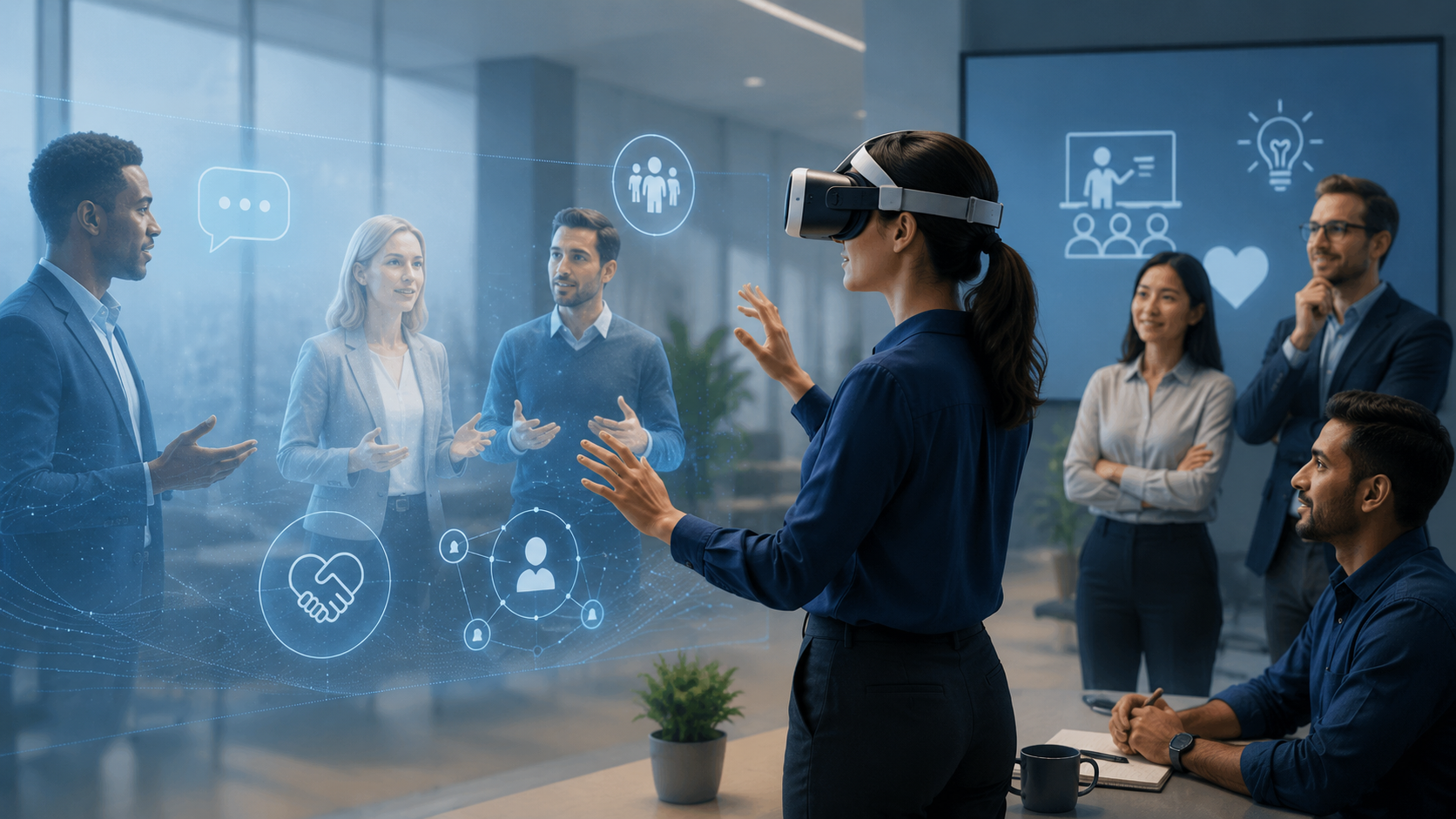
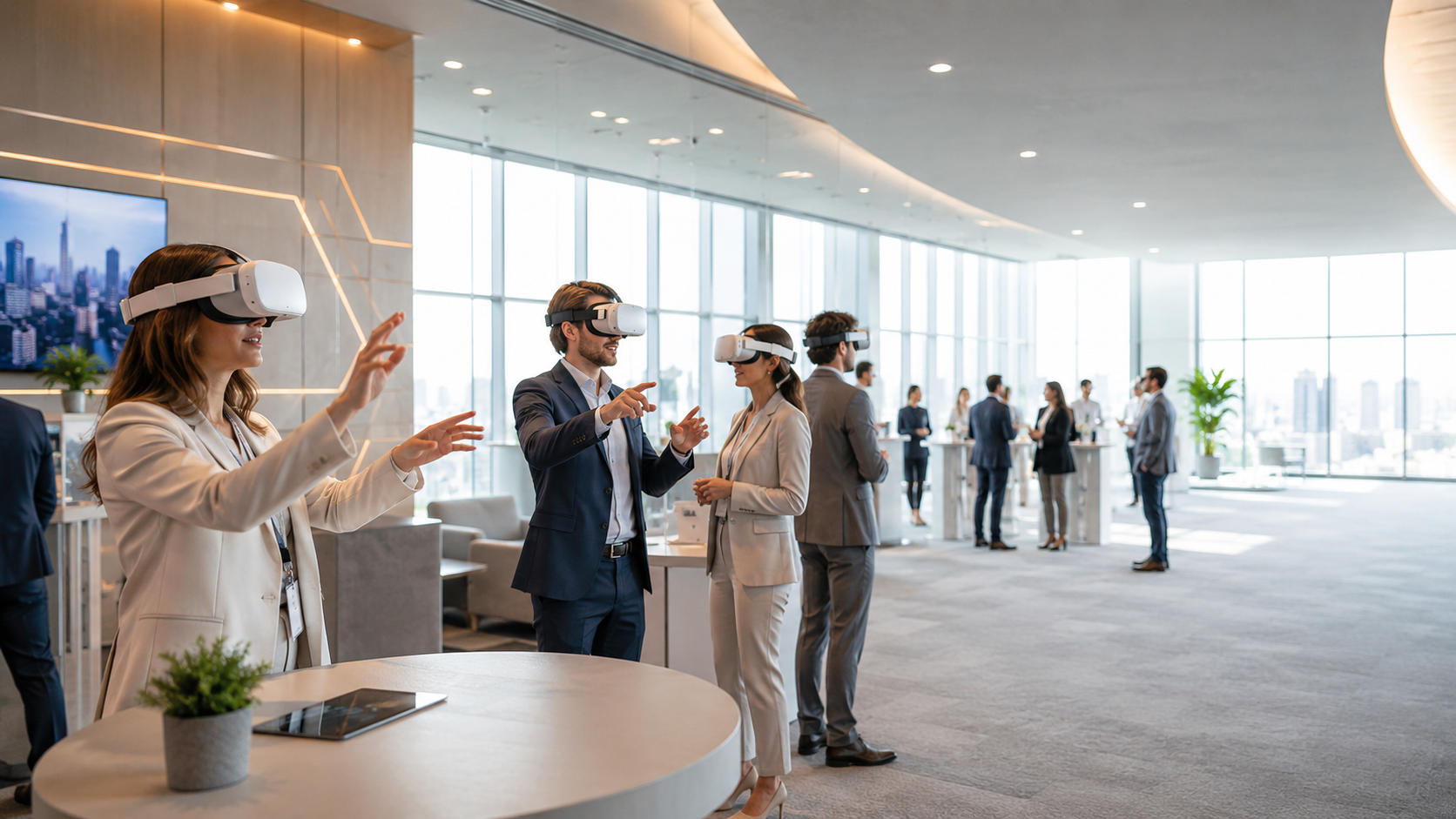
Virtual reality transforms corporate events from passive presentations into memorable experiences that drive measurable business outcomes. Whether you’re showcasing products at trade shows, training distributed teams, or creating breakthrough team-building experiences, VR rental programs deliver enterprise-grade technology without the capital investment, obsolescence risk, or technical complexity of ownership.
Why Companies Choose VR Rentals Over Purchase for Events and Training
Corporate VR deployments face unique challenges: proving ROI before capital investment, managing multi-location logistics, ensuring IT compliance, and delivering experiences that work for non-technical participants. Rental programs solve these operational hurdles while letting teams test VR applications across different business functions.
Leading organizations leverage VR rentals to validate use cases, measure employee engagement, and demonstrate value to stakeholders before committing to permanent deployments. This approach reduces risk while accelerating time-to-value for innovative training and marketing initiatives.
Capital Flexibility and Pilot Program Advantages
VR rentals shift technology costs from capital expenditure to operational expense, simplifying budget approval through existing event or training allocations. This financial treatment eliminates lengthy procurement cycles and allows immediate deployment for time-sensitive initiatives.
Testing multiple headset models through rentals enables informed purchasing decisions based on actual user feedback rather than vendor specifications. Teams can evaluate Meta Quest 3 for standalone simplicity, Pico 4 Enterprise for device management capabilities, or Varjo Aero for ultra-high fidelity applications—all without long-term commitments.
Scaling capacity becomes straightforward with rentals. A product launch might require 20 headsets for the main event but only 4 for follow-up regional demonstrations. Rental programs accommodate these fluctuations without leaving expensive equipment idle between deployments.
Hardware evolution accelerates in the VR market, with major releases every 12-18 months. Rentals eliminate obsolescence risk while ensuring access to latest-generation equipment that delivers optimal performance and user experience.
Setup Support and Technical Management
Professional VR rental providers offer on-site technician services for high-stakes corporate events. These specialists handle equipment setup, troubleshoot technical issues, guide participants through experiences, and ensure smooth operations throughout your event. For Fortune 500 product launches or executive demonstrations, dedicated technical support protects against disruption while your team focuses on business objectives.
Pre-configured experiences arrive ready for immediate deployment. Rental providers handle software installation, account provisioning, and content testing before shipping. Your team receives equipment with experiences already loaded, user accounts created, and settings optimized for your specific use case.
Enterprise IT departments require specific security protocols for any technology entering corporate environments. Professional rental providers address these requirements through:
- Isolated network configurations preventing corporate data access
- Encrypted storage with remote wipe capabilities
- Compliance documentation for audit requirements
- Device management platforms enabling centralized control
Live event troubleshooting support extends beyond on-site presence. Remote assistance options include video consultations, phone support during event hours, and pre-event training sessions ensuring your team can handle common issues independently.
Corporate VR Rental Packages by Business Function
Different corporate use cases require distinct hardware configurations, content libraries, and support levels. Understanding these variations helps procurement teams select appropriate packages and set realistic budgets.
Trade Show and Conference Booth Activations
Trade show VR deployments prioritize throughput and engagement over extended experiences. Attendees spend 3-5 minutes in VR, requiring quick reset capabilities and minimal instruction. Standalone headsets like Meta Quest 3 or Pico 4 Enterprise excel here, eliminating cable management while supporting rapid user transitions.
Effective booth experiences complete in under 5 minutes, balancing immersion with visitor flow. Popular formats include virtual facility tours, product interaction demos, and gamified brand experiences that generate social sharing.
Lead capture integration transforms VR from attraction to pipeline generator. Modern rental packages include QR code systems, email capture forms within VR, and CRM integration APIs that automatically populate contact databases with engagement metrics.
Booth infrastructure requires careful planning. Each VR station needs 6×6 feet minimum for safe movement, accessible power outlets, and consideration for queue management. Professional packages include boundary markers, charging stations, and cable management systems maintaining professional appearance throughout multi-day events.
Standard trade show packages include 4-8 headsets accommodating 50-80 demonstrations daily, branded virtual experiences aligned with marketing messages, and comprehensive booth staff training ensuring consistent delivery.
Sales and Product Demonstration Programs
Complex B2B sales cycles benefit from immersive product demonstrations impossible through traditional media. VR rentals enable sales teams to showcase industrial equipment, architectural designs, or software platforms in full scale and context.
Custom visualization applications transform CAD models into interactive experiences where prospects examine products from any angle, explore internal components, and simulate real-world operation. These demonstrations reduce sales cycles by 30% while increasing close rates through enhanced understanding.
Remote demonstration capabilities extend reach beyond physical meetings. Cloud-based VR platforms enable simultaneous sessions where sales representatives guide distant prospects through virtual showrooms, maintaining personal connection while eliminating travel costs.
CRM integration captures engagement analytics including viewing time per feature, interaction patterns, and areas of highest interest. These insights inform follow-up strategies and identify hot prospects based on behavioral data rather than stated interest.
Typical sales packages include 2-4 high-end headsets supporting detailed graphics, custom content development translating existing assets into VR, and training ensuring sales teams maximize technology impact.
Employee Training and Onboarding
VR training delivers 4x faster learning with 275% higher confidence in skill application compared to traditional methods. Rental programs enable rapid deployment of immersive training without long-term infrastructure investment.
Multi-user synchronized experiences allow entire cohorts to train simultaneously while instructors monitor progress in real-time. Participants practice procedures, navigate virtual facilities, or respond to simulated scenarios while receiving immediate feedback.
Learning management system integration tracks individual progress, assessment scores, and competency achievements. These metrics feed existing HR systems, maintaining training records while identifying knowledge gaps requiring additional attention.
Standard training packages accommodate 10-20 simultaneous users, include diverse content libraries covering safety procedures to soft skills, and provide facilitator tools enabling non-technical trainers to manage sessions effectively.
Team Building and Corporate Events
VR team building creates shared experiences impossible in physical space. Teams collaborate solving escape rooms, compete in virtual sports, or explore fantastic environments that spark creativity and connection.
Multiplayer experiences designed for group dynamics foster communication, leadership, and problem-solving skills. Unlike traditional team building, VR activities engage introverted team members equally while accommodating physical limitations that might exclude participants from outdoor challenges.
Non-gamer friendly content ensures broad participation. Intuitive interfaces, gradual difficulty progression, and varied experience types mean every employee finds engaging options regardless of technical comfort.
Event packages typically include 6-12 headsets supporting full team participation, diverse content libraries offering competitive and collaborative options, and experienced coordinators guiding groups through activities while managing technology.
Planning Your Corporate VR Rental: Timeline and Logistics
Corporate VR rentals require coordination across multiple stakeholders including IT, facilities, legal, and event teams. This planning framework addresses common corporate requirements and approval processes.
Pre-Event Planning Checklist
Standard rental packages require 2-4 weeks lead time for equipment preparation, content configuration, and shipping logistics. Custom content development or large-scale deployments may need 6-8 weeks advance planning.
IT security reviews examine data handling, network requirements, and device management protocols. Provide IT teams with technical specifications, security documentation, and compliance certifications at least 3 weeks before events to ensure smooth approval.
Insurance considerations include general liability coverage for participant injuries and equipment damage protection. Most rental providers offer damage waivers covering normal wear while corporate event insurance typically extends to rental equipment. Confirm coverage limits and deductibles during initial planning.
Space requirements vary by experience type and participant count. Standing experiences need 6×6 feet per station while seated demonstrations require 4×4 feet. Account for queue areas, equipment storage, and spectator viewing zones when planning layouts.
Staff training ensures smooth execution. Schedule 2-hour orientation sessions covering equipment operation, experience facilitation, troubleshooting basics, and hygiene protocols. Designate primary and backup operators for redundancy.
Day-of Execution Requirements
Professional VR setups require 2-3 hours including equipment unpacking, boundary configuration, software verification, and final testing. Schedule access accordingly, particularly for union venues with restricted setup windows.
Power infrastructure supports 100-150 watts per VR station. Verify outlet locations, circuit capacity, and extension cord policies during venue walkthroughs. Battery-powered headsets provide 2-3 hours continuous operation between charges.
Network connectivity enables cloud-based experiences and remote support. While standalone headsets operate offline, WiFi access improves functionality. Confirm bandwidth availability and authentication requirements with venue IT teams.
Hygiene protocols maintain safety across multiple users. Rental packages include disposable face covers, antibacterial wipes, and UV sanitization equipment. Establish cleaning schedules based on usage intensity and corporate health policies.
Backup equipment provides insurance against technical failures. Professional packages include 20% spare capacity ensuring continued operation despite potential issues. Verify backup availability and swap procedures during planning.
Technical support protocols establish escalation paths for issues beyond on-site capability. Document support phone numbers, response time commitments, and remote assistance procedures. Designate technical points of contact with authority to make operational decisions.
Measuring ROI on Corporate VR Rentals
Justifying VR rental budgets requires clear success metrics aligned to business objectives. These measurement frameworks help corporate teams demonstrate value and secure future funding.
Trade Show and Event Metrics
VR experiences increase booth dwell time by 3-5x compared to traditional displays. Visitors spending 5 minutes in VR versus 1 minute at standard demos create deeper engagement and stronger brand recall.
Lead quality improves through self-selection—prospects willing to try VR demonstrate higher interest and innovation alignment. Companies report 40% higher conversion rates from VR-generated leads versus traditional booth interactions.
Social amplification multiplies event impact as participants share VR experiences across professional networks. Branded VR photos and videos generate 10x more engagement than standard booth photography, extending reach beyond physical attendees.
Cost per qualified lead often decreases 25-30% despite higher initial investment. Extended engagement time enables deeper qualification while memorable experiences improve follow-up response rates.
Training and Development Metrics
Knowledge retention reaches 75% one year after VR training compared to 10% for traditional methods. Immersive experiences create emotional connections to content, improving long-term recall of procedures and concepts.
Time to competency reduces by 40% as learners practice skills in risk-free virtual environments. Mistakes become learning opportunities rather than safety hazards, accelerating proficiency development.
Safety incident reduction reaches 43% for organizations implementing VR hazard training. Employees experience dangerous situations virtually, building muscle memory and decision-making skills without actual risk exposure.
Travel cost avoidance for distributed team training generates immediate ROI. A 20-person training program saves $30,000-50,000 in travel expenses while eliminating productivity loss from time away from work.
Corporate VR Rental Pricing and Package Comparison
Corporate VR rental pricing varies based on equipment tier, rental duration, support level, and content requirements. Understanding these variables helps procurement teams budget accurately and negotiate effectively.
Standard Package Pricing Ranges
Basic event packages including 4 standalone headsets for single-day deployments range from $800-1,500. This entry-level option suits small meetings, executive demonstrations, or pilot programs testing VR viability.
Trade show packages supporting 3-day events with 6-8 headsets typically cost $3,000-5,000. Pricing includes equipment, standard content library, basic booth training, and remote technical support throughout the event.
Training programs requiring 10-20 headsets for week-long deployments range from $5,000-10,000. These comprehensive packages include learning content, facilitator tools, progress tracking systems, and on-site setup assistance.
Volume discounts apply for multi-event contracts or extended rentals. Organizations committing to quarterly deployments often receive 20-30% reductions versus single-event pricing. Annual agreements provide predictable budgeting while ensuring equipment availability.
Custom content development adds $5,000-25,000 depending on complexity. Simple branding modifications cost less than full custom experiences requiring 3D modeling, interaction design, and user testing.
What’s Included vs Additional Costs
Standard rental packages include headsets with controllers, hygiene supplies for 50-100 users, basic content libraries with 5-10 experiences, setup instructions and remote support, and standard shipping within continental US.
Common add-ons enhance deployment success but increase costs. On-site technicians add $1,500-2,500 per day. Custom branding or content curation costs $500-2,000. Premium experiences or specialized training modules range from $50-200 per title. Express shipping for last-minute requests adds $200-500.
Shipping and insurance require careful consideration. Standard shipping includes basic coverage up to $1,000 per headset. Additional insurance costs 2-3% of equipment value but provides peace of mind for high-value deployments.
Damage waivers eliminate liability for accidental damage during normal use. These policies typically cost 10-15% of rental fees but prevent unexpected charges from minor incidents common during corporate events.
Selecting the Right VR Hardware for Corporate Applications
Corporate VR deployments have different hardware requirements than consumer applications. Key considerations include ease of use for non-technical users, enterprise management capabilities, and hygiene factors for shared use.
Standalone vs PC-Tethered Systems
Standalone headsets like Meta Quest 3 and Pico 4 Enterprise dominate corporate rentals through superior portability and simplified setup. These all-in-one systems eliminate gaming PCs, reduce failure points, and enable rapid deployment across multiple locations.
Standalone advantages include 5-minute setup times, no cable management requirements, lower total rental costs, easier troubleshooting, and broader venue compatibility. These benefits make standalone systems ideal for trade shows, training programs, and team events.
PC-tethered systems like HTC Vive Pro or Varjo Aero justify added complexity for specific use cases requiring maximum visual fidelity or computational power. Architectural visualization, engineering design review, and medical training benefit from enhanced graphics capabilities.
Hybrid configurations provide flexibility for varied requirements. Some rental packages include standalone headsets for general use with optional PC connections for demanding applications, balancing simplicity with capability.
Network and security implications differ between platforms. Standalone headsets operate independently, minimizing IT concerns. PC-based systems require careful configuration to prevent corporate network access while maintaining functionality.
Enterprise-Ready Features
Device management platforms distinguish professional rentals from consumer equipment. Solutions like ArborXR or Pico Business Suite enable centralized control over multiple headsets, streamlining deployment while maintaining security.
Kiosk mode locks devices into specific experiences, preventing users from accessing system settings or unauthorized content. This feature proves essential for public events where hundreds of participants use equipment throughout the day.
Multi-user synchronization capabilities coordinate experiences across multiple headsets, enabling group training or collaborative exercises. Instructors control pacing while monitoring individual progress through dashboard interfaces.
Content deployment systems simplify experience management across device fleets. Cloud-based platforms push updates, add new content, or modify configurations without touching individual headsets, reducing setup time while ensuring consistency.
Frequently Asked Questions
How far in advance should we book corporate VR rentals?
Book standard packages 2-3 weeks in advance to ensure equipment availability and allow time for IT reviews. Custom content or large deployments need 6-8 weeks. Peak periods like major trade shows or Q4 events require earlier reservations.
Can VR rentals integrate with our existing corporate IT systems?
Most VR rentals operate independently from corporate networks for security. However, cloud-based platforms can integrate with CRM, LMS, and analytics systems through APIs. Discuss integration requirements during initial consultations.
What insurance coverage is needed for corporate VR events?
Standard corporate event insurance typically covers rental equipment. Confirm coverage limits match equipment value (usually $3,000-5,000 per headset). Consider damage waivers from rental providers for additional protection.
How many VR headsets do we need for a 100-person corporate event?
For 2-hour events, 8-10 headsets accommodate 100 participants with 5-minute experiences. Longer events or extended experiences require proportionally more equipment. Consider event flow and whether all attendees need VR access.
What’s the typical rental period for corporate training programs?
Training rentals typically span 1-2 weeks, allowing setup, multiple training sessions, and makeup opportunities. Monthly rentals offer better value for extended programs while maintaining flexibility.
Can we get custom branded VR experiences for our company?
Yes, rental providers offer branding options from simple logo placement to fully custom experiences. Basic branding takes 1-2 weeks while custom development requires 4-8 weeks depending on complexity.
What technical support is included with corporate VR rentals?
Standard packages include remote phone/video support during business hours. Premium packages add on-site technicians, extended hours coverage, and dedicated support representatives familiar with your deployment.
How do you handle hygiene for shared VR headsets at corporate events?
Professional rental packages include disposable face covers, antibacterial wipes, and UV sanitization systems. Staff training covers cleaning protocols between users. Some providers offer medical-grade hygiene options for healthcare applications.
What’s the difference between consumer and enterprise VR rental packages?
Enterprise packages include device management software, commercial content licensing, enhanced support options, and invoice billing. Consumer rentals typically offer limited equipment, basic support, and credit card payment only.
Can we rent VR equipment for multiple office locations simultaneously?
Yes, enterprise rental providers coordinate multi-location deployments with synchronized delivery, consistent configurations, and centralized billing. Cloud-based management platforms enable remote monitoring across all locations.
Conclusion
Corporate VR rentals transform ambitious technology initiatives from risky capital investments into manageable operational expenses that deliver measurable business outcomes. By selecting appropriate hardware configurations, planning logistics thoroughly, and establishing clear success metrics, organizations leverage immersive technology to enhance training effectiveness, amplify marketing impact, and create memorable experiences that drive competitive advantage.
The flexibility of rental programs enables rapid testing, iteration, and scaling based on actual results rather than theoretical projections. As VR technology continues evolving, rentals provide access to latest innovations without obsolescence risk, ensuring your organization maintains technological leadership while managing costs effectively.
Ready to explore VR rental options for your next corporate initiative? Contact enterprise rental providers for consultations tailored to your specific use case, budget parameters, and success metrics. Request case studies from similar deployments and pilot program options that prove value before scaling. Your journey into corporate VR starts with a single rental—and the possibilities are limitless.