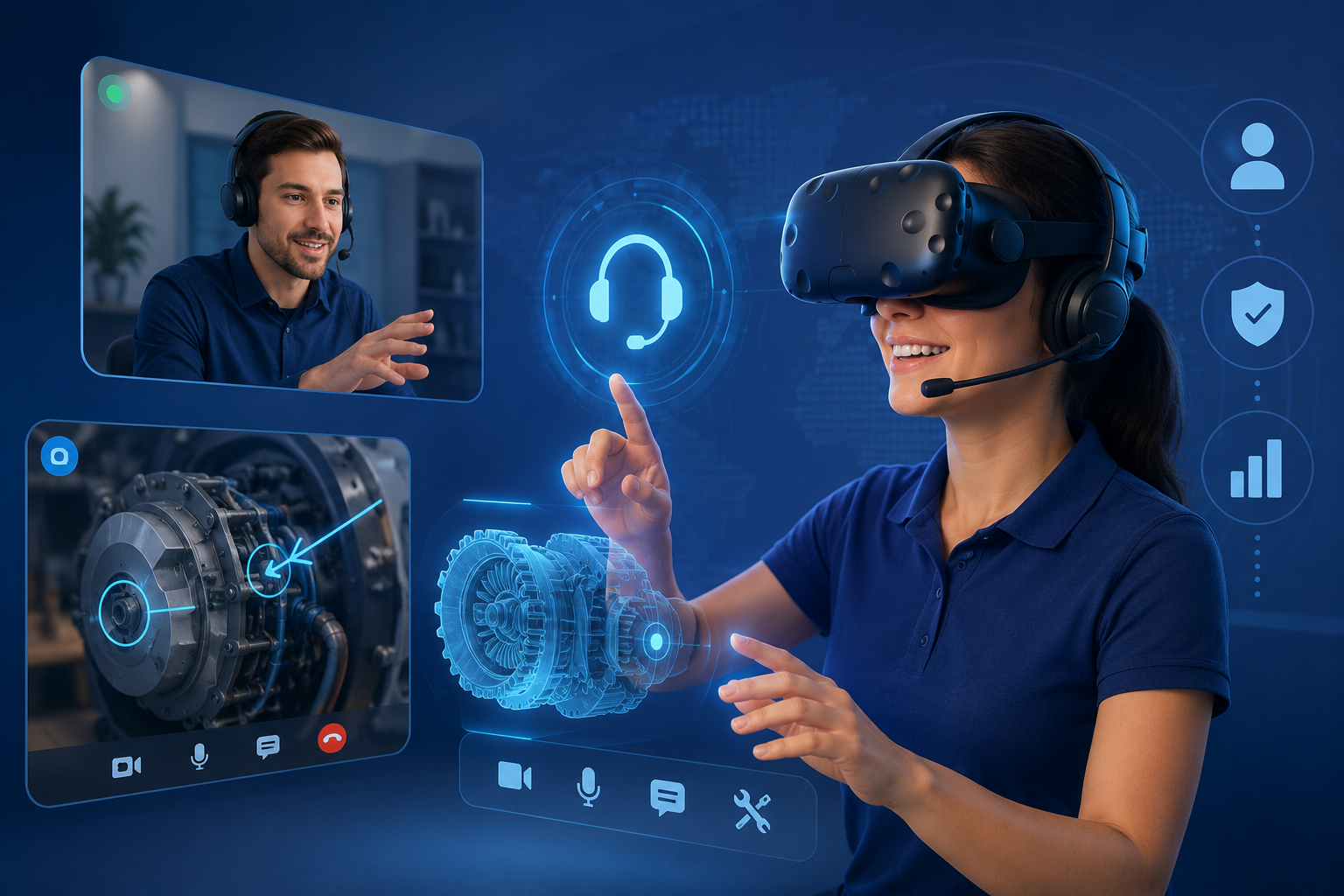
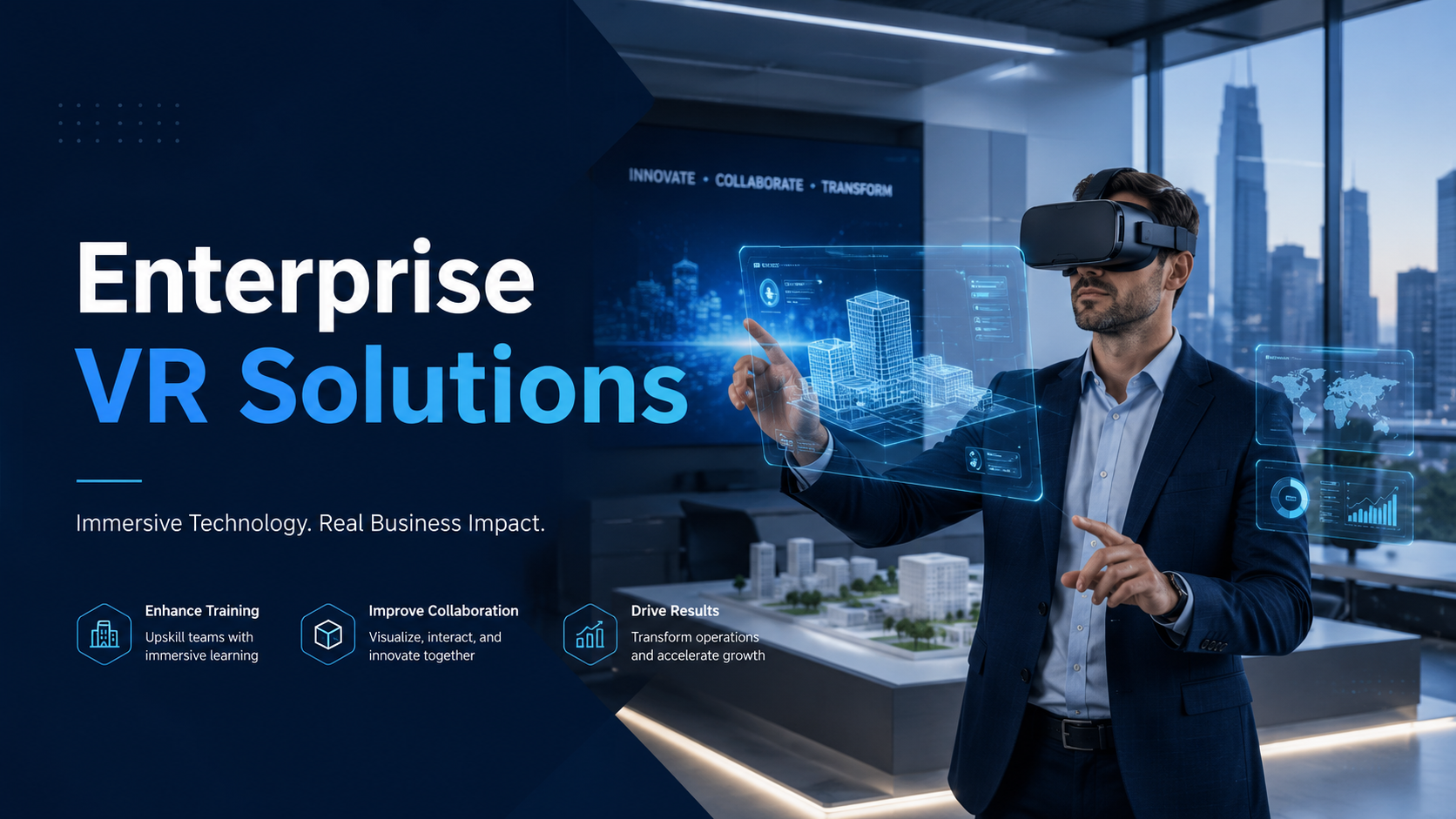
Enterprise VR adoption spans four primary departments: L&D teams use VR for safety training and soft skills development, marketing deploys VR at trade shows and brand activations, sales teams leverage VR for product demonstrations and virtual showrooms, and operations implements VR for remote assistance and facility planning. Each department requires different hardware configurations, content types, and deployment models.
Enterprise VR Solutions by Department: Where Virtual Reality Delivers Business Value
L&D and Training Applications
Learning and Development departments lead enterprise VR solutions adoption with measurable training outcomes. Safety training simulations reduce workplace incidents by 43% according to PwC studies, while maintaining consistent training quality across all locations. Manufacturing companies deploy VR forklift simulations that eliminate equipment damage during training, saving $50,000 annually per facility in damaged inventory and equipment repairs.
Soft skills training through VR creates repeatable scenarios for customer service representatives, managers, and leadership teams. Walmart trained over one million associates using VR for customer service scenarios, reducing training time from 8 hours to 15 minutes per module. DE&I training in VR increases perspective-taking scores by 33% compared to traditional video-based training, with participants experiencing scenarios from multiple viewpoints.
Technical skills training accelerates competency development for equipment operation and maintenance procedures. BMW reduced training time for assembly line workers by 40% using VR simulations that replicate exact factory conditions. Maintenance technicians practice rare failure scenarios impossible to recreate with actual equipment, improving first-time fix rates by 28%.
Onboarding programs compress orientation timelines from two weeks to three days through immersive facility tours, safety walkthroughs, and company culture experiences. New employees at Accenture complete VR onboarding modules that increase retention rates by 82% compared to traditional PowerPoint presentations.
Marketing and Brand Activation Use Cases
Marketing departments leverage corporate VR solutions to create memorable brand experiences that generate measurable engagement metrics. Trade show VR experiences generate 3x more booth traffic than traditional displays, with average dwell times increasing from 3 minutes to 12 minutes per visitor. Automotive brands like Audi and Mercedes-Benz deploy 20-30 VR headsets at auto shows, allowing visitors to experience vehicle features through virtual test drives.
Product launches reach global audiences simultaneously through virtual showrooms accessible from any location. Samsung’s Galaxy Unpacked events include VR experiences distributed to retail partners worldwide, enabling store associates to experience products before physical inventory arrives. Fashion brands create virtual runway shows where buyers examine garments in 360-degree detail, reducing sample production costs by 60%.
Brand storytelling through immersive narratives transforms passive viewers into active participants. The North Face created VR experiences of Yosemite National Park and Nepal base camps, generating 2.3 million social media impressions and increasing in-store conversion rates by 18%. Tourism boards deploy VR destination previews at travel agencies, increasing booking rates by 27% for featured locations.
Event activations incorporate multiplayer VR experiences for team building and conference engagement. Google deployed 400 VR headsets simultaneously at Google I/O, creating shared virtual spaces where attendees collaborated on coding challenges. Corporate team-building events use VR escape rooms and puzzle games that accommodate 8-12 participants simultaneously.
Sales Enablement and Product Demonstration
Sales teams transform complex product demonstrations into portable business VR solutions that eliminate logistics constraints. Industrial equipment manufacturers save $100,000 annually in shipping costs by replacing physical demo units with VR simulations. Caterpillar’s VR demonstrations allow customers to operate excavators and bulldozers in virtual job sites, testing equipment capabilities without visiting dealerships.
Customizable showrooms display entire product catalogs within limited physical spaces. Furniture retailers like Natuzzi use VR to show 500+ SKUs in 400-square-foot stores, increasing average transaction values by 35%. B2B sales teams configure virtual showrooms for specific client meetings, highlighting relevant products without maintaining physical inventory.
Remote sales presentations leverage shared VR sessions connecting participants across multiple locations. Pharmaceutical companies conduct virtual lab tours for healthcare providers, demonstrating manufacturing processes and quality controls without travel requirements. Real estate developers sell properties off-plan through VR walkthroughs, achieving 22% higher pre-construction sales rates.
Configuration tools visualize customization options in real-time, reducing decision cycles from weeks to hours. Boeing uses VR to help airlines configure aircraft interiors, testing seat layouts and cabin designs before manufacturing begins. Kitchen designers close sales 40% faster using VR visualization tools that render material and color changes instantly.
Rental vs. Purchase Decision Framework for Enterprise VR
The rental vs. purchase decision depends on deployment frequency, user volume, content requirements, and IT support capacity. Rental models work best for pilot programs, quarterly training sessions, and event-based deployments, while purchase makes sense for daily use cases with dedicated VR spaces.
When to Rent Enterprise VR Equipment
Pilot programs benefit from rental flexibility when testing enterprise virtual reality solutions effectiveness before capital investment. Organizations rent 10-20 headsets for 30-90 day pilots, investing $5,000-$15,000 to validate use cases instead of $50,000+ for equipment purchase. Failed pilots return equipment without depreciation losses or disposal requirements.
Quarterly or annual training sessions with 50-500 participants create surge demands that exceed base capacity. Construction companies rent 100+ headsets for annual safety certification programs, paying $30,000 for one-week rentals versus $300,000 for equipment used four weeks annually. Rental providers handle logistics, setup, and technical support during peak periods.
Trade shows and events requiring 10-50 headsets for 3-5 days generate clear rental ROI. Exhibition costs include $2,000-$5,000 for VR rentals compared to $20,000-$50,000 for purchase plus shipping, insurance, and storage between events. Rental providers deliver pre-configured headsets with branded content loaded and tested.
Multi-location deployments benefit from local rental fulfillment versus shipping owned equipment. Global companies conducting simultaneous training across 10 cities save $15,000 in shipping costs and avoid customs delays by renting locally. Equipment arrives sanitized, charged, and configured for immediate deployment.
Technology refresh cycles favor rentals when latest hardware matters. Marketing agencies rent cutting-edge headsets for client presentations, accessing Quest 3 or Apple Vision Pro without waiting for procurement cycles. Annual rental costs of $6,000 per headset remain below three-year total cost of ownership including upgrades.
When to Purchase VR Hardware
Daily use cases with dedicated VR training rooms justify equipment ownership. Police academies operating de-escalation training 250 days annually achieve payback within six months. Ownership eliminates scheduling conflicts and enables spontaneous training sessions without rental lead times.
Organizations with in-house VR content development require consistent hardware access for testing and iteration. Game studios and training companies need permanent equipment for quality assurance, maintaining 20-30 headsets across different models and firmware versions. Development teams test builds multiple times daily, making rental logistics impractical.
Custom security configurations and air-gapped networks mandate equipment ownership. Defense contractors and financial institutions implement proprietary security protocols incompatible with rental fleet management systems. Owned equipment receives custom firmware, encryption, and network isolation impossible with shared rental inventory.
Dedicated IT support for VR hardware maintenance reduces total cost of ownership below rental rates. Universities with existing AV/IT departments add VR support without incremental headcount. In-house technicians perform repairs, updates, and troubleshooting at marginal cost versus rental support fees.
Hybrid Models: Rent-to-Own and Surge Capacity
Rent-to-own programs apply 60-80% of rental fees toward eventual purchase, combining flexibility with ownership benefits. Organizations test equipment for 6-12 months before committing to purchase, with rental payments reducing final acquisition costs. Failed pilots return equipment with minimal financial exposure.
Core fleet ownership supplemented by rentals handles demand variability efficiently. Training centers maintain 20 permanent headsets for regular classes while renting 30 additional units for new employee onboarding surges. Base capacity serves 80% of needs with rentals covering peak periods.
Hardware evaluation through short-term rentals informs fleet upgrade decisions. IT departments rent five units of competing models for 30-day comparisons before purchasing 100+ headsets. Side-by-side testing reveals performance differences not apparent in specifications.
Seasonal rental supplements accommodate predictable demand patterns. Retailers add 50 rental headsets during November-December for holiday customer experiences. Universities rent equipment for summer camps without maintaining inventory during academic terms.
Enterprise VR Hardware Requirements and Specifications
Enterprise VR deployments require different hardware configurations than consumer setups. Standalone headsets like Meta Quest 3 and Pico 4 Enterprise dominate business deployments due to wireless operation, device management tools, and bulk deployment features.
Standalone Headsets for Enterprise Deployment
Meta Quest 3 leads VR solutions for enterprise with 2064×2208 per-eye resolution, 120Hz refresh rate, and Meta for Business accounts enabling centralized management. Bulk deployment tools push applications and settings to 100+ headsets simultaneously. Kiosk mode locks devices to specific applications, preventing unauthorized access. Quest 3’s $649 price point delivers enterprise features at 40% lower cost than Quest Pro.
Pico 4 Enterprise provides 2160×2160 per-eye resolution with enterprise-specific features including remote assistance, cloud streaming, and location tracking. Content distribution servers deploy applications locally without internet connectivity. Face and eye tracking enables advanced training analytics. European data residency options address GDPR requirements for EU deployments.
HTC Vive Focus 3 offers swappable batteries enabling continuous operation during multi-day events. Magnesium alloy construction withstands commercial use better than plastic competitors. Quick-release face gaskets facilitate cleaning between users. OpenXR support ensures compatibility with industry-standard development tools.
Varjo Aero delivers human-eye resolution (35 PPD) for engineering and medical applications requiring visual precision. Automatic IPD adjustment accommodates users without manual configuration. Professional-grade construction includes active cooling for extended sessions. Price premium ($1,990) justified for specialized use cases requiring maximum visual fidelity.
PC-Tethered Systems for High-Fidelity Applications
Engineering visualization demands PC-tethered systems for computational complexity exceeding standalone capabilities. CAD model reviews with millions of polygons require RTX 4090 graphics cards and 64GB system RAM. Varjo Aero connected to engineering workstations enables design reviews with sub-millimeter precision.
Location-based entertainment facilities deploy HTC Vive Pro 2 with SteamVR tracking for room-scale experiences. Lighthouse base stations track multiple users across 10×10 meter spaces. Wireless adapters eliminate trip hazards while maintaining PC-grade graphics quality. Commercial licensing includes venue-specific support and warranty extensions.
Workstation specifications determine experience quality and user comfort. RTX 4070 graphics cards provide minimum viable performance for professional applications. 32GB RAM prevents frame drops during complex scene loading. Dedicated USB 3.0 controllers eliminate bandwidth bottlenecks causing tracking issues. NVMe SSDs reduce application load times from minutes to seconds.
Cable management systems prevent equipment damage and user injuries. Retractable ceiling pulleys keep cables above head height. Cable sleeves protect against wear at connection points. Wireless adapters eliminate cables entirely but add $350 per headset and reduce battery life to 2-3 hours.
Supporting Infrastructure and Accessories
Charging infrastructure scales with deployment size and usage patterns. 10-bay charging stations occupy 2 square feet while maintaining headsets at 100% charge. Smart chargers prevent overcharging and extend battery lifespan. Mobile charging carts transport and charge 30 headsets simultaneously for multi-room deployments.
Hygiene protocols protect users and extend equipment lifespan. Disposable face covers ($0.50 each) provide sanitary barriers between users. UV-C sanitization cabinets disinfect headsets in 60 seconds without chemical residues. Lens cleaning kits prevent scratches that degrade visual quality. Antibacterial wipes remove makeup and skin oils after each session.
Boundary marking systems prevent collisions and define safe play areas. Foam floor tiles create tactile boundaries users feel through shoes. LED strip lights provide visual boundaries visible to spectators. Retractable barrier posts establish temporary VR zones in multipurpose spaces. Guardian boundary systems display virtual walls before users reach physical limits.
Network infrastructure supports content delivery and multi-user experiences. Local content servers eliminate internet dependencies for mission-critical training. 50 Mbps per headset enables cloud streaming for remote rendering applications. Wi-Fi 6E access points reduce latency below 20ms for responsive interactions. Network segregation isolates VR traffic from corporate systems.
Content Strategy for Enterprise VR Solutions
Enterprise VR content falls into three categories: off-the-shelf applications available on app stores, custom-developed experiences tailored to company needs, and platform-based content that combines templates with customization.
Off-the-Shelf Enterprise VR Applications
Immersive learning platforms accelerate enterprise VR deployment with pre-built content libraries. Strivr offers 30+ soft skills modules covering customer service, leadership, and DE&I topics. Pricing starts at $50,000 annually for 100 users with unlimited module access. Bodyswaps provides avatar-based role-playing for difficult conversations, reducing HR escalations by 35%.
Safety training libraries ensure compliance while reducing incident rates. PIXO VR includes 50+ OSHA-compliant safety modules for construction, manufacturing, and energy sectors. Subscription pricing at $500 per user annually includes quarterly content updates. Virtual safety training reduces workers’ compensation claims by 43% within 12 months.
Collaboration platforms replace video conferencing with spatial presence. Spatial supports 50 simultaneous participants in virtual meeting rooms with 3D model sharing. Horizon Workrooms integrates with Microsoft Teams and Slack for hybrid meetings. Arthur provides persistent virtual offices where remote teams maintain continuous presence.
Enterprise licensing models accommodate various deployment scales. Per-seat annual subscriptions range from $300-$1,500 depending on features and support levels. Site licenses for 500+ users reduce per-seat costs by 40%. Perpetual licenses with maintenance agreements suit organizations preferring capital expenditure over operational costs.
Custom VR Content Development
Development costs scale with complexity and interactivity requirements. Simple 360-video experiences with hotspots cost $50,000-$75,000 for 10-minute modules. Interactive simulations with branching scenarios range from $150,000-$250,000. Physics-based training with haptic feedback exceeds $500,000 for comprehensive programs.
Timeline expectations inform project planning and budget allocation. Basic training modules require 3-4 months from concept to deployment. Complex simulations with custom assets need 9-12 months including user testing and iteration. Agile development delivers minimum viable products in 6-8 weeks for rapid validation.
Unity dominates enterprise VR development with 65% market share due to extensive asset stores and developer communities. Unreal Engine serves high-fidelity visualization projects requiring photorealistic rendering. WebXR enables browser-based deployment without application installation, reducing IT friction.
Content management systems centralize version control and deployment. LMS integration tracks completion rates and assessment scores. Analytics dashboards measure engagement metrics and identify improvement opportunities. A/B testing frameworks optimize training effectiveness through controlled experiments.
Platform-Based Content Creation
No-code authoring tools democratize VR content creation for subject matter experts. CenarioVR’s drag-and-drop interface creates interactive scenarios without programming knowledge. Uptale provides templates for common training situations modifiable through web interfaces. ThingLink converts 360-degree photos into interactive learning experiences in hours versus weeks.
Template libraries accelerate content development for standard use cases. Customer service templates include common scenarios like complaint handling and upselling. Safety templates cover equipment operation, hazard identification, and emergency procedures. Onboarding templates provide facility tours, culture introductions, and compliance training.
360-video production offers rapid content creation for real-world environments. Professional 360 cameras ($5,000-$15,000) capture training environments in actual facilities. Post-production software adds interactive elements, annotations, and assessments. Cloud-based editing platforms enable collaborative content development across distributed teams.
Platform integration connects VR content with existing enterprise systems. SCORM compliance ensures LMS compatibility for training records. Single sign-on (SSO) eliminates separate login credentials. API connections sync user progress with HR information systems. Analytics feeds integrate with business intelligence platforms.
Implementation Roadmap: From Pilot to Scale
Successful enterprise VR implementation follows a phased approach: pilot program with 10-20 users, departmental rollout to 100-200 users, and enterprise-wide deployment. Each phase requires different support structures, success metrics, and stakeholder engagement strategies.
Phase 1: Pilot Program Design (Months 1-3)
Use case selection determines pilot success probability and organizational buy-in. High-impact, low-complexity scenarios like safety training or product demonstrations validate VR effectiveness quickly. Measurable KPIs include training completion time (typically 50% reduction), error rates (30-40% improvement), and engagement scores (80%+ satisfaction).
Participant recruitment requires demographic and skill diversity for valid results. Include technology-resistant employees alongside early adopters to identify adoption barriers. Select participants from target departments rather than volunteers to ensure representative feedback. Groups of 15-20 participants provide statistical significance while remaining manageable.
Rental-based pilots minimize financial risk while testing corporate VR solutions. Three-month rentals of 20 headsets cost $15,000-$20,000 including setup support and training. Rental providers offer pilot packages with flexible terms and extension options. Failed pilots return equipment without depreciation losses or disposal logistics.
Data collection methods capture quantitative and qualitative insights. Pre/post assessments measure knowledge retention improvements averaging 75% higher than traditional training. Time-on-task metrics reveal 40% efficiency gains in skill development. User surveys identify friction points and improvement opportunities. Session recordings enable detailed behavioral analysis.
Phase 2: Departmental Rollout (Months 4-9)
Scaling from pilot to department-wide deployment requires infrastructure and process maturation. 100-200 users stress-test systems revealing scalability issues invisible during pilots. Dedicated VR training rooms accommodate 8-12 simultaneous users with proper ventilation and safety equipment. Scheduling systems manage equipment allocation across multiple sessions daily.
Facilitator certification programs ensure consistent delivery quality. Two-day training programs cover equipment operation, troubleshooting, and session management. Certified facilitators achieve 95% session completion rates versus 70% for untrained staff. Train-the-trainer models scale expertise across multiple locations efficiently.
Content library expansion addresses diverse learning objectives within departments. Initial pilots typically test 2-3 modules while departmental rollouts require 10-15 modules. Content roadmaps prioritize high-frequency, high-impact training scenarios. User feedback drives iterative improvements increasing satisfaction scores from 75% to 90%.
IT integration eliminates manual processes that limit scalability. Single sign-on (SSO) reduces login friction and improves security. Mobile device management (MDM) platforms push updates to 100+ headsets simultaneously. Network configuration optimizes bandwidth allocation for concurrent users. Help desk ticketing systems track issues and resolution times.
Phase 3: Enterprise Deployment (Months 10-12)
Multi-site rollout strategies accommodate geographic and cultural differences. Regional deployment teams understand local regulations and languages. Phased geographic expansion identifies and resolves location-specific challenges. Global content libraries include localized versions for major markets.
Change management programs drive adoption beyond early enthusiasts. Executive sponsors communicate strategic importance through town halls and newsletters. Success stories from pilot participants build grassroots enthusiasm. Incentive programs reward departments achieving adoption targets. Resistance management identifies and addresses specific concerns proactively.
Support desk operations scale with user populations and geographic distribution. Tier-1 support resolves 80% of issues through documentation and remote assistance. Tier-2 support handles hardware replacements and complex troubleshooting. Service level agreements guarantee 4-hour response times for critical issues. Knowledge bases reduce support ticket volume by 60%.
ROI measurement justifies continued investment and expansion. Training effectiveness metrics show 4x knowledge retention improvement. Cost reduction calculations include travel savings ($2,000 per employee annually) and reduced training time (50% reduction). Time savings multiply hourly rates by efficiency gains across user populations. Safety improvements reduce insurance premiums and workers’ compensation claims.
Vendor Evaluation Criteria for Enterprise VR Solutions
Evaluating VR solution providers requires assessing hardware supply chains, content capabilities, support services, and integration options. The right vendor depends on whether you need turnkey rental packages, custom development, or platform licenses.
Hardware Vendor Assessment
Inventory depth determines ability to support large-scale deployments reliably. Leading rental providers maintain 500+ headsets enabling simultaneous 200-unit deployments with backup inventory. Geographic distribution centers reduce shipping times and costs. Real-time inventory systems prevent overbooking during peak seasons.
Geographic coverage impacts multi-location deployments and support availability. National providers serve all major markets with local fulfillment. International capabilities matter for global organizations requiring consistent service standards. Same-day delivery in major cities enables rapid response to urgent requests.
Setup support options range from white-glove service to self-service models. On-site technicians handle complete setup for $2,000-$5,000 per event. Remote assistance via video calls reduces costs while maintaining quality. Self-service includes detailed documentation and video tutorials. Hybrid models provide on-site support for day one with remote assistance thereafter.
Equipment condition standards ensure consistent user experiences. Grade-A equipment shows no visible wear with latest firmware installed. Hygiene protocols include UV sanitization and new face gaskets. Pre-deployment testing verifies all functions including tracking, controllers, and audio. Replacement guarantees provide backup units within 24 hours for failures.
Content Partner Evaluation
Portfolio relevance accelerates deployment with industry-specific content. Vertical specialists understand regulatory requirements and industry terminology. Horizontal providers offer broader catalogs requiring more customization. Reference customers in similar industries validate vendor capabilities.
Customization capabilities determine alignment with specific requirements. Template modification costs 50-75% less than ground-up development. Branding options include logos, colors, and custom environments. Scenario builders enable non-technical users to create variations. API access allows deep integration with enterprise systems.
Content update frequency maintains relevance and addresses user feedback. Quarterly updates add new scenarios and improve existing modules. Bug fixes deploy within 48 hours for critical issues. Version control systems maintain compatibility with older hardware. Rollback capabilities restore previous versions if updates cause issues.
Licensing flexibility accommodates various business models and scales. Perpetual licenses suit stable requirements with predictable user counts. Subscription models align costs with usage and include updates. Per-use pricing works for irregular training schedules. Enterprise agreements provide volume discounts and simplified administration.
Support and Service Requirements
SLA terms define vendor accountability and response commitments. Hardware replacement within 24 hours prevents training cancellations. Technical support response within 4 hours resolves most issues same-day. Uptime guarantees of 99.5% ensure availability for critical training. Financial penalties for SLA breaches provide vendor motivation.
Training services accelerate internal capability development. Administrator training covers device management and troubleshooting. Facilitator training includes session management and participant coaching. Content creator training enables internal development capabilities. Certification programs validate competency and provide ongoing education.
Integration support reduces implementation friction with existing systems. LMS integration specialists configure SCORM/xAPI connections. SSO setup eliminates password management overhead. API documentation enables custom integrations. Professional services assist with complex enterprise architectures.
Data security certifications validate vendor trustworthiness. SOC 2 Type II certification demonstrates security controls. GDPR compliance ensures European data protection. HIPAA compliance enables healthcare deployments. Penetration testing reports verify security posture.
Frequently Asked Questions
What’s the typical ROI timeline for enterprise VR solutions?
Most organizations achieve positive ROI within 12-18 months of deployment. Training-focused implementations see breakeven at 8-12 months through reduced travel costs, decreased training time, and improved retention rates. A 500-person organization saves $1 million annually in travel costs alone when replacing quarterly in-person training with VR. Marketing and sales applications generate ROI through increased conversion rates (typically 20-30% improvement) and reduced physical demo costs.
How many VR headsets does an enterprise need for effective training programs?
Training program requirements depend on participant numbers and session frequency. Organizations training 100 employees monthly need 10-15 headsets for sequential sessions. Simultaneous training for onboarding cohorts requires one headset per participant plus 20% spares. Most enterprises start with 20-30 headsets for pilot programs, scaling to 50-100 for departmental deployments. Rental surge capacity handles peak periods without overinvestment in idle equipment.
Can enterprise VR solutions work without internet connectivity?
Yes, most enterprise VR deployments operate offline for security and reliability. Content pre-loads onto headsets via USB or local network connections. Offline mode eliminates latency issues and bandwidth constraints. Training continues during internet outages without disruption. Analytics data syncs when connectivity returns. Cloud-dependent features like multiplayer collaboration require internet, but core training functions work offline.
What are the insurance and liability considerations for enterprise VR deployment?
General liability insurance typically covers VR activities with proper safety protocols. Additional coverage may be required for public-facing deployments at events. Participant waivers address motion sickness and collision risks. Safety briefings document risk acknowledgment. Boundary systems and spotters reduce accident probability. Equipment rental agreements often include liability coverage. Consult insurance providers for specific policy requirements.
How do enterprise VR solutions integrate with existing learning management systems?
Modern VR platforms support SCORM and xAPI standards for LMS integration. User progress, scores, and completion certificates sync automatically. Single sign-on (SSO) eliminates separate login requirements. Analytics dashboards aggregate VR metrics with traditional training data. APIs enable custom integrations for proprietary systems. Most major LMS platforms (Cornerstone, SAP SuccessFactors, Workday Learning) include VR integration capabilities.
What’s the difference between enterprise and consumer VR hardware?
Enterprise VR hardware includes device management tools, bulk deployment features, and commercial warranties. Kiosk modes lock devices to specific applications. Centralized management consoles control multiple headsets simultaneously. Commercial warranties cover business use with faster replacement terms. Enterprise accounts access priority support and volume pricing. Hardware construction uses more durable materials for frequent use. Hygiene-focused designs facilitate cleaning between users.
How much space is required for enterprise VR training rooms?
Minimum viable VR training spaces require 6×6 feet (2×2 meters) per user for seated experiences. Room-scale training needs 10×10 feet (3×3 meters) per participant. Multi-user sessions require 15-foot minimum separation between play areas. Ceiling heights of 9+ feet prevent controller collisions. Storage areas accommodate charging stations and equipment carts. Ventilation systems handle heat from multiple users and equipment. Acoustic treatments reduce noise in adjacent spaces.
Conclusion
Enterprise VR solutions transform training, marketing, and sales operations through immersive experiences that deliver measurable business value. The rental-versus-purchase decision framework enables organizations to optimize deployment costs while maintaining flexibility for scaling. Department-specific use cases from safety training to product demonstrations justify investment through quantifiable ROI metrics.
Successful implementation follows a proven three-phase roadmap from pilot programs through enterprise-wide deployment. Hardware selection, content strategy, and vendor evaluation criteria provide clear decision frameworks for VR initiatives. Organizations deploying VR solutions report 40-75% improvements in training effectiveness, 30% reduction in time-to-competency, and millions in travel cost savings.
The enterprise VR market continues maturing with improved hardware, expanding content libraries, and refined deployment models. Rental-based deployments eliminate barriers to entry while enabling rapid scaling for events and training surges. As VR technology becomes increasingly accessible and affordable, enterprises that embrace immersive solutions gain competitive advantages through superior training, compelling marketing experiences, and innovative sales tools.
Ready to explore enterprise VR solutions for your organization? Start with a rental-based pilot program to validate use cases and build stakeholder support. Contact enterprise VR solution providers for customized proposals based on your specific requirements, timeline, and budget. The future of enterprise training, marketing, and sales is immersive – position your organization at the forefront of this transformation.