Virtual reality has evolved from tech novelty to essential brand activation tool, but managing VR experiences at events requires specialized expertise, equipment, and support systems that most marketing teams lack internally. Full-service VR activation bridges this gap by providing end-to-end management of your immersive experiences, from strategic planning through post-event analytics.
This guide examines what comprehensive VR activation services include, how different event types require unique service configurations, and what to expect when partnering with a full-service provider for your next brand experience.
What Full-Service VR Activation Actually Includes
Full-service VR activation extends beyond equipment rental to encompass strategic planning, content curation, technical setup, on-site management, and performance measurement. Unlike self-service rentals where you handle logistics yourself, full-service providers manage every operational detail while you focus on your event objectives and guest experience.
Pre-Event Strategy and Planning
Strategic planning begins 6-12 weeks before your event, establishing the foundation for successful VR activation. Your provider conducts initial discovery sessions to understand activation goals whether driving qualified leads at a trade show, creating memorable brand moments at a product launch, or delivering immersive training at a corporate event.
Audience analysis shapes experience selection by evaluating attendee demographics, technical comfort levels, and expected dwell time. B2B technology conferences might support complex 5-minute demonstrations, while consumer festivals require quick 90-second experiences that maximize throughput. This analysis prevents the common mistake of deploying sophisticated VR content to audiences expecting simple, accessible interactions.
Venue assessment identifies practical constraints that impact activation design. Power availability determines equipment configuration—standalone headsets for venues with limited electrical access, or high-performance PC-powered systems where infrastructure supports it. Traffic flow analysis positions VR stations to attract participants without creating bottlenecks, while acoustic considerations ensure voice-guided experiences remain audible in noisy exhibition halls.
Timeline development creates accountability checkpoints from concept approval through day-of execution. Key milestones include content selection (8 weeks out), equipment reservation (6 weeks), staff scheduling (4 weeks), pre-event testing (1 week), and on-site setup (day before). This structured approach prevents last-minute scrambling that compromises activation quality.
Equipment Curation and Content Selection
Hardware selection balances performance requirements with practical constraints. Standalone headsets like Meta Quest 3 offer mobility and quick setup for roaming activations, while tethered systems like HTC Vive Pro deliver superior graphics for stationary installations. Full-service providers maintain diverse inventory to match specific use cases rather than forcing clients into one-size-fits-all solutions.
Content curation aligns VR experiences with brand messaging and audience expectations. Automotive brands might deploy virtual test drives showcasing vehicle features, while healthcare companies use anatomical visualizations to explain complex procedures. The best providers maintain libraries spanning industries and use cases, eliminating the need for expensive custom development unless unique requirements demand it.
Custom branding transforms generic VR content into brand-specific experiences. This ranges from simple logo placement within virtual environments to complete visual redesigns matching brand guidelines. Advanced integrations include product placement within experiences, branded avatar clothing, and custom voiceovers using brand spokespersons.
Backup equipment planning ensures activation continuity when technology fails. Professional providers maintain 20-30% equipment redundancy on-site, with pre-configured backup units ready for immediate deployment. This includes spare headsets, controllers, batteries, and even complete backup stations for mission-critical activations where downtime isn’t acceptable.
On-Site Execution and Support
Professional setup teams arrive 4-6 hours before event opening, handling all technical configuration while your staff focuses on other event preparations. This includes headset firmware updates, play area boundary configuration, content installation, and network connectivity testing. Experienced technicians anticipate common issues like wireless interference in crowded venues or tracking problems from reflective surfaces.
Brand ambassador training transforms your staff into confident VR facilitators. Full-service providers conduct 60-90 minute training sessions covering headset operation, common troubleshooting, hygiene protocols, and experience talking points. This training includes role-playing exercises where staff practice guiding nervous first-time users and managing equipment transitions between participants.
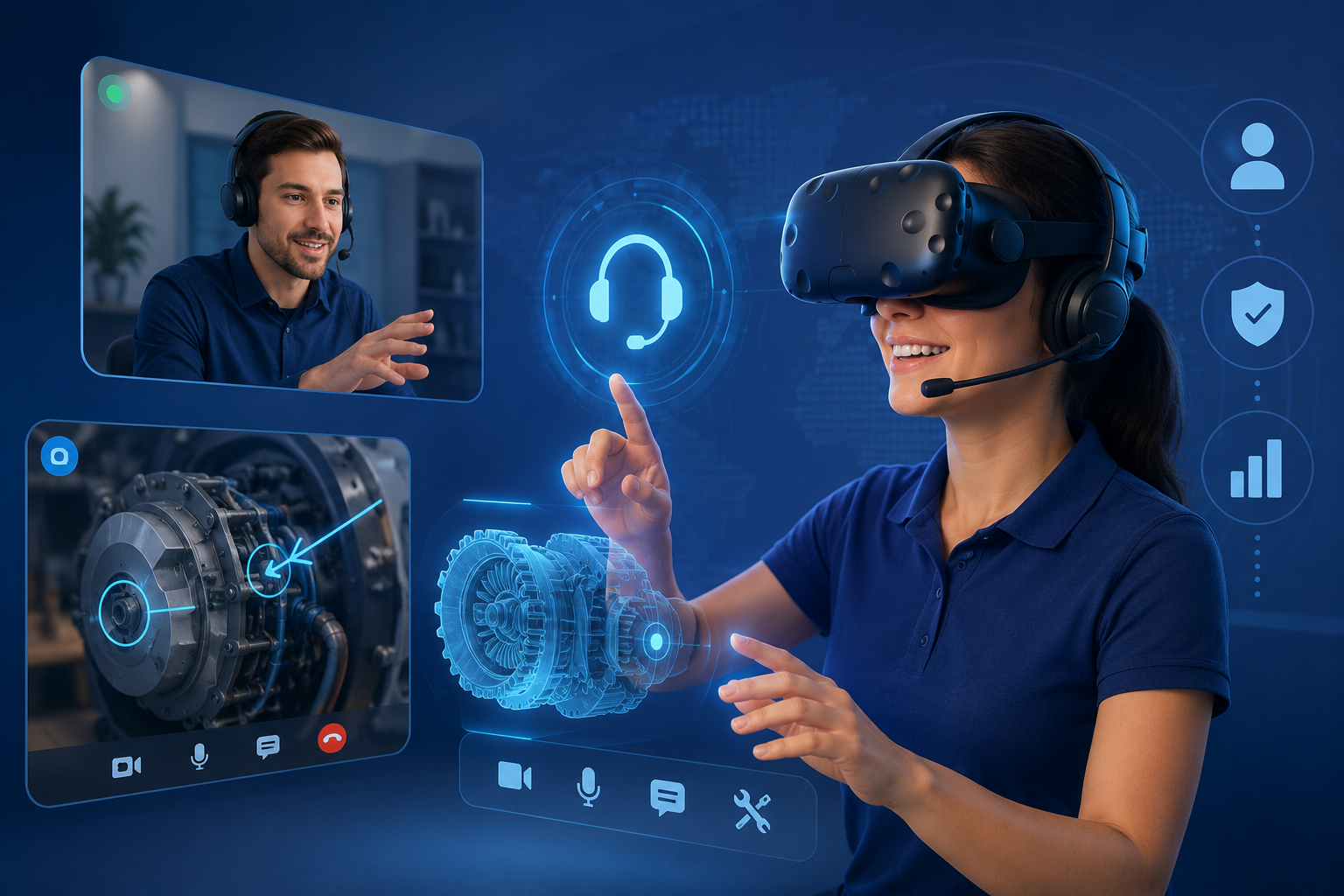
Real-time technical support maintains activation quality throughout your event. Dedicated technicians monitor equipment performance, address user issues, and implement fixes without disrupting participant flow. This might involve recalibrating tracking sensors when afternoon sunlight affects performance, or switching to backup units when batteries deplete faster than expected in cold environments.
Queue management systems optimize throughput while maintaining experience quality. Digital sign-ups via tablets or QR codes let participants reserve time slots while exploring other booth activities. Queue displays show estimated wait times, reducing abandonment from uncertainty. Some providers offer virtual queue systems sending text notifications when participants’ turns approach, maximizing both efficiency and satisfaction.
VR Activation Types and Their Service Requirements
Different activation goals require distinct service configurations. Trade show booths need high-throughput experiences with lead capture, while training sessions require longer-form content with progress tracking. Understanding these variations helps determine the right full-service package for your objectives.
Trade Show and Conference Activations
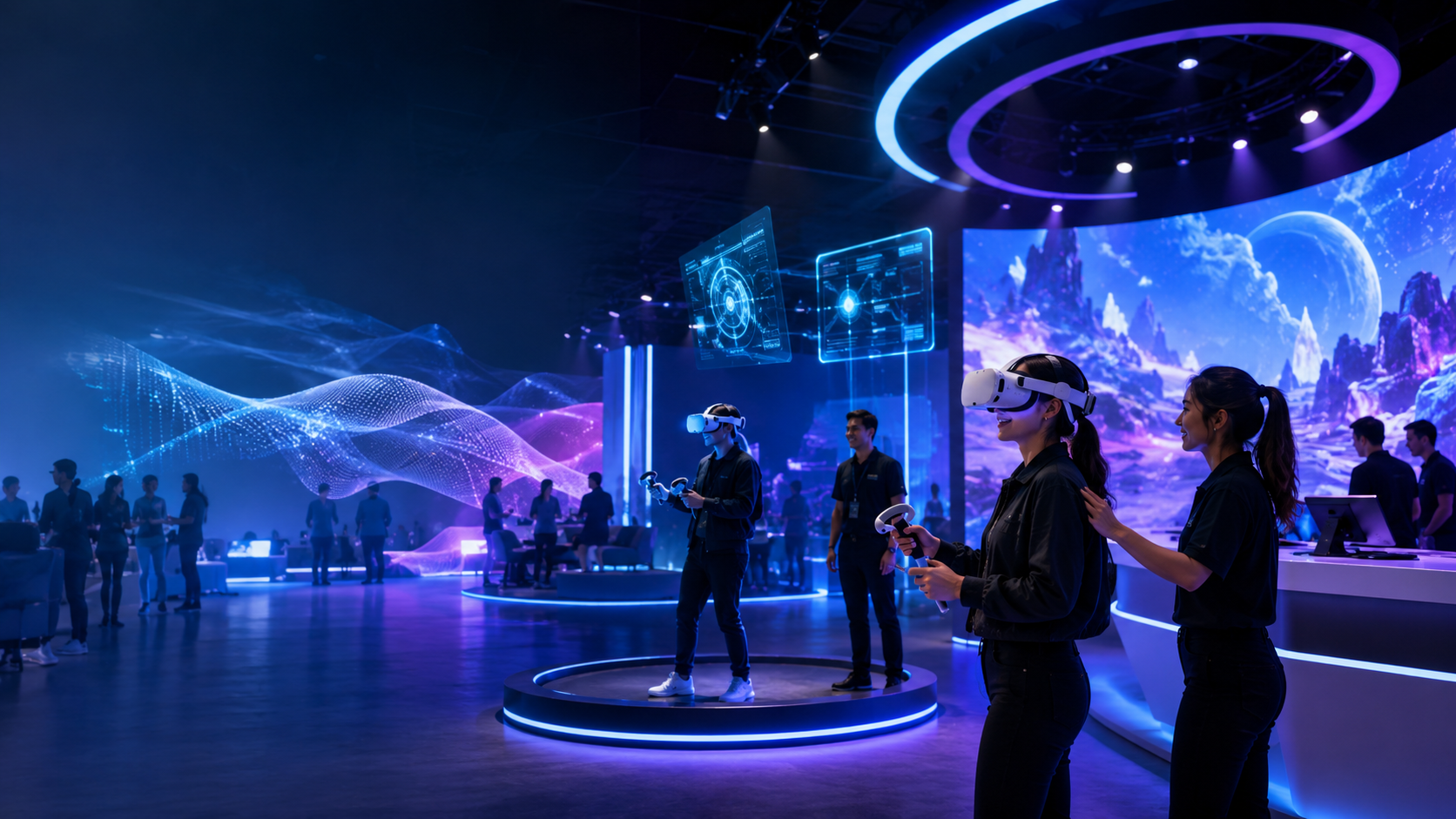
Trade show VR activations prioritize visitor attraction and lead generation within limited booth footprints. Successful deployments feature 2-3 minute experiences that deliver key messages while maintaining steady traffic flow. A 10×20 booth might accommodate three VR stations processing 60-80 participants per hour, generating substantial foot traffic in competitive exhibition environments.
Lead capture integration connects VR participation with customer relationship management systems. Badge scanning before experiences automatically populates contact databases, while post-experience surveys capture qualification data and follow-up preferences. Advanced integrations track which VR content sections generated highest engagement, informing sales team follow-up strategies.
Multi-station configurations accommodate varying audience sizes and interest levels. Primary stations run full experiences for engaged prospects, while secondary stations offer abbreviated demos for casual visitors. This tiered approach prevents committed prospects from abandoning due to long waits while still serving high visitor volumes.
Competitive differentiation emerges when VR experiences showcase capabilities impossible through traditional media. Manufacturing companies use VR to transport visitors inside industrial equipment, demonstrating internal mechanisms without physical cutaways. Software companies visualize data flows through three-dimensional environments, making abstract concepts tangible and memorable.
Product Launch and Brand Experiences
Product launch activations leverage VR’s ability to create impossible scenarios that amplify brand narratives. Beverage brands transport participants to source locations—Colombian coffee farms or Scottish distilleries—creating emotional connections beyond product features. Fashion brands enable virtual runway experiences where participants view collections from designer perspectives.
Social sharing amplifies activation reach beyond physical participants. Full-service providers configure sharing stations where participants receive branded photos or videos of themselves in VR experiences. QR codes link to cloud-hosted content for immediate social media posting, while branded frames and overlays ensure consistent visual identity across user-generated content.
Celebrity and influencer integrations add exclusivity to VR activations. Participants might receive virtual coaching from professional athletes, explore movie sets with directors, or attend virtual concerts with musicians. These experiences create memorable moments that generate organic social buzz and media coverage beyond paid promotion.
Multi-city roadshow logistics require sophisticated coordination across venues, schedules, and local regulations. Full-service providers manage equipment transportation, customs documentation for international events, and local staffing in each market. Centralized project management ensures consistent experience delivery whether activating in New York, London, or Tokyo.
Corporate Training and Team Building
Corporate training activations demand different service configurations than marketing events. Sessions run longer (30-60 minutes), require private spaces for confidential content, and need robust data capture for compliance documentation. Full-service providers adapt their delivery models accordingly, often deploying trainers rather than brand ambassadors.
Learning management system integration tracks individual progress through training modules. VR experiences capture performance metrics—decision accuracy, reaction times, procedure compliance—that feed into corporate training databases. This creates audit trails for regulated industries while identifying knowledge gaps requiring additional instruction.
Scenario-based modules let employees practice high-stakes situations without real-world consequences. Medical device companies use VR to train surgical procedures before touching actual equipment. Retail chains simulate Black Friday crowds for customer service training. Construction firms enable safety violation identification in virtual job sites.
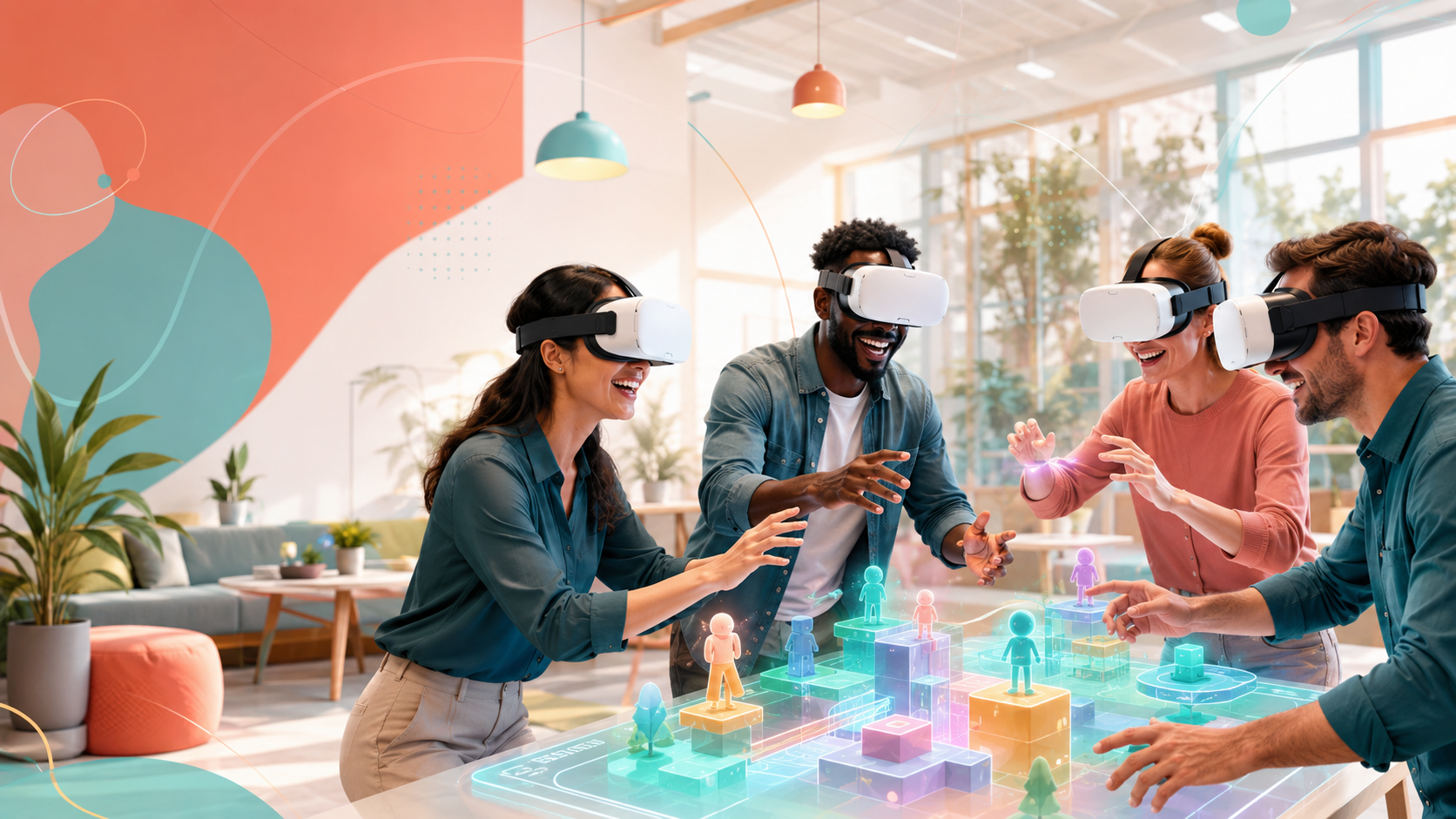
Team collaboration experiences unite distributed workforces through shared virtual environments. Remote participants join the same virtual spaces, solving problems together despite physical separation. These activations require synchronized headset deployment to multiple locations, coordinated session scheduling, and facilitator training across time zones.
Pricing Models for Full-Service VR Activation
Full-service VR activation pricing reflects the comprehensive nature of the offering, typically structured as project-based fees rather than daily equipment rates. Understanding cost drivers helps you budget effectively and compare providers based on total value rather than hardware costs alone.
Cost Components and Pricing Structures
Base service fees cover strategic planning, project management, and execution coordination regardless of event size. These typically range from $2,500-$10,000 depending on activation complexity and provider expertise. This investment ensures professional delivery rather than improvised execution that risks brand reputation.
Equipment costs scale with headset quantity and sophistication. Consumer-grade standalone headsets rent for $150-$300 per day, while professional PC-powered systems command $500-$1,000 daily. Multi-day events often receive discounted rates, with weekly rentals priced at 3-4 times daily rates rather than seven times.
Staffing represents a significant cost component, particularly for consumer-facing activations requiring trained brand ambassadors. On-site technicians charge $500-$1,500 per day depending on expertise level and market rates. Brand ambassadors cost $300-$800 per day, with premium rates for specialized skills like foreign language capabilities or technical product knowledge.
Content licensing varies dramatically based on experience type and exclusivity. Generic library content might be included in base fees, while premium experiences cost $500-$5,000 per event. Custom content development ranges from $10,000 for simple brand integrations to $100,000+ for fully bespoke experiences.
Travel and logistics add 15-30% to total costs for out-of-market events. This includes equipment transportation, staff travel expenses, and insurance for interstate or international shipments. Local providers might offer lower total costs even with higher base rates by eliminating travel expenses.
Budget Ranges by Activation Type
Small corporate events serving 10-50 participants typically cost $5,000-$15,000 for full-service delivery. This includes 2-4 headsets, one technician, basic content library access, and half-day setup. Internal training sessions at corporate offices fall into this category, as do executive briefing center demonstrations.
Trade show booth activations for three-day events range from $15,000-$40,000 depending on scale and complexity. Standard packages include 4-6 headsets, two brand ambassadors, lead capture integration, and full technical support. Premium packages add custom branded content, additional stations, and extended operating hours.
Multi-city roadshows require $50,000-$200,000+ budgets accounting for repeated setup/breakdown cycles, equipment transportation, and local staff in each market. A 10-city tour might cost $100,000 for full-service delivery including all equipment, staffing, and logistics, compared to $250,000+ when adding custom content development.
Ongoing training programs cost $2,000-$5,000 per session when delivered regularly. Volume discounts apply for committed schedules, with monthly sessions potentially costing 50% less per delivery than one-off events. This pricing model makes VR training accessible for ongoing employee development rather than special occasions only.
Selecting a Full-Service VR Activation Partner
Choosing the right full-service provider determines activation success. Beyond equipment inventory, evaluate their strategic capabilities, execution track record, and ability to align VR experiences with your specific business objectives.
Essential Evaluation Criteria
Portfolio evaluation reveals provider capabilities beyond marketing claims. Request case studies from similar industries showing challenge-approach-results narratives. A provider experienced with automotive trade shows might struggle with healthcare compliance requirements, making industry-specific experience valuable.
Technical expertise across platforms ensures flexibility as VR technology evolves. Providers locked into single hardware ecosystems limit your options and potentially force suboptimal solutions. Look for partners maintaining relationships with multiple manufacturers and staying current with emerging platforms.
Project management maturity separates professional providers from hobbyists with equipment. Established providers use formal project management methodologies, provide dedicated account managers, and maintain clear communication protocols. They should present detailed project plans, risk registers, and escalation procedures during initial consultations.
Insurance and liability coverage protects both parties when incidents occur. Professional providers carry general liability insurance ($2-5 million minimum), equipment coverage, and errors/omissions protection. They should readily provide certificates of insurance and add your organization as additional insured for event dates.
Performance measurement capabilities indicate whether providers view themselves as equipment suppliers or strategic partners. Advanced providers offer real-time analytics dashboards, detailed post-event reports, and concrete recommendations for future optimizations. They should articulate how VR activation metrics connect to your broader business objectives.
Red Flags to Avoid
Hardware-first providers pushing specific equipment without understanding your objectives often deliver poor results. VR activation success depends on strategic alignment, not technology specifications. Providers leading with equipment features rather than business outcomes likely lack strategic depth.
Missing backup equipment or contingency planning creates unacceptable risk for professional events. Ask specifically about redundancy protocols, backup equipment quantities, and incident response procedures. Providers dismissing these concerns as unlikely scenarios haven’t experienced enough real-world events.
Hidden fees for setup, travel, or technical support inflate final costs beyond initial quotes. Professional providers present comprehensive proposals detailing all potential charges. Beware providers quoting suspiciously low base rates that exclude essential services.
Limited content libraries forcing additional licensing costs reduce provider value. Established providers maintain diverse content portfolios spanning industries and use cases. While custom content has its place, most activations succeed with professionally curated existing experiences.
Unclear communication and project management processes predict execution problems. If providers can’t clearly explain their delivery methodology during sales conversations, expect confusion during actual events. Professional providers document processes, assign clear responsibilities, and maintain regular communication cadences.
Measuring VR Activation Success
Full-service providers should deliver comprehensive performance metrics beyond participant counts. Effective measurement combines engagement data from the VR experience with broader event KPIs to demonstrate activation ROI.
Key Performance Indicators
Participation metrics establish baseline activation performance. Track total participants, participation rate (participants divided by booth visitors), and demographic breakdowns. High-performing trade show activations achieve 20-30% participation rates, while destination experiences might reach 60-70%.
Engagement quality metrics reveal whether experiences resonate with audiences. Average completion time indicates whether content maintains attention—shorter than expected suggests disengagement, while longer implies genuine interest. Eye-tracking data shows which experience elements capture attention, informing future content selection.
Lead generation metrics connect VR activation to revenue outcomes. Track lead volume, qualification scores, and follow-up conversion rates. Compare cost-per-lead against traditional activation methods to demonstrate VR’s efficiency. Advanced analytics correlate specific VR content interactions with purchase probability.
Social amplification metrics quantify reach beyond direct participants. Monitor social media mentions, hashtag usage, and user-generated content volume. Calculate earned media value by comparing organic reach against paid advertising costs for similar impressions.
Brand impact metrics measure lasting effects beyond immediate engagement. Post-event surveys assess message retention, brand perception changes, and purchase intent shifts. Compare these metrics between VR participants and control groups experiencing traditional activations.
Post-Event Reporting and Analysis
Heat mapping visualizations show aggregate user attention within virtual environments. These reveal which product features generate most interest, where users spend time, and what elements get ignored. This data informs both future VR content selection and broader marketing strategies.
Comparative analysis benchmarks VR activation performance against alternative methods. Calculate metrics like cost-per-engagement, lead quality scores, and brand recall rates for VR versus traditional displays, product demonstrations, or promotional giveaways. This positions VR investment within broader marketing mix optimization.
Optimization recommendations translate data insights into actionable improvements. Professional providers identify specific adjustments—content modifications, staffing changes, or flow optimizations—that could improve future performance. These recommendations should include projected impact estimates based on observed data.
Content performance analysis evaluates individual experience effectiveness. Track completion rates, engagement scores, and qualitative feedback for each VR experience offered. This identifies which content resonates with specific audience segments, informing future curation decisions.
Frequently Asked Questions
How far in advance should I book full-service VR activation?
Book full-service VR activation 8-12 weeks before your event for optimal planning and equipment availability. Trade shows and conferences require earlier booking (10-12 weeks) due to venue logistics and competing demands for equipment during peak event seasons. Corporate training sessions might accommodate 4-6 week lead times if using standard content and configurations.
What happens if VR equipment fails during my event?
Professional full-service providers maintain 20-30% backup equipment on-site and deploy technicians trained in rapid troubleshooting. When failures occur, technicians swap units within 2-3 minutes while maintaining participant flow to alternate stations. Providers should document their incident response protocols and backup equipment policies in service agreements.
Can full-service providers create custom VR content for my brand?
Most full-service providers offer custom content development ranging from simple brand integration ($10,000-$25,000) to completely bespoke experiences ($50,000-$250,000+). Development typically requires 12-16 weeks from concept to deployment. Many activations succeed with existing content libraries modified with brand elements, reducing both cost and timeline.
How many participants can experience VR per hour at an activation?
Throughput depends on experience length and station quantity. A single station running 3-minute experiences processes 15-20 participants per hour accounting for transitions. Trade show booths with four stations might serve 60-80 participants hourly. Queue management systems and pre-registration can increase effective capacity by 20-30%.
Do full-service VR activations require dedicated internet connections?
Most VR experiences run locally without internet requirements, though lead capture, analytics, and cloud-based content might need connectivity. Providers typically specify bandwidth requirements (usually 10-25 Mbps per station) in technical requirements documents. Many providers offer mobile hotspot backup for venues with unreliable internet.
What’s the minimum space requirement for a VR activation booth?
Individual VR stations require 6×6 to 10×10 feet depending on experience type—seated experiences need less space than room-scale interactions. Multi-station activations need additional space for queuing, equipment storage, and staff operations. A typical 4-station trade show activation fits comfortably in a 20×20 booth with proper layout design.
Can VR activations integrate with my existing event technology stack?
Modern VR activation platforms integrate with common event technologies including registration systems (Cvent, Eventbrite), CRM platforms (Salesforce, HubSpot), and marketing automation tools (Marketo, Pardot). Full-service providers handle technical integration during pre-event setup, though some custom integrations might require additional development time and costs.
Full-service VR activation transforms complex technology deployment into turnkey brand experiences that deliver measurable results. By partnering with experienced providers who manage everything from strategic planning through post-event analytics, marketing teams can focus on business objectives rather than technical logistics.
Success requires selecting providers who understand your industry, maintain robust equipment inventories, and demonstrate proven execution capabilities. The investment in full-service delivery typically 40-60% above equipment-only rental returns value through professional execution, reduced risk, and superior attendee experiences.
As VR technology becomes increasingly essential for competitive brand activation, the question isn’t whether to incorporate immersive experiences, but how to execute them professionally. Full-service providers bridge the gap between VR’s potential and practical implementation, ensuring your investment generates meaningful business impact rather than just technological novelty.
Ready to elevate your next event with professional VR activation? Contact IGIVU’s full-service team to discuss how managed VR experiences can achieve your specific event objectives while eliminating technical complexity and execution risk.