What Are Training Simulations and Why They Transform Enterprise Learning
Training simulations recreate real-world scenarios in controlled environments where employees practice skills, make decisions, and learn from consequences without real-world risks. From flight simulators that have trained pilots for decades to modern VR experiences that prepare surgeons for complex procedures, simulations deliver measurably better learning outcomes than traditional training methods.
The shift toward simulation-based training represents a fundamental change in how organizations approach skill development. Rather than telling employees what to do through lectures or showing them through videos, simulations let them experience scenarios firsthand, building competence through practice rather than observation.
The Science Behind Simulation-Based Learning
Experiential learning theory demonstrates that people learn most effectively through direct experience and reflection. When employees actively engage with training content through simulations, they form stronger neural pathways than passive learning methods create. This active engagement triggers multiple learning systems simultaneously—cognitive understanding, emotional response, and motor memory all work together to encode new skills.
Research consistently shows dramatic differences in knowledge retention across training methods. Simulation-based training achieves 75% retention rates compared to just 10% for reading and 20% for audiovisual presentations. These numbers reflect how our brains prioritize learning from experience over abstract information.
Safe failure environments accelerate skill development by removing the fear and consequences of mistakes. When employees can experiment freely, they discover boundaries, test different approaches, and learn from errors without damaging equipment, endangering colleagues, or losing customer trust. This psychological safety encourages deeper exploration and faster skill acquisition.
Muscle memory and procedural learning through repetition create automatic responses to specific situations. Just as athletes train movements until they become instinctive, employees using training simulations develop reflexive competence in critical procedures. This automaticity proves invaluable in high-pressure situations where conscious decision-making may be too slow.
Key Benefits That Drive Enterprise Adoption
Risk-free practice for high-stakes scenarios transforms how organizations approach dangerous or expensive training. Medical teams can practice rare emergency procedures without patient risk. Manufacturing workers learn to operate million-dollar equipment without potential damage. Customer service representatives handle difficult situations without losing real customers. This safety buffer enables more aggressive training scenarios that would be impossible or unethical in real-world settings.
Consistent training delivery across locations and trainers eliminates variability in learning experiences. Every employee receives the same high-quality instruction regardless of their trainer’s experience level or geographic location. This standardization ensures compliance with regulations and maintains quality standards across global operations.
Measurable performance data and skill assessment provide objective insights into employee capabilities. Unlike traditional training where assessment relies on subjective observation or written tests, simulations capture detailed performance metrics—reaction times, decision accuracy, procedure compliance, and error patterns. This data enables targeted remediation and validates training effectiveness.
Training time reduction of 40-60% compared to traditional methods accelerates time-to-productivity for new employees. Simulations eliminate downtime waiting for equipment availability, compress rare scenarios into on-demand experiences, and allow self-paced progression through material. Organizations report new hire onboarding periods cut nearly in half through simulation deployment.
Lower long-term costs emerge despite higher initial investments. While simulation technology requires upfront spending, the elimination of travel costs, reduction in equipment wear, decreased accident rates, and shortened training cycles generate positive ROI within 12-18 months for most implementations. High-frequency training scenarios see payback periods as short as six months.
Types of Training Simulations: From Screen-Based to Full Immersion
Training simulations span a spectrum from simple screen-based scenarios to fully immersive virtual environments. Understanding each type’s strengths, costs, and ideal use cases helps learning teams select the right simulation technology for their specific training objectives and budget constraints.
The evolution of simulation technology has created options for every training need and budget level. Organizations no longer face a binary choice between expensive physical simulators and basic e-learning—modern simulation technologies offer graduated levels of immersion and interactivity.
Screen-Based and Software Simulations
Browser-based simulations for customer service and sales scenarios provide accessible training without specialized hardware. Employees navigate branching conversations, handle objections, and practice consultative selling techniques through interactive dialogues. These simulations run on existing computers and tablets, making deployment straightforward across distributed teams.
Software training environments mirror actual applications, allowing employees to learn complex systems without affecting production data. These sandboxed environments replicate ERP systems, CRM platforms, and specialized industry software. Learners can experiment freely, make mistakes, and reset scenarios without IT intervention or data corruption concerns.
Branching scenario simulations develop decision-making skills through consequence-based learning. Each choice leads to different outcomes, teaching employees to anticipate results and consider multiple factors. These simulations excel at training judgment-based skills like project management, strategic planning, and ethical decision-making.
Custom development costs typically range from $5,000 to $50,000 depending on complexity and interactivity levels. Off-the-shelf solutions start at $50 per user for standard scenarios. Development timelines span 2-6 months for custom content, while pre-built simulations deploy immediately.
Screen-based simulations work best for soft skills development, process training, and software onboarding where physical interaction isn’t critical. They excel when training needs to scale quickly across large populations or when learners need flexible, self-paced access to training materials.
AR and Mixed Reality Training
Augmented reality overlays digital instructions directly onto real equipment, guiding employees through complex procedures step-by-step. Technicians see arrow indicators, highlighted components, and contextual information through AR glasses or tablet screens while working on actual machinery. This blend of digital guidance and physical practice accelerates skill transfer to real-world application.
Remote assistance capabilities enable expert guidance without travel delays or costs. Senior technicians can see what trainees see through AR glasses, annotate their view with instructions, and provide real-time coaching from anywhere in the world. This capability proves invaluable for organizations with distributed operations or specialized expertise concentrated in specific locations.
Equipment maintenance and assembly training through AR reduces errors and training time. Boeing reported 25% faster wing assembly and 40% fewer errors using AR work instructions. The technology ensures consistent procedure following while accommodating different learning speeds and experience levels.
Hardware costs for AR training range from $500 for tablet-based solutions to $3,500 per headset for advanced AR glasses like Microsoft HoloLens. Cloud-based AR platforms charge $100-500 per user monthly for content creation and delivery capabilities.
AR training excels for technical skills, field service, and manufacturing applications where employees need hands-on practice with real equipment. The technology bridges the gap between theoretical knowledge and practical application while maintaining the benefits of digital tracking and assessment.
VR and Immersive Simulations
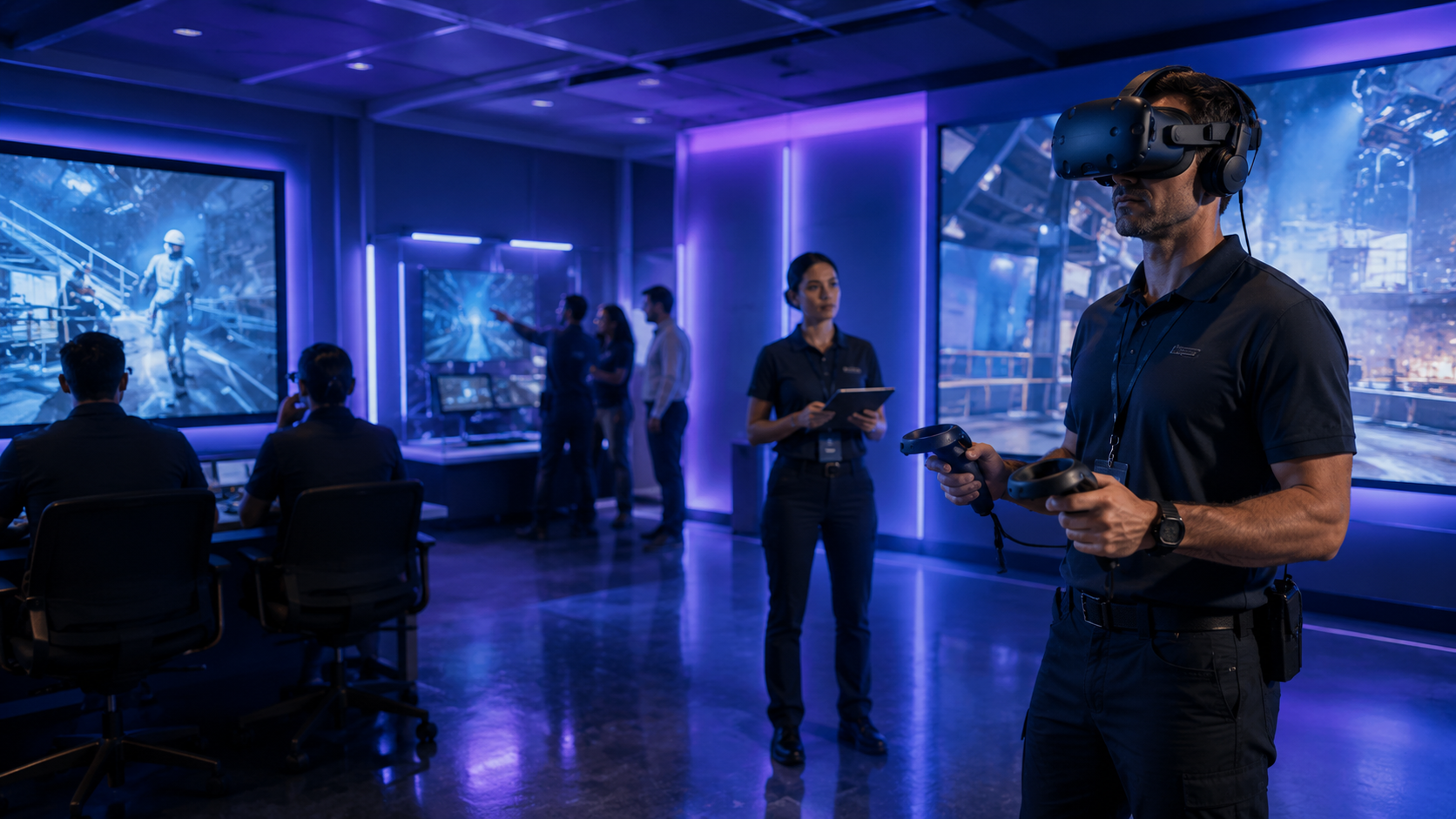
Full environmental immersion through VR creates unmatched engagement and presence in training scenarios. Learners feel genuinely present in virtual environments, triggering the same physiological and emotional responses as real situations. This immersion level proves particularly valuable for high-stress scenario training where emotional control affects performance.
Spatial training for construction, warehouse, and emergency response leverages VR’s ability to recreate three-dimensional environments at full scale. Workers practice navigating complex spaces, identifying hazards, and executing procedures with accurate spatial relationships. This spatial accuracy improves transfer to real-world performance compared to screen-based training.
Emotional and empathy training through perspective-taking exercises help employees understand diverse viewpoints and experiences. VR simulations place learners in scenarios involving discrimination, accessibility challenges, or customer frustrations, building emotional intelligence and inclusive behaviors through visceral experience rather than abstract discussion.
VR equipment costs have dropped dramatically, with capable headsets now available from $300 to $1,500. Rental options starting at $50 per day eliminate capital investment barriers for pilot programs. Content libraries offer thousands of pre-built training scenarios with per-user licensing from $20-100 monthly.
VR training delivers maximum impact for safety training, spatial skills development, and high-risk scenarios where mistakes carry severe consequences. The technology’s ability to create impossible or dangerous situations safely makes it ideal for emergency preparedness and rare event training.
Physical Simulators and Hybrid Systems
Flight simulators, driving simulators, and medical mannequins represent the original simulation training technology. These physical systems provide authentic controls, resistance, and feedback that purely digital solutions cannot match. Modern versions incorporate virtual displays and scenarios, combining physical and digital elements for enhanced realism.
Hybrid systems blend physical controls with virtual environments, offering the tactile feedback of real equipment with the flexibility of digital scenarios. Crane operators practice with actual control levers while viewing virtual construction sites. Surgeons manipulate physical instruments while operating on virtual patients displayed through headsets.
Haptic feedback technology adds realistic touch sensations to virtual training, enabling learners to feel texture, resistance, and temperature changes. This sensory feedback proves critical for medical procedures, manufacturing quality control, and any task requiring fine motor control or material assessment.
Physical simulator costs range from $10,000 for basic driving simulators to millions for full-motion flight simulators. Hybrid systems typically cost $50,000-500,000 depending on complexity and customization requirements. These investments make sense for high-value skills where physical muscle memory is critical.
Physical simulators remain optimal for vehicle operation, medical procedures, and heavy machinery training where authentic physical feedback directly impacts real-world performance. The combination of physical and virtual elements provides the most complete training experience for complex psychomotor skills.
Real-World Training Simulation Applications Across Industries
Every industry faces unique training challenges that simulations address differently. These real-world applications demonstrate how organizations deploy simulation training to solve specific skill gaps, reduce accidents, and accelerate competency development.
The diversity of simulation applications reflects the technology’s adaptability to different learning objectives. From life-saving medical procedures to everyday customer interactions, simulations provide targeted solutions for industry-specific training needs.
Healthcare and Medical Training
Surgical procedure practice without patient risk revolutionizes medical education and continuing professional development. Residents perform hundreds of virtual surgeries before touching real patients, building confidence and muscle memory in zero-risk environments. Experienced surgeons rehearse complex procedures on patient-specific anatomical models created from CT scans, improving outcomes for challenging cases.
Emergency response scenarios prepare trauma teams for high-pressure situations requiring coordinated action. Teams practice communication protocols, role assignments, and rapid decision-making in simulated emergency rooms. These exercises reveal coordination gaps and build team cohesion without waiting for actual emergencies to occur.
Patient interaction and bedside manner training addresses the human side of healthcare through conversational simulations. Medical students practice delivering difficult diagnoses, showing empathy, and managing emotional responses. These soft skills prove as critical as technical knowledge for patient satisfaction and treatment adherence.
Stanford Medicine’s VR training program demonstrates measurable impact, reducing procedure time by 20% while improving accuracy rates. Residents using VR simulation completed procedures faster and with fewer errors compared to traditional training methods. The program now extends across multiple specialties, with over 20 different procedure simulations available.
Manufacturing and Industrial Safety
Equipment operation training before touching expensive machinery protects both employees and assets. Workers master control sequences, understand equipment limitations, and recognize warning signs in virtual environments. This preparation reduces equipment damage during initial training periods and accelerates progression to productive operation.
Hazard recognition and safety protocol practice embeds safety consciousness through repeated exposure to dangerous scenarios. Employees identify potential hazards, practice lockout/tagout procedures, and respond to emergency situations. The ability to experience near-miss events safely builds situational awareness that prevents real accidents.
Assembly line optimization and quality control training improves production efficiency and product quality. Workers practice identifying defects, maintaining production pace, and following quality procedures. Simulations can speed up or slow down processes, helping workers build skills progressively without production pressure.
Ford’s VR training implementation achieved remarkable results, reducing injuries by 70% and cutting training time by 75%. The company uses VR to train assembly line workers on ergonomics and proper body positioning, preventing repetitive strain injuries. Over 30,000 employees have completed VR training across global facilities, with measured improvements in both safety metrics and production quality.
Retail and Customer Service
Difficult customer scenario practice prepares employees for challenging interactions without risking real customer relationships. Representatives handle angry customers, navigate complex complaints, and practice de-escalation techniques. The safe environment encourages experimentation with different approaches, building confidence for real encounters.
Store robbery and emergency response training ensures employees know exactly how to react in dangerous situations. Simulations recreate robbery scenarios, active shooter events, and medical emergencies, training automatic responses that could save lives. Employees report feeling more prepared and less anxious about potential incidents after simulation training.
Product knowledge through virtual showrooms enables detailed exploration of inventory without physical samples. Sales associates examine products from every angle, understand features and benefits, and practice demonstration techniques. This deep product familiarity translates to more confident and effective customer interactions.
Walmart’s VR training program for 1.4 million employees represents the largest corporate VR deployment to date. The company uses VR for everything from Black Friday crowd management to fresh produce handling. Stores with VR training report 10-15% higher customer satisfaction scores and reduced training time from 8 hours to 15 minutes for specific modules.
Corporate Leadership and Soft Skills
Presentation skills development in virtual boardrooms helps executives and managers build confidence without high-stakes pressure. Speakers practice in front of virtual audiences that display realistic reactions—checking phones when bored, nodding when engaged, asking challenging questions. This practice reduces anxiety and improves delivery for critical presentations.
Diversity and inclusion perspective-taking exercises create visceral understanding of different experiences and challenges. Participants experience scenarios from various demographic perspectives, encountering microaggressions, accessibility barriers, and systemic biases firsthand. This experiential learning proves more impactful than traditional diversity training lectures.
Conflict resolution and negotiation practice develops crucial interpersonal skills through realistic scenario roleplay. Managers navigate difficult conversations, mediate team disputes, and practice giving critical feedback. The ability to restart scenarios and try different approaches accelerates skill development.
Remote team management scenarios address the unique challenges of distributed workforce leadership. Managers practice conducting virtual meetings, building remote team culture, and identifying signs of disengagement through digital channels. These skills become increasingly critical as remote work becomes permanent for many organizations.
Building Your Training Simulation Strategy: From Pilot to Scale
Successful simulation training deployment follows a proven path from small pilots to enterprise-wide implementation. Starting with rental equipment and pre-built content reduces risk while you validate ROI and build internal buy-in for larger investments.
Organizations that approach simulation training strategically see faster adoption, better outcomes, and stronger ROI than those making large upfront commitments without validation. The pilot-to-scale methodology minimizes risk while building organizational capability and enthusiasm.
Identifying High-Impact Training Opportunities
Mapping current training pain points reveals where simulations deliver maximum value. Document training scenarios that involve high costs (travel, equipment, instructor time), high risks (safety hazards, expensive mistakes), or high frequency (repeated across many employees). These pain points become priority targets for simulation solutions.
Risk reduction value for safety training often provides the strongest business case. Calculate current incident rates, average incident costs, and potential reduction through improved training. A single prevented injury can justify entire simulation programs when considering medical costs, lost productivity, and liability exposure.
Prioritizing scenarios requires balancing impact and feasibility. High-frequency, moderate-impact scenarios may deliver better ROI than low-frequency, high-impact ones. Consider scenarios affecting large employee populations, those with compliance requirements, and situations where current training shows poor knowledge retention.
Building the business case requires quantifying both costs and benefits. Document current training expenses including instructor time, travel, materials, and opportunity costs of employee time. Project simulation training costs including technology, content, and support. Calculate payback period based on conservative estimates of time savings and performance improvements.
Running Effective Pilot Programs
Starting with 10-20 person pilots validates effectiveness before broader rollout. Select participants representing your target audience—mix experience levels, learning styles, and potential skeptics with enthusiasts. This diversity provides comprehensive feedback and identifies potential adoption challenges.
Renting equipment eliminates capital investment risk during validation phases. Rental programs include setup support, training, and technical assistance, reducing internal resource requirements. Month-to-month rentals allow extension or termination based on pilot results without long-term commitments.
Using off-the-shelf content accelerates pilot launch while deferring custom development costs. Generic scenarios still demonstrate simulation training benefits and help refine requirements for eventual custom content. Many vendors offer free trials or pilot pricing for evaluation purposes.
Measuring baseline performance before simulation training establishes clear comparison metrics. Document current training completion times, assessment scores, and on-the-job performance indicators. Repeat these measurements after simulation training to quantify improvements objectively.
Gathering comprehensive feedback shapes program evolution. Survey participants about engagement, perceived value, and suggested improvements. Interview instructors about facilitation challenges and support needs. Observe sessions to identify technical issues and process refinements.
Scaling from Pilot to Production
Transitioning from rentals to ownership depends on usage patterns and long-term projections. Calculate the breakeven point between rental and purchase costs based on projected usage. Consider factors like technology refresh cycles, maintenance costs, and the flexibility needs of your organization.
Building versus buying custom content decisions balance specificity needs against development costs. Generic content may suffice for common scenarios like safety training or soft skills. Organization-specific procedures, proprietary equipment, or unique culture elements justify custom development investment.
Training facilitators requires both technical skills and pedagogical adaptation. Instructors need comfort with technology troubleshooting, session management, and debriefing techniques specific to simulation training. Invest in train-the-trainer programs to build internal capability rather than relying on external facilitation.
Integration with existing Learning Management Systems streamlines administration and tracking. Modern simulation platforms offer LMS integration through SCORM or xAPI standards, enabling automatic progress tracking, completion recording, and performance analytics within existing training infrastructure.
Change management strategies address instructor resistance and learner skepticism. Involve instructors early in platform selection and content development. Share pilot success stories and peer testimonials. Position simulation as enhancing rather than replacing instructor value. Celebrate early adopters and success stories to build momentum.
Measuring Training Simulation ROI and Performance Impact
Training simulations deliver measurable returns through reduced training time, improved performance, and fewer workplace incidents. These metrics and measurement approaches help justify initial investments and guide ongoing program optimization.
Quantifying simulation training value requires comprehensive measurement across multiple dimensions. Organizations tracking detailed metrics report average ROI of 300-600% within two years of implementation.
Key Performance Metrics to Track
Time to competency reduction typically ranges from 40-60% compared to traditional training. Document how long employees take to achieve performance standards with traditional versus simulation training. Include both formal training time and supervised practice periods for complete comparison.
Error rate reduction in real-world performance provides concrete evidence of training effectiveness. Track mistake frequency before and after simulation training for specific procedures or tasks. Manufacturing organizations report 30-50% error reduction after VR training implementation.
Knowledge retention measurements at 30, 60, and 90 days post-training reveal long-term effectiveness. Simulation training consistently shows 2-3x better retention rates compared to traditional methods. This improved retention reduces refresher training requirements and maintains performance standards longer.
Safety incident reduction directly impacts bottom-line costs and employee wellbeing. Organizations using VR safety training report 40-70% reduction in workplace accidents. Document both incident frequency and severity to capture full safety impact.
Training cost per employee calculations should include all associated expenses. Factor in instructor time, travel costs, materials, venue rental, and employee time away from production. Simulation training typically reduces per-employee costs by 30-50% after initial implementation.
Calculating Total Cost of Ownership
Hardware costs vary significantly between purchase and rental models. Purchasing VR headsets costs $300-1,500 per unit with 2-3 year replacement cycles. Rental programs charge $50-150 daily or $500-1,000 monthly, including support and replacement coverage. Calculate breakeven points based on your usage patterns.
Content licensing versus custom development presents a major cost variable. Off-the-shelf content licenses range from $20-100 per user monthly. Custom content development costs $25,000-250,000 depending on complexity but eliminates ongoing licensing fees. Consider content reusability across different training programs when evaluating options.
Facilitator training and ongoing support represent hidden costs often overlooked in initial budgets. Budget $2,000-5,000 per facilitator for initial training and certification. Ongoing support contracts typically cost 15-20% of hardware costs annually. Internal IT support requirements average 0.25 FTE per 100 VR headsets.
Travel and venue savings provide immediate cost reductions for distributed organizations. Calculate current costs for bringing employees to central training locations or sending instructors to remote sites. Simulation training eliminates these expenses while providing consistent training quality.
Opportunity cost calculations reveal the true value of reduced training time. Every hour employees spend in training represents lost productivity. Reducing training time by 50% effectively adds productive capacity equivalent to hiring additional staff. This hidden value often exceeds direct cost savings.
Getting Started with Training Simulations: Practical Next Steps
Moving from interest to implementation requires clear first steps. Whether you’re exploring options or ready to pilot, these practical actions help you experience simulation training firsthand and build momentum for broader adoption.
The path to successful simulation training deployment starts with hands-on experience and gradually builds toward full implementation. Organizations taking measured, experiential approaches report higher satisfaction and better long-term outcomes than those making large, untested commitments.
Experience Simulations Through Rental Programs
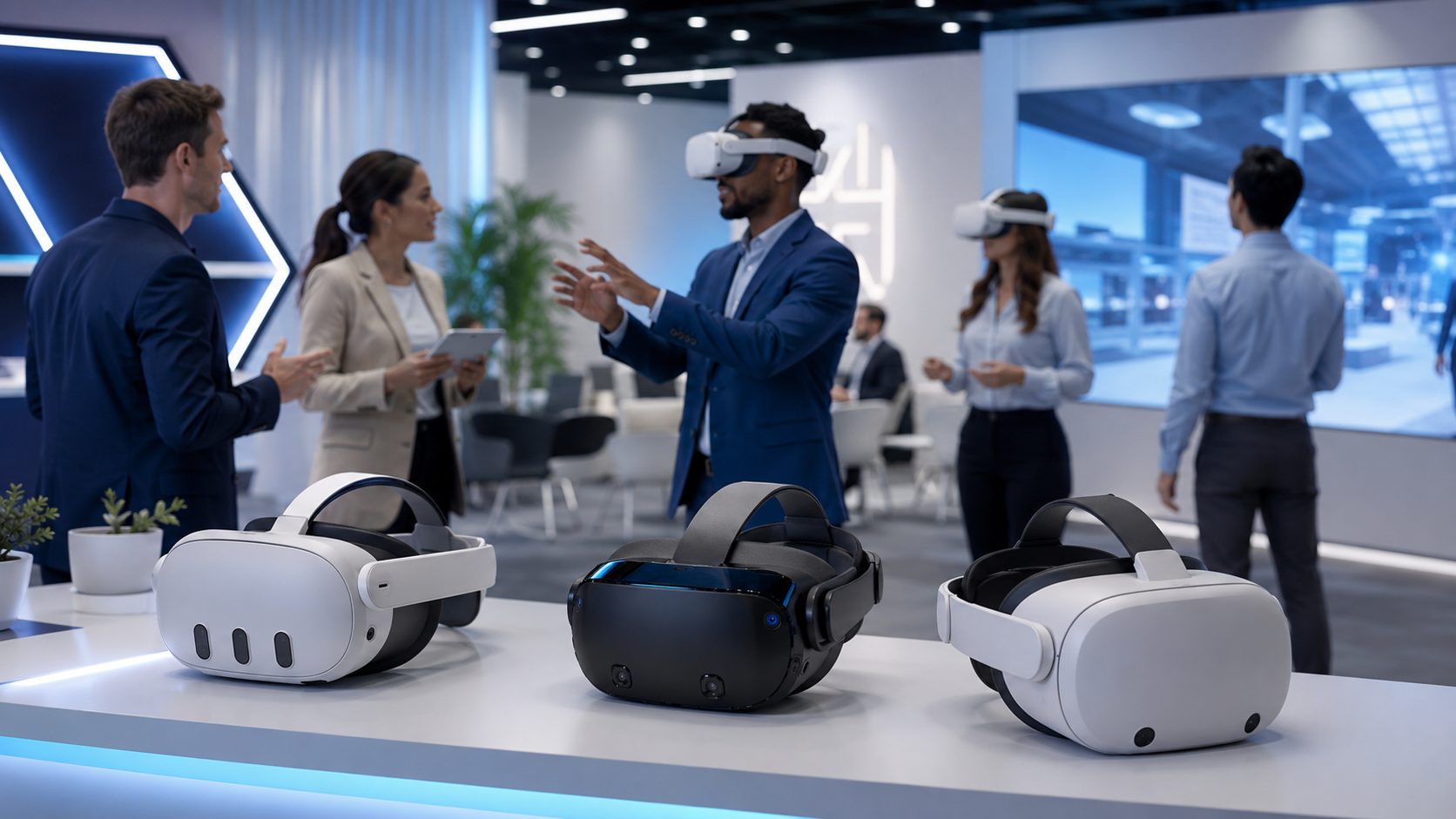
VR headset rental packages offer risk-free exploration of immersive training capabilities. Rental providers ship pre-configured equipment with training content libraries relevant to your industry. Most programs include multiple headsets, enabling group experiences that demonstrate collaborative training possibilities.
Pre-configured training content libraries eliminate content creation barriers during initial exploration. Access hundreds of existing scenarios covering safety, soft skills, technical procedures, and leadership development. These generic scenarios demonstrate training potential while you evaluate custom content needs.
Setup support and facilitator guidance ensure successful first experiences. Rental programs typically include remote setup assistance, facilitator training videos, and live support during initial sessions. This support reduces technical barriers and helps internal champions build confidence.
Risk-free exploration without capital investment allows thorough evaluation before commitment. Month-to-month rentals let you test different scenarios, gauge employee reception, and measure initial results. This flexibility enables evidence-based decision-making about larger investments.
Connect with Simulation Training Partners
Content providers specializing in your industry offer targeted solutions and expertise. Industry-specific providers understand regulatory requirements, common training challenges, and proven approaches. These partnerships accelerate deployment and improve outcome likelihood.
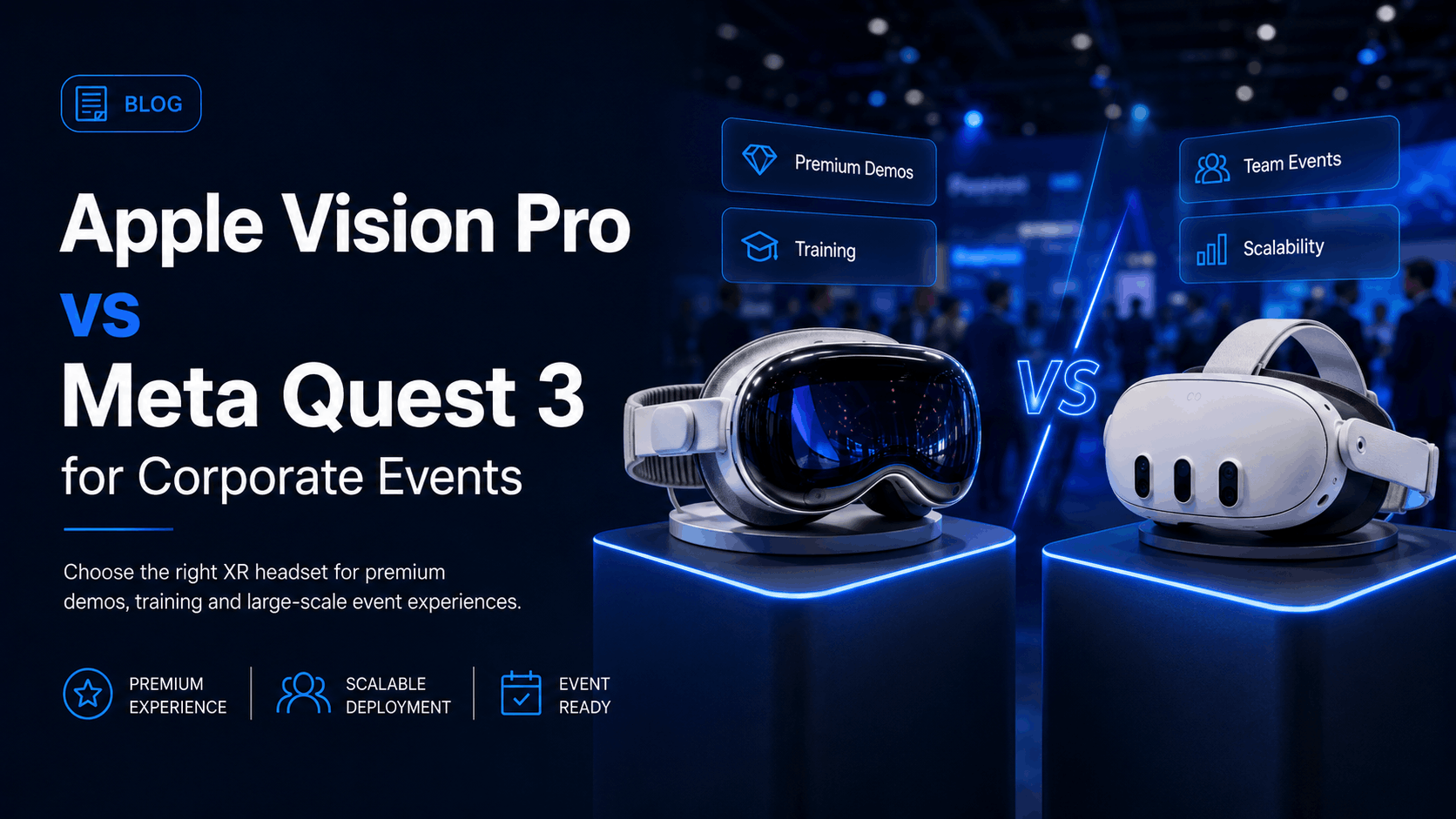
Hardware vendors and rental services provide technology options and pricing models. Compare different headset manufacturers, rental terms, and support offerings. Consider factors like ease of use, content compatibility, and scalability when evaluating options.
Implementation consultants and change management support guide successful deployments. Experienced consultants help avoid common pitfalls, design effective pilots, and build stakeholder buy-in. Their expertise proves particularly valuable for organizations without prior simulation experience.
Internal champions who’ve successfully deployed simulations provide peer credibility and practical insights. Connect with similar organizations through industry associations, vendor references, or professional networks. Learning from others’ experiences accelerates your own implementation and builds confidence in the approach.
Frequently Asked Questions
How much do training simulations cost compared to traditional training?
Initial simulation setup costs exceed traditional training, but total costs typically become lower within 12-18 months. VR hardware costs $300-1,500 per headset or rents for $50-150 daily. Content ranges from $20-100 monthly per user for off-the-shelf to $25,000-250,000 for custom development. Traditional training costs include instructor salaries ($50,000-100,000 annually), travel ($1,000-5,000 per session), venues ($500-2,000 daily), and materials ($50-200 per participant). When factoring in reduced training time (40-60% faster) and improved retention (2-3x better), simulation training delivers 300-600% ROI within two years.
What’s the minimum team size to justify simulation training investment?
Teams as small as 10-20 people can justify simulation training for high-value or high-risk scenarios. The key factors are training frequency, scenario complexity, and potential impact rather than absolute team size. Organizations training 50+ people annually typically see positive ROI within 12 months. Rental programs make simulation viable for smaller teams by eliminating upfront investment.
Can simulations replace hands-on training completely?
Simulations complement but don’t completely replace hands-on training for most applications. They excel at initial skill building, dangerous scenario practice, and rare event preparation. However, final validation and certification often require real-world demonstration. The optimal approach combines simulation for initial learning and practice with hands-on validation for final competency confirmation.
How long does it take to develop custom simulation content?
Custom simulation development typically requires 2-6 months depending on complexity. Simple branching scenarios take 2-3 months, interactive VR experiences need 3-4 months, and complex technical simulations require 4-6 months or longer. Development time includes requirements gathering, storyboarding, asset creation, programming, testing, and revision cycles.
What technical skills do facilitators need to run simulation training?
Facilitators need basic technical comfort but not advanced IT skills. Essential abilities include headset setup and adjustment, application launching and navigation, basic troubleshooting for common issues, and session management through instructor interfaces. Most vendors provide 4-8 hours of facilitator training covering these skills. Strong facilitation and debriefing skills matter more than technical expertise.
How do you handle motion sickness in VR training simulations?
Motion sickness affects 15-25% of VR users but can be minimized through proper design and usage practices. Start with shorter sessions (15-20 minutes) and gradually increase duration. Use comfort settings like teleportation movement instead of smooth locomotion. Ensure proper headset fit and interpupillary distance adjustment. Take breaks every 30 minutes. Most users develop “VR legs” within 3-5 sessions.
Can simulation training be delivered remotely?
Yes, modern simulation platforms support remote delivery through cloud-based content and multi-user sessions. Instructors can observe and guide learners from anywhere, providing real-time feedback and support. Remote delivery requires reliable internet (25+ Mbps), compatible devices, and appropriate software licenses. This capability proved invaluable during pandemic-related travel restrictions.
What industries see the highest ROI from training simulations?
Healthcare, manufacturing, energy, and aviation report the highest ROI from simulation training due to high-risk scenarios and expensive equipment. Healthcare organizations see 400-800% ROI through reduced medical errors. Manufacturing achieves 300-500% ROI via accident reduction and productivity improvements. Energy companies report 500-1000% ROI from prevented safety incidents. Aviation has used simulators for decades with proven ROI exceeding 1000% through accident prevention.
Conclusion: Transform Your Training with Immersive Simulations
Training simulations represent a fundamental shift in how organizations develop employee capabilities. The combination of risk-free practice, measurable outcomes, and accelerated skill development makes simulation-based training essential for competitive organizations.
The technology has reached an inflection point where costs have decreased while capabilities have expanded dramatically. VR headsets that cost $10,000 five years ago now deliver better experiences for under $1,000. Content libraries offer thousands of ready-to-deploy scenarios. Rental programs eliminate capital investment barriers.
Success with training simulations requires thoughtful implementation rather than technology for technology’s sake. Start with clear objectives, run controlled pilots, measure results objectively, and scale based on demonstrated value. Organizations following this measured approach consistently achieve positive ROI and improved training outcomes.
The question is no longer whether to adopt simulation training, but how quickly you can deploy it effectively. Every month of delay represents continued exposure to preventable accidents, extended training cycles, and suboptimal performance. Your competitors are already using these technologies to build more capable workforces.
Take the first step today. Experience training simulations firsthand through a rental program. Run a pilot with your most challenging training scenario. Measure the results. The evidence will speak for itself, and your path forward will become clear.
Contact a simulation training provider to arrange a demonstration or pilot program. Your employees, your customers, and your bottom line will thank you for embracing the future of corporate training.