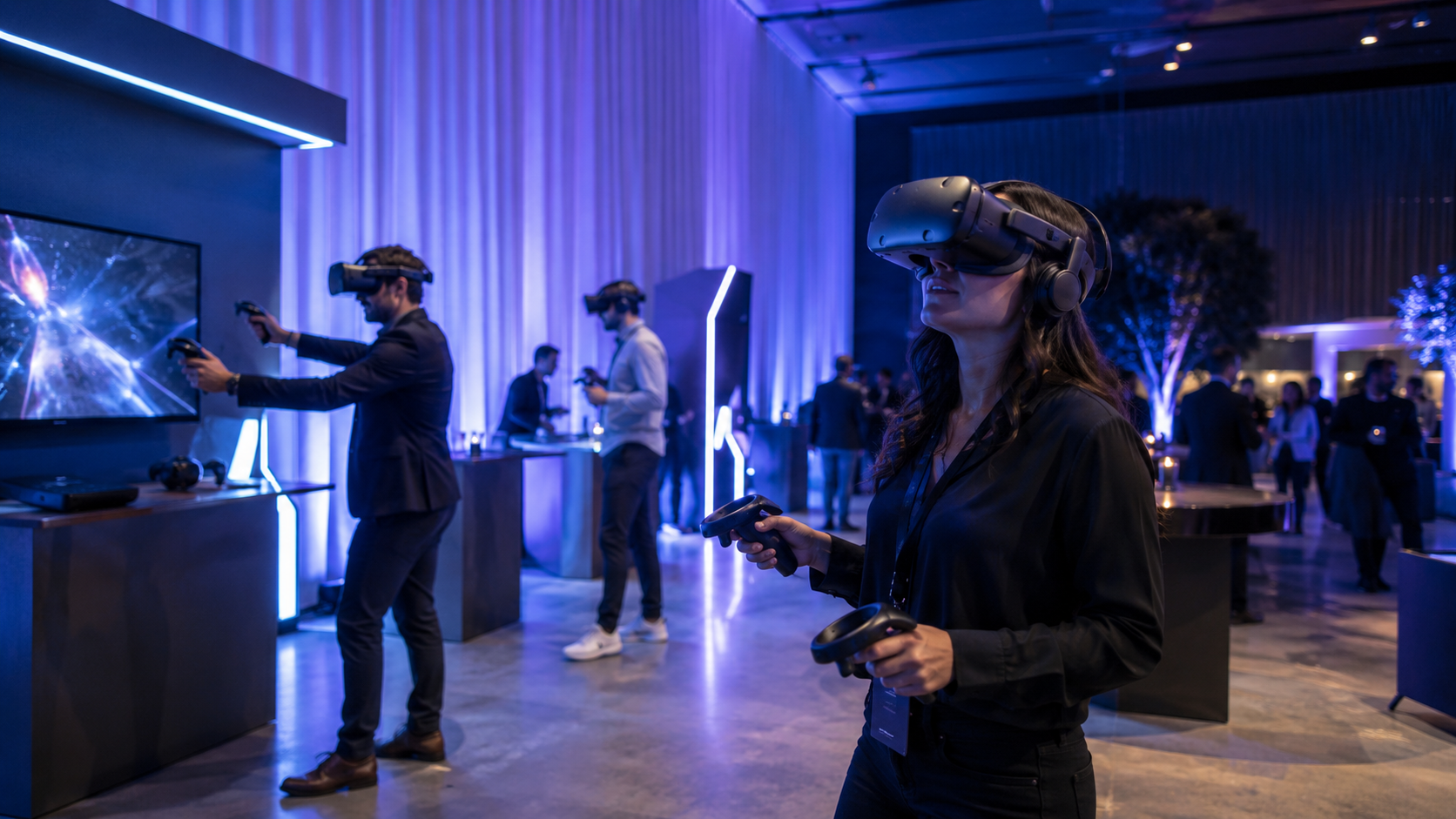

The enterprise learning landscape is undergoing a seismic shift. Traditional training methods are making way for immersive technologies that promise higher engagement, better retention, and a stronger return on investment. At the forefront of this revolution are Virtual Reality (VR) learning platforms, which offer simulated environments where employees can practice complex skills in a safe, controlled, and highly realistic setting. For Learning and Development (L&D) teams and training managers, the question is no longer if they should adopt VR, but how to navigate the burgeoning market of platforms, content, and hardware.
This guide provides a comprehensive framework for enterprise teams to evaluate VR learning solutions. It follows the buyer’s journey, moving from understanding platform categories and selection criteria to designing effective pilot programs with rental hardware, assessing the content ecosystem, and finally, making informed scaling and deployment decisions.
VR Learning Platform Categories and Core Capabilities
VR learning platforms fall into three distinct categories based on how they handle content creation, delivery, and learner management. Understanding these differences is the first step in determining whether you need a full Learning Management System (LMS) integration, a standalone VR training platform, or a hybrid approach that combines rented hardware with your existing learning infrastructure.
Standalone VR Training Platforms
These are all-in-one solutions that provide the software infrastructure for creating, deploying, and managing immersive learning experiences. Platforms like STRIVR, Immerse, and Virti offer a complete package that includes content authoring tools, device management capabilities, and detailed analytics portals.
- Core Functionality: These platforms are designed for scalability, allowing organizations to distribute training content across numerous devices and locations. They often feature no-code authoring tools that can reduce content creation time by 60-80% compared to traditional game engine development.
- Pricing Models: Pricing typically ranges from $50 to $500 per user per month, with some enterprise-focused platforms like STRIVR having annual minimums starting at $100,000 for large-scale deployments.
- Content: A key differentiator is the availability of a built-in content library versus the capabilities for custom content development. Many platforms offer pre-built modules for common skills like leadership, safety, and customer service.
- Hardware: Most standalone platforms are hardware-agnostic, supporting major enterprise headsets like the Meta Quest series, Pico, and HTC VIVE.
LMS-Integrated VR Solutions
For organizations with established learning ecosystems, integrating VR training with an existing LMS is critical. These solutions ensure that learner progress and performance data from VR experiences are tracked within the same system as all other training activities.
- Compliance and Tracking: Platforms like PrecisionOS and Osso VR are designed to connect with systems like Cornerstone, Workday Learning, or SAP SuccessFactors. They use standards like SCORM (Sharable Content Object Reference Model) and xAPI (Experience API) to send completion data, assessment scores, and detailed interaction analytics back to the LMS.
- Workflow Integration: Key features include single sign-on (SSO) and user provisioning, which streamline the learner experience and reduce administrative overhead. Reporting dashboards sync VR training metrics with existing L&D data, providing a unified view of learner progress.
- Technical Considerations: xAPI is almost always the preferred standard for VR integrations as it supports standalone headsets, offline data tracking, and rich behavioral analytics that SCORM cannot capture.
Content-First VR Learning Ecosystems
This category includes platforms that are highly specialized in specific skill domains, offering deep, pre-built curriculum paths rather than broad authoring tools.
- Industry Focus: Examples include Transfr, which focuses on career and technical education for skilled trades, and Embodied Labs, which provides immersive training for the healthcare industry, particularly in elder care.
- Learning Models: These platforms often provide a mix of self-paced modules and instructor-led virtual sessions. Many incorporate multi-user collaboration features, allowing teams to practice procedures and communication skills together in a shared virtual environment.
- Deployment: The business model often bundles the platform subscription with hardware, making them particularly well-suited for rental-based pilot programs.
Platform Selection Criteria for Enterprise Learning Teams
Selecting the right VR learning platform requires a rigorous evaluation of technical requirements, content flexibility, the learner experience, and the total cost of ownership. These criteria help L&D teams assess platforms against their specific training objectives and organizational constraints.
Content Development and Customization Options
The ability to create and modify training content is often the most critical factor. The choice between off-the-shelf and custom content depends on the specificity of the training need.
- Authoring Tools: Look for platforms with no-code or low-code authoring tools that empower L&D teams to create and edit scenarios without needing a team of developers. More advanced platforms may offer a Software Development Kit (SDK) for deep customization.
- Asset Libraries: The availability of pre-built 3D asset libraries and scenario templates can significantly accelerate content development.
- Interactivity: For soft skills or decision-making training, the ability to create branching scenarios with multiple outcomes is essential.
- Cost and Time: Custom VR content development is a significant investment. The average time to develop a VR training module is 8-10 weeks, but can range from 4 weeks to over 6 months depending on complexity. Costs can range from $25,000 for a single-scenario pilot to over $250,000 for a complex, multi-module program.
Deployment Models and IT Requirements
How the VR training is delivered to learners has major implications for IT infrastructure and support.
- Delivery Method: Platforms may use cloud-based streaming, which requires a stable internet connection (a minimum of 25 Mbps per concurrent user is recommended), or local installation, where content is downloaded directly onto the headsets.
- Device Management: For any deployment beyond a handful of devices, a Mobile Device Management (MDM) solution is essential. MDM platforms like ArborXR or ManageXR allow IT teams to remotely manage headsets, install and update content, and monitor device status from a central dashboard.
- Offline Access: For training in field locations or areas with poor connectivity, the ability for content to be accessed offline is a critical feature.
Analytics and Learning Measurement
One of the most powerful aspects of VR training is the ability to capture granular data on learner performance.
- Biometric and Behavioral Data: Advanced platforms can capture biometric data like eye tracking and hand movements, as well as behavioral metrics like reaction times, hesitation, and decision-making patterns.
- Performance Scoring: Look for platforms that use sophisticated algorithms to score performance and map it to specific competencies. This allows for objective, data-driven assessment of skill acquisition.
- Comparative Analytics: The ability to compare performance across different learner groups, locations, or time periods is crucial for identifying trends and measuring the overall impact of the training program.
- ROI Measurement: The platform should provide a framework for measuring the return on investment (ROI) of VR training. This involves tracking metrics like reduced training time, improved performance, and decreased error or incident rates.
Running Platform Pilots with Rental Hardware
Testing a VR learning platform with rental hardware is a low-risk, high-reward strategy that eliminates the need for significant capital investment before validating training effectiveness. A structured pilot program using rented headsets provides concrete data on learner engagement, content quality, and operational feasibility.
Pilot Program Design with Rental Packages
A well-designed pilot program can provide the business case needed for a full-scale rollout.
- Scope and Duration: A typical pilot program lasts 30-90 days and involves a small fleet of 5-20 headsets. This is enough time to gather meaningful data without becoming a logistical burden.
- Cost-Benefit of Renting: Renting headsets costs an average of $300-$500 per unit per month. This is significantly less than the purchase price, which can range from $3,000 to $5,000 for enterprise-grade devices when factoring in licenses and support.
- Turnkey Solutions: Many rental providers offer pre-configured headsets with the chosen platform’s software and content already installed. They also typically include technical support for troubleshooting, which is invaluable during a pilot phase.
Platform Trial Accounts and Test Content
Most platform vendors are eager to support pilot programs and offer trial access to their software.
- Trial Access: It is common for platforms to offer 30-day trials with a limited number of user seats, which aligns perfectly with a rental-based pilot.
- Demo Content: Use the platform’s demo content library for initial testing. This allows you to evaluate the quality of the experiences and the usability of the platform without investing in custom content upfront.
- Success Metrics: Define clear success metrics for the pilot. These should include completion rates, knowledge retention scores (measured through pre- and post-assessments), and user satisfaction surveys.
- A/B Testing: Where possible, conduct A/B tests comparing the VR training module against traditional methods (e.g., classroom or e-learning) to generate powerful comparative data.
Scaling from Pilot to Full Deployment
The data gathered during the pilot phase should inform the decision of whether and how to scale the program.
- Rent vs. Buy Decision: The primary decision is whether to continue renting hardware or to purchase a fleet of headsets. A break-even analysis will typically show that purchasing becomes more cost-effective after 6-10 months of continuous use.
- Hybrid Models: Consider a hybrid approach. Purchase headsets for locations with high-frequency training needs and continue to rent for sites that require only occasional use.
- Subscription Negotiation: Use the pilot data on usage and user feedback to negotiate a favorable enterprise subscription with the platform vendor based on projected user volumes.
Content Libraries and Learning Module Ecosystems
While technical features are important, the success of a VR learning platform often hinges on the depth, quality, and relevance of its content ecosystem. A thorough assessment of a platform’s content offerings is crucial for matching the solution to specific training needs.
Industry-Specific Content Catalogs
Many platforms specialize in content for particular industries, offering rich libraries of pre-built simulations.
- Healthcare: Platforms may offer detailed surgical simulations, patient interaction scenarios for developing empathy, and procedural training for medical devices.
- Manufacturing and Industrial: Content libraries frequently include modules for equipment operation, maintenance procedures, and critical safety protocols like lockout/tagout.
- Soft Skills: A growing number of platforms provide extensive libraries for soft skills, covering topics like leadership development, Diversity, Equity, and Inclusion (DEI), conflict resolution, and customer service conversations.
- Technical Skills: Specialized modules are available for IT, engineering, and other technical trades, allowing for hands-on practice with complex systems.
Content Licensing Models and Costs
The way content is licensed and priced can have a significant impact on the total cost of ownership.
- Per-Seat Licensing: The most common model is a per-seat annual license, which can range from $500 to $2,000 per learner.
- Site Licenses: For large organizations with over 500 users, many vendors offer unlimited-use site licenses, which can be more cost-effective at scale.
- Content Marketplaces: Some platforms operate on a marketplace model, where individual training modules or courses can be purchased a la carte.
- Revenue Sharing: In cases where an enterprise co-develops custom content with a platform vendor, a revenue-sharing agreement may be an option if the content has broader market appeal.
Implementation Roadmap and Change Management
A successful VR learning platform adoption requires more than just technical deployment; it demands a thoughtful change management strategy. Organizations that follow a phased implementation approach see significantly higher adoption rates and better learning outcomes.
Stakeholder Alignment and Champion Development
Gaining buy-in from across the organization is the first and most critical step.
- Executive Sponsorship: Build a strong business case for executive sponsors by focusing on ROI projections and competitive benchmarks. Frame the investment in terms of cost savings, productivity gains, and risk reduction.
- Facilitator Training: Leverage the “train-the-trainer” and certification programs offered by platform vendors. This creates a pool of internal experts who can support the rollout.
- Internal Champions: Identify and empower early adopters to become internal champions. Their success stories and enthusiasm will be your most powerful marketing tool for driving broader adoption.
- IT Partnership: Involve the IT department from the very beginning. They are critical partners for managing network requirements, security protocols, and device logistics.
Learner Onboarding and Support Systems
A smooth and supportive onboarding experience is crucial for overcoming any initial hesitation or anxiety among learners.
- First-Time User Orientation: Conduct orientation sessions for first-time VR users. These sessions should cover how to properly wear the headset, how to use the controllers, and tips for minimizing motion sickness.
- Hygiene and Safety: Establish clear hygiene protocols for shared equipment, including procedures for cleaning and sanitizing headsets between uses.
- Technical Support: Train your help desk team on how to troubleshoot common technical issues with the headsets and software.
- Feedback Mechanisms: Create formal feedback loops for learners to share their experiences. This information is invaluable for continuously improving both the content and the delivery methods.
Platform Comparison: Features, Pricing, and Rental Compatibility
This comparison matrix evaluates leading VR learning platforms across key decision factors, with a specific focus on their compatibility with rental hardware programs. Pricing reflects enterprise tiers, and most vendors will provide custom quotes for large-scale deployments.
Enterprise Platform Comparison Matrix
| Platform | Target Audience & Focus | Typical Pricing Model | Rental Compatibility |
|---|---|---|---|
| STRIVR | Fortune 500, large enterprise; focus on operational efficiency and customer experience. | $100K+ annual minimums; seat-based subscription. | High; works well with Quest Pro and other enterprise headsets. |
| Immerse | Global enterprise; strong in manufacturing, pharma, and energy sectors. | $50-$150 per user/month; platform and content licensing. | High; supports all major standalone headsets. |
| Virti | Healthcare, education, and corporate soft skills. | $75-$200 per user/month; tiered subscriptions. | High; cloud-based platform is ideal for rental deployments. |
| PrecisionOS | Medical and surgical training for healthcare professionals. | $5,000-$10,000 per module; often bundled with services. | Moderate; requires high-end headsets which may be less common in rental fleets. |
| Transfr | Career and technical education for skilled trades. | Bundled pricing with hardware and services; grant-focused. | Very High; platform is often deployed in a rental or lease model. |
Total Cost of Ownership (TCO) Calculations
A comprehensive TCO analysis should account for all costs associated with the VR training program.
- Core Components: The total cost typically includes the platform subscription, hardware (purchase or rental), content development or licensing, and support fees. Annually, this can range from $2,000 to $5,000 per active user.
- Impact of Rentals: A rental-based pilot program can reduce the first-year TCO by 40-60% compared to a model where hardware is purchased upfront.
- Break-Even Analysis: Conduct a break-even analysis comparing the costs of renting, leasing, and purchasing hardware over a three-year period to determine the most financially viable option for your usage levels.
- Hidden Costs: Be sure to budget for potential hidden costs, such as facilitator training, dedicated IT support hours, physical space setup for training sessions, and ongoing content customization or updates.
Your Journey into Immersive Learning Starts Now
The adoption of VR learning platforms is no longer a futuristic vision; it is a practical and powerful strategy for building a more skilled, confident, and engaged workforce. The evidence is clear: immersive learning leads to faster training times, higher knowledge retention, and a significant, measurable impact on business performance.
By understanding the different types of platforms, applying a rigorous selection framework, and leveraging rental-based pilots to de-risk the initial investment, enterprise L&D teams can confidently navigate the path to implementation. The journey from a small, focused pilot to a scaled, enterprise-wide immersive learning program is a strategic imperative for any organization committed to developing the workforce of the future.
Ready to take the next step? Contact our team of immersive learning specialists to schedule a consultation and learn how a rental-based pilot program can help you build the business case for VR training in your organization
Frequently Asked Questions (FAQs)
What’s the difference between a VR learning platform and a traditional LMS?
A traditional LMS is primarily a system for managing and tracking a wide range of learning activities, often focused on course administration and completion records. A VR learning platform is a specialized system designed specifically for the creation, delivery, and analysis of immersive 3D training experiences. While many VR platforms can integrate with an LMS to report data, their core function is to manage the unique aspects of VR content and hardware.
Can we use our existing VR headsets with any learning platform?
Generally, yes, but compatibility needs to be verified. Most modern VR learning platforms are designed to be “hardware-agnostic,” meaning they support a range of popular standalone headsets like the Meta Quest, HTC VIVE, and Pico series. However, it is crucial to confirm with the platform vendor that your specific headset models are supported.
How long does it take to create custom VR training content?
The development time for custom VR content can vary significantly based on complexity. A simple interactive 360-degree video module might take 4-6 weeks. A fully interactive 3D simulation with complex branching scenarios can take 8-10 weeks on average, with highly complex projects extending to 6 months or more.
What’s the typical ROI timeline for a VR learning platform investment?
Most enterprise VR training programs begin to show a positive ROI within 12 to 36 months. Programs focused on safety or high-stakes operational tasks often see a faster return, sometimes within the first year, as a single prevented incident can often pay for the entire program cost. A Forrester study found a 219% ROI over three years with a payback period of under six months.
Do VR learning platforms work with rented headsets?
Absolutely. Cloud-based VR learning platforms are perfectly suited for use with rental hardware. Rental providers can pre-install the necessary platform software on the headsets before shipping them, allowing your team to start training immediately. This is the recommended approach for pilot programs.
How many headsets do we need for a 100-person training program?
The number of headsets depends on your training throughput, not the total number of learners. A common ratio is one headset for every 25 to 50 learners per year, assuming the training can be scheduled over time. For a 100-person program, you might start with 2-4 headsets and schedule employees in small groups.
Can VR learning platforms track compliance training completion?
Yes. Through SCORM and, more effectively, xAPI integration, VR platforms can send detailed completion data, scores, and even evidence of specific interactions to your LMS, creating a robust audit trail for compliance training.
What happens to our content if we switch platforms?
Content portability can be a challenge. Content created with a platform’s proprietary authoring tools is often locked to that platform. If you commission custom content built on an open standard like Unity or Unreal, you will have more flexibility to migrate it to a new platform, though some integration work will likely be required. It is critical to clarify content ownership and export rights in your contract.
How do VR platforms handle multi-language training needs?
Most enterprise-grade VR platforms support multiple languages. This is typically handled by allowing for the substitution of text, audio files, and other assets based on the learner’s language preference. When evaluating platforms, inquire about their specific localization and language management workflows.