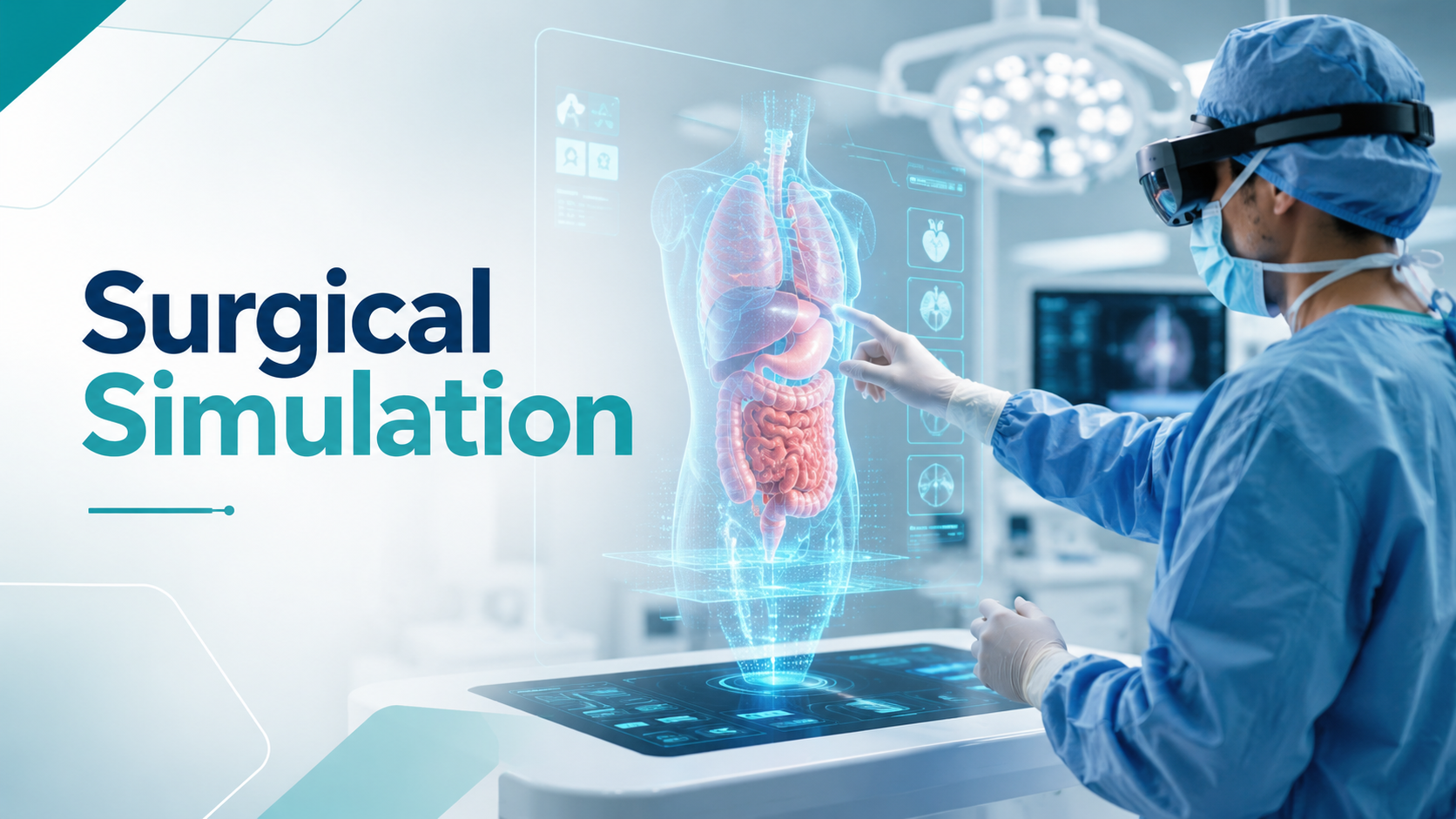
Medical training programs spend $500,000 to $2 million building physical surgical simulation labs with mannequins, haptic devices, and wet lab facilities. VR surgical simulation delivers comparable training outcomes at 10% of the cost through rental programs that eliminate capital investment, maintenance contracts, and dedicated lab space. Here’s how medical education directors are evaluating the ROI of VR-based surgical training versus traditional simulation infrastructure.
The Business Case for VR Surgical Simulation vs. Traditional Skills Labs
Cost Comparison: Physical Lab vs. VR Rental Program
Traditional surgical simulation labs require substantial upfront investment that extends far beyond equipment purchases. A single high-fidelity mannequin costs between $30,000 and $150,000, with most programs requiring 4-6 units to avoid bottlenecks. Haptic trainers for laparoscopic skills run $75,000 or more per station. Lab renovation adds another $200,000 to $500,000 for proper ventilation, electrical capacity, and storage infrastructure.
VR rental programs operate on a predictable monthly cost structure. Medical-grade VR headsets rent for $500 to $1,500 per month with preloaded surgical modules. A 20-headset deployment supporting 80 residents costs approximately $20,000 monthly—less than the annual maintenance contract on a single physical simulator.
Software updates happen automatically through cloud deployment, eliminating the $10,000 to $30,000 annual service contracts required for physical simulators. When new procedures become available, they download overnight rather than requiring technician visits or hardware upgrades.
Space requirements present another stark contrast. Physical simulation labs need 2,000 to 4,000 square feet of dedicated space, valued at $50 to $100 per square foot annually in hospital settings. VR equipment stores on a single charging cart that fits in any secure closet, freeing valuable clinical space for patient care.
Training Capacity and Scheduling Flexibility
Physical simulation labs create artificial scarcity through limited training stations. A typical lab with six stations forces programs into complex rotation schedules, with residents waiting weeks for specific procedure practice. Night and weekend access requires additional staffing costs or remains unavailable entirely.
VR deployment eliminates these constraints through unlimited concurrent users. Every resident can practice the same procedure simultaneously using rental fleet scaling. Programs add headsets monthly based on demand rather than planning capacity years in advance.
Remote training capability transforms multi-site residency programs. Residents at affiliated hospitals access the same surgical simulation content without traveling to the main campus. Rural rotation sites become viable training locations with just internet connectivity and shipped headsets.
The 24/7 practice model fundamentally changes skill development. Residents complete required repetitions at home after shifts, turning previously wasted commute or downtime into productive training. Usage data shows 60% of VR practice happens outside traditional lab hours.
Skill Transfer and Assessment Data
Published research demonstrates strong skill transfer from VR surgical simulation to operating room performance. A 2023 meta-analysis in Surgical Endoscopy found VR-trained residents completed laparoscopic tasks 29% faster with 37% fewer errors compared to traditional training methods.
Automated performance metrics replace subjective observation scoring. Every hand movement, decision point, and procedural step generates objective data. Programs track metrics like economy of motion, tissue handling scores, and critical error rates without faculty observers present.
Assessment data flows directly into residency management systems through API integration. Milestone achievements, competency documentation, and readiness scores populate automatically. Program directors access real-time dashboards showing individual and cohort progress against curriculum requirements.
The granularity of VR assessment data enables personalized training paths. Residents struggling with specific techniques receive targeted practice modules. High performers advance to complex variations and complications. This adaptive approach optimizes training time and improves outcomes across skill levels.
Surgical Simulation Software Platforms: What’s Actually Available for Rental Deployment
Not all surgical simulation software works on rental-ready standalone headsets. Most platforms require high-end PCs, haptic devices, or proprietary hardware that defeats the purpose of flexible deployment. These platforms offer genuine standalone VR surgical training that runs on Meta Quest or Pico headsets available through rental programs.
Osso VR: Orthopedic and General Surgery Procedures
Osso VR leads standalone deployment with over 120 procedures spanning orthopedics, general surgery, and medical device training. The platform runs entirely on Quest 2, Quest 3, and Pico 4 Enterprise headsets without external computers or sensors.
Orthopedic modules cover total knee arthroplasty, hip replacement, spine fusion, and trauma procedures. Each module includes anatomical variation, implant selection, and complication management. Residents practice the complete workflow from patient positioning through closure.
Multi-user collaborative sessions enable attending-resident interaction in shared virtual operating rooms. Up to 8 participants join procedures simultaneously, with role assignment for surgeon, assistant, and observers. This multiplayer capability supports remote proctoring and assessment.
Assessment scoring happens automatically with detailed metrics on technique, efficiency, and decision-making. The platform generates competency reports aligned with ACGME milestones. Typical rental deployments include 10-20 headsets preloaded with specialty-specific procedure libraries.
FundamentalVR: Haptic-Enhanced Surgical Training
FundamentalVR combines visual immersion with haptic feedback through HapticVR gloves, providing touch sensation during procedures. While requiring a PC workstation, the complete setup remains portable on a wheeled cart for flexible deployment.
The platform excels in procedures requiring fine tactile discrimination. Ophthalmology modules simulate cataract surgery with realistic tissue resistance. Orthopedic applications provide bone drilling feedback. General surgery scenarios include suturing with appropriate tension response.
Rental packages bundle the headset, haptic gloves, and configured workstation as a complete unit. Monthly costs run higher than standalone solutions but remain below traditional haptic simulator pricing. Programs typically deploy 2-4 haptic stations supplemented by standalone headsets for visual training.
Educational analytics track force application, tremor, and precision alongside visual performance metrics. The combination of haptic and visual data provides comprehensive skill assessment unavailable in purely visual platforms.
PrecisionOS: Orthopedic Surgery Focus
PrecisionOS delivers orthopedic surgical simulation optimized for Quest platform deployment. The software emphasizes procedural accuracy with guidance from leading orthopedic surgeons and medical device partners.
Hip arthroscopy, knee replacement, shoulder repair, and spine procedures form the core curriculum. Each procedure includes multiple approaches, implant systems, and patient anatomies. The platform particularly excels at teaching proper tool handling and surgical technique.
CME credit eligibility makes PrecisionOS attractive for continuing education beyond residency. Practicing surgeons rent headsets for new technique training or annual competency requirements. This dual-use capability improves program ROI.
Rental deployments come with headsets preloaded and user accounts provisioned. Programs receive quarterly content updates with new procedures and techniques. Usage analytics integrate with learning management systems for automated credit tracking.
SimX: Emergency and Trauma Surgery Scenarios
SimX specializes in high-acuity scenarios requiring rapid decision-making and team coordination. The platform transforms VR from individual skill training to team-based crisis management.
Trauma bay simulations place surgical residents, emergency physicians, and nurses in time-critical scenarios. Penetrating trauma, multi-system injuries, and mass casualty events test protocols and communication. The multiplayer environment captures team dynamics impossible in traditional simulation.
Surgical scenarios include emergency procedures like cricothyrotomy, thoracotomy, and damage control laparotomy. Time pressure and evolving patient conditions create realistic stress. Performance metrics track both technical execution and crisis resource management.
Cloud-based deployment enables instant scenario updates and custom case creation. Programs upload local protocols and preferences for tailored training. Monthly content releases add new scenarios based on actual trauma cases and emerging best practices.
Implementation Roadmap: Launching a Surgical Simulation Pilot Program
Medical education programs typically start with a 3-6 month pilot before committing to full deployment. This phased approach validates training outcomes, tests logistics, and builds faculty buy-in without major investment. Here’s the tactical roadmap programs follow when launching VR surgical simulation through rental deployment.
Phase 1: Stakeholder Alignment and Pilot Design (Weeks 1-2)
Successful pilots begin with champion identification across key stakeholder groups. Surgery department chairs provide political support and funding approval. Residency program directors define curriculum integration points. Senior residents offer peer credibility and practical feedback.
Procedure selection focuses on high-volume, high-risk, or difficult-to-access training opportunities. Laparoscopic cholecystectomy addresses volume. Carotid endarterectomy covers high-risk scenarios. Arthroscopy provides experience before expensive cadaver labs.
Measurable outcomes drive pilot design and evaluation. Time to proficiency benchmarks compare VR-trained residents against historical controls. Error rate tracking uses OR video review or simulation assessment. Confidence scores capture subjective readiness through validated instruments.
Pilot sizing balances statistical significance with resource constraints. Five to ten headsets supporting 20-30 residents provides adequate power for meaningful comparisons. Larger pilots risk implementation complexity without proportional benefit. Smaller deployments lack generalizability.
Phase 2: Platform Selection and Rental Setup (Weeks 3-4)
Platform matching aligns institutional needs with available content. Orthopedic programs prioritize Osso VR or PrecisionOS. General surgery focuses on laparoscopic platforms. Emergency medicine departments choose SimX for trauma scenarios.
Rental configuration extends beyond headset quantity. Charging stations prevent battery-related disruptions. Transport cases enable multi-site deployment. Hygiene supplies maintain infection control standards. Complete packages eliminate procurement delays.
Content preloading and account provisioning happen before equipment arrival. Vendor support teams configure user groups, assign content libraries, and establish analytics dashboards. This advance preparation enables immediate training upon delivery.
Faculty facilitator training ensures smooth adoption. Two-hour virtual sessions cover platform navigation, session management, and troubleshooting. Recorded training materials provide ongoing reference. Super-user identification creates internal support capacity.
Phase 3: Pilot Execution and Data Collection (Months 2-4)
Initial orientation sessions set expectations and build enthusiasm. Thirty-minute hands-on introductions overcome VR hesitation. Residents complete baseline assessments and familiarization modules. Early wins generate word-of-mouth promotion.
Weekly practice requirements maintain engagement without overwhelming schedules. Two hours of VR training weekly shows measurable improvement while fitting into resident workflows. Flexible scheduling accommodates call schedules and rotation demands.
Monthly faculty reviews track progress and address concerns. Performance data presentations demonstrate objective improvement. Technical issues receive immediate attention. Curriculum adjustments respond to learner feedback.
Support escalation pathways prevent frustration. Peer mentors handle basic questions. Program coordinators manage scheduling and logistics. Vendor support addresses technical issues. Clear communication channels maintain pilot momentum.
Phase 4: Evaluation and Scaling Decision (Month 5-6)
Skill assessment analysis compares pre- and post-training performance. Statistical testing validates improvement significance. Effect sizes quantify training impact. Subgroup analysis identifies differential benefits across experience levels.
Cost-benefit calculations inform scaling decisions. Per-resident training costs include rental, support, and administration. Comparison with traditional methods highlights efficiency gains. Projected scaling costs model different deployment sizes.
Stakeholder surveys capture qualitative feedback beyond metrics. Resident satisfaction influences recruitment and retention. Faculty acceptance determines long-term adoption. Administrative support ensures continued funding.
Business case development synthesizes quantitative and qualitative findings. Executive summaries highlight key outcomes and recommendations. Detailed appendices provide supporting data. Presentation materials facilitate committee discussions and decision-making.
Specialty-Specific Surgical Simulation Applications
Different surgical specialties have unique training requirements that determine platform selection and deployment approach. Orthopedic programs need procedural repetition, while general surgery focuses on laparoscopic skills and anatomy recognition. Understanding these specialty-specific needs shapes the rental configuration and content selection.
Orthopedic Surgery Simulation
Joint replacement procedures dominate orthopedic simulation requirements. Total knee arthroplasty modules teach alignment, bone cutting, and implant positioning. Hip replacement training covers approaches, cup positioning, and leg length assessment. Shoulder arthroplasty addresses glenoid preparation and humeral stem placement.
Fracture reduction and fixation techniques require different simulation approaches. VR excels at teaching reduction maneuvers and implant selection. Fluoroscopy interpretation and 3D spatial reasoning improve through repeated practice. Complex fracture patterns that rarely present in residency become accessible training cases.
Arthroscopy simulation benefits from VR’s ability to teach camera navigation and triangulation. Knee, shoulder, and hip arthroscopy modules develop hand-eye coordination. Procedural steps from portal placement through therapeutic intervention receive focused practice.
Typical orthopedic programs deploy 15-20 headsets to support PGY1-5 residents plus fellows. Content libraries include 30-40 procedures with multiple difficulty levels. Monthly rotation through subspecialty modules aligns with clinical rotations.
General Surgery and Laparoscopy
Fundamentals of Laparoscopic Surgery (FLS) task training forms the foundation of general surgery simulation. Peg transfer, precision cutting, and intracorporeal suturing modules build essential skills. VR platforms provide unlimited practice without consumable supplies or equipment setup.
Common procedures receive priority in content selection. Cholecystectomy modules teach critical view of safety and anatomical variations. Appendectomy training covers different approaches and difficulty levels. Hernia repair simulation includes mesh placement and fixation techniques.
Camera navigation and assistance skills often receive insufficient attention in traditional training. VR platforms enable residents to practice both operating and assisting roles. Understanding optimal camera angles and anticipating surgeon needs improves OR efficiency.
Suturing and knot-tying modules address the technical skills gap many residents face. Haptic-enabled platforms provide tension feedback for realistic practice. Progress tracking identifies residents needing additional support before OR exposure.
Neurosurgery and Spine Procedures
Craniotomy planning benefits from VR’s 3D visualization capabilities. Residents explore approach angles, identify anatomical landmarks, and anticipate complications. Patient-specific models from DICOM imports enable preoperative rehearsal for complex cases.
Spinal procedures emphasize pedicle screw placement and decompression techniques. Cervical, thoracic, and lumbar modules cover common pathologies. Navigation system integration teaches modern surgical techniques. Fluoroscopy correlation improves intraoperative imaging interpretation.
Microscope simulation addresses the unique challenges of microsurgery. Tremor amplification, limited depth of field, and restricted working space create realistic training conditions. Fine motor control exercises prepare residents for delicate procedures.
Patient-specific simulation transforms complex case preparation. Tumor resections, vascular malformations, and skull base procedures benefit from rehearsal. Surgical teams practice together in virtual environments before high-stakes operations.
Cardiovascular and Thoracic Surgery
Coronary artery bypass grafting (CABG) simulation teaches both on-pump and off-pump techniques. Vessel harvesting, anastomosis creation, and graft positioning receive focused practice. Beating heart modules add realistic motion challenges.
Valve procedures require precise suture placement and sizing decisions. Mitral repair simulation includes annuloplasty and leaflet techniques. Aortic valve replacement modules cover surgical and transcatheter approaches. The complexity of valve surgery benefits from repeated virtual practice.
Endovascular training bridges interventional and surgical techniques. EVAR, TEVAR, and fenestrated graft deployment improve through simulation. Catheter navigation and fluoroscopy interpretation skills transfer directly to hybrid OR procedures.
Robotic surgery preparation increasingly relies on VR simulation. Console time remains expensive and limited for trainees. VR platforms provide preliminary training in robotic control and 3D visualization before actual robot access.
Logistics and Support: Managing a VR Surgical Simulation Fleet
The operational side of surgical simulation often determines program success. Medical education teams need clear processes for headset distribution, hygiene protocols, technical support, and usage tracking. Rental programs include these operational elements as managed services, eliminating the IT burden on hospital staff.
Headset Distribution and Access Control
Centralized charging cart deployment simplifies equipment management. Simulation centers or medical libraries house 20-unit carts with automated charging and status monitoring. LED indicators show charge levels and ready status. Locked carts prevent unauthorized access while maintaining availability.
Check-out systems balance access with accountability. Badge scanning or app-based reservation tracks individual usage. Overnight and weekend loans enable home practice. Automated reminders ensure timely returns. Overdue notifications escalate to program coordinators.
User authentication protects patient scenarios and maintains individual progress. Single sign-on integration with hospital credentials streamlines access. Biometric options like hand tracking provide password-free authentication. Guest accounts enable visiting resident or student access.
Multi-site synchronization supports distributed programs. Cloud-based profiles follow users across locations. Progress syncs automatically between sessions. Administrators view consolidated analytics regardless of access location.
Hygiene and Infection Control Protocols
Medical-grade hygiene supplies prevent cross-contamination between users. Disposable face cushions provide individual barriers. Antibacterial wipes designed for electronics clean surfaces between sessions. Lens cleaning supplies maintain visual clarity without damaging coatings.
UV-C sanitization stations offer rapid turnaround between users. Five-minute cycles eliminate 99.9% of pathogens. Automatic cycles prevent human error. Documentation logs support infection control audits. Multiple stations prevent bottlenecks during high-use periods.
Hospital infection control approval requires detailed protocols. Written procedures specify cleaning agents and contact times. Training materials ensure consistent application. Compliance monitoring through spot checks maintains standards. Regular updates incorporate emerging guidelines.
Joint Commission compliance documentation demonstrates safety standards. Cleaning logs show protocol adherence. Incident reports track any hygiene concerns. Quality improvement initiatives address identified gaps. Annual reviews ensure continued compliance.
Technical Support and Troubleshooting
Vendor help desks provide immediate assistance for common issues. Dedicated medical education support teams understand clinical training contexts. Average response times under 10 minutes prevent training disruptions. Escalation paths reach specialized technicians for complex problems.
Advance replacement programs minimize equipment downtime. Defective units ship immediately upon issue confirmation. Prepaid return labels simplify logistics. Replacement units arrive preconfigured with user data. Typical turnaround under 48 hours maintains training continuity.
Software update management happens transparently through rental programs. Automatic overnight updates install new features and fixes. Staged rollouts prevent widespread issues. Rollback capabilities restore previous versions if needed. Release notes communicate changes to administrators.
On-site support for major events ensures smooth execution. Vendor technicians attend orientation sessions and assessments. Real-time troubleshooting prevents session disruptions. Backup equipment provides immediate replacements. Post-event reports identify improvement opportunities.
Measuring ROI: KPIs and Outcomes for Surgical Simulation Programs
Medical education directors need concrete metrics to justify surgical simulation investment to hospital administration. Successful programs track both educational outcomes and operational efficiency gains, building the case for continued funding or expansion. These KPIs demonstrate the value of VR surgical training beyond traditional assessment methods.
Clinical Performance Metrics
Time to procedural competency shows dramatic improvement with VR training. Programs report 30-40% reduction in repetitions needed to achieve proficiency benchmarks. Laparoscopic cholecystectomy competency requires 15 VR sessions versus 25 traditional lab sessions. This acceleration translates directly to earlier OR independence.
First-time success rates in the operating room provide objective validation. VR-trained residents complete initial procedures with 23% fewer attending interventions. Critical step completion without assistance increases from 68% to 84%. These improvements reduce OR time and improve patient safety.
Error reduction in critical procedural steps demonstrates training effectiveness. Video review shows 37% fewer technical errors in VR-trained cohorts. Critical errors requiring attending takeover decrease by 45%. Near-miss events decline significantly with structured VR preparation.
Attending surgeon confidence ratings validate subjective readiness improvements. Surveys show 4.2/5 confidence in VR-trained residents versus 3.4/5 for traditional training. Attendings report reduced anxiety when supervising VR-prepared residents. Graduated autonomy happens earlier with documented VR competency.
Educational Efficiency Gains
Practice hours logged outside scheduled time transform training capacity. VR platforms record 2.3 hours of additional practice weekly per resident. Evening and weekend sessions account for 60% of total usage. This expanded practice time requires no additional faculty resources.
Procedure repetition numbers increase dramatically with VR access. Residents complete 5-10x more repetitions before live surgery. Rare procedures receive adequate practice despite limited clinical exposure. Complication scenarios impossible in traditional labs become routine training.
Faculty teaching time optimization occurs through automated instruction. Basic skill development happens independently through VR modules. Faculty focus on advanced techniques and decision-making. One-on-one instruction becomes more valuable and targeted.
Animal and cadaver lab requirements decrease with VR pre-training. Programs report 40% reduction in animal lab sessions. Cadaver lab time focuses on anatomy rather than basic techniques. Cost savings from reduced lab usage partially offset VR rental costs.
Financial Impact Analysis
Cost per training hour calculations favor VR deployment. Traditional simulation labs cost $125-200 per resident hour including equipment, space, and staffing. VR rental programs achieve $25-40 per hour at full utilization. The 5-8x cost advantage improves with scale.
Operating room efficiency gains provide measurable returns. VR-trained residents reduce case times by 12-18 minutes for common procedures. Faster turnover enables additional case capacity. Reduced attending supervision time increases faculty productivity.
Malpractice risk reduction through competency documentation adds defensive value. Objective performance data demonstrates training adequacy. Automated record-keeping provides litigation support. Insurance carriers increasingly recognize simulation training in rate calculations.
Grant funding opportunities expand with innovative training approaches. NIH and foundation grants favor programs using advanced simulation. Industry partnerships develop around VR platform deployment. Innovation recognition attracts top residency candidates.
Frequently Asked Questions
How much does it cost to rent VR headsets for surgical simulation training?
Medical-grade VR headsets with surgical simulation software rent for $500-1,500 per month per unit. Volume discounts apply for 10+ headset deployments. Complete packages including charging stations, hygiene supplies, and support run $750-2,000 monthly per headset.
Which surgical procedures can be practiced in VR?
Current VR platforms offer 200+ surgical procedures across specialties. Common procedures include laparoscopic cholecystectomy, appendectomy, total knee replacement, hip arthroplasty, spine fusion, craniotomy, CABG, and trauma management. New procedures are added monthly through software updates.
Do VR surgical simulators provide haptic feedback?
Select platforms like FundamentalVR include haptic gloves providing touch sensation. Most standalone VR systems rely on visual and audio feedback without haptics. Controller vibration provides basic tactile cues. Full haptic systems require additional hardware but remain portable.
How many headsets do we need for a residency program?
Programs typically need one headset per 3-4 residents for adequate access. A 40-resident program deploys 10-15 headsets. Larger deployments enable concurrent training sessions. Smaller programs may start with 5 headsets and scale based on usage.
Can surgical simulation VR content be customized for our curriculum?
Most platforms allow curriculum customization through module selection and sequencing. Some vendors create custom scenarios based on specific cases or protocols. API integration enables custom assessment rubrics and reporting aligned with program requirements.
What’s the evidence that VR surgical training transfers to real OR performance?
Multiple peer-reviewed studies demonstrate 25-40% improvement in OR performance metrics after VR training. Randomized controlled trials show faster task completion, fewer errors, and improved economy of motion. Skill retention remains strong at 6-month follow-up assessments.
How do we handle hygiene and infection control with shared VR headsets?
Medical VR rental programs include disposable face cushions, antibacterial wipes, and UV-C sanitization stations. Written protocols meet hospital infection control standards. Cleaning occurs between each user with documentation for compliance tracking.
Can residents practice surgical simulation at home?
Yes, standalone VR headsets work anywhere with WiFi. Residents check out headsets for home practice. Progress syncs to cloud platforms for instructor review. Home practice typically accounts for 60% of total training time.
Which VR platforms offer CME credits for surgical training?
PrecisionOS, Osso VR, and several other platforms provide CME-eligible content. Credit hours vary by module and specialty. Automatic tracking and certificate generation simplify credit documentation. Check with specific vendors for current CME offerings.
How long does it take to implement a VR surgical simulation program?
Pilot programs launch in 4-6 weeks from initial decision. Week 1-2: stakeholder alignment and planning. Week 3-4: platform selection and setup. Week 5-6: equipment delivery and initial training. Full deployment follows 3-6 month pilot evaluation.
Conclusion
VR surgical simulation through rental deployment represents a fundamental shift in medical training economics. Programs achieve superior training outcomes at a fraction of traditional simulation lab costs, with the flexibility to scale and adapt as technology evolves. The combination of proven skill transfer, operational efficiency, and financial sustainability makes VR rental the practical path forward for surgical education.
The evidence is clear: residents trained with VR surgical simulation perform better in the operating room, require less supervision, and achieve competency faster than traditionally trained peers. Medical education programs that delay VR adoption risk falling behind in recruitment, training quality, and innovation funding opportunities.
Ready to launch your VR surgical simulation pilot program? Contact our medical simulation specialists for a customized deployment plan. We’ll help you select the right platforms, size your rental fleet, and design assessment protocols that demonstrate ROI to stakeholders. Schedule your consultation today and join the growing network of programs transforming surgical training through VR technology.