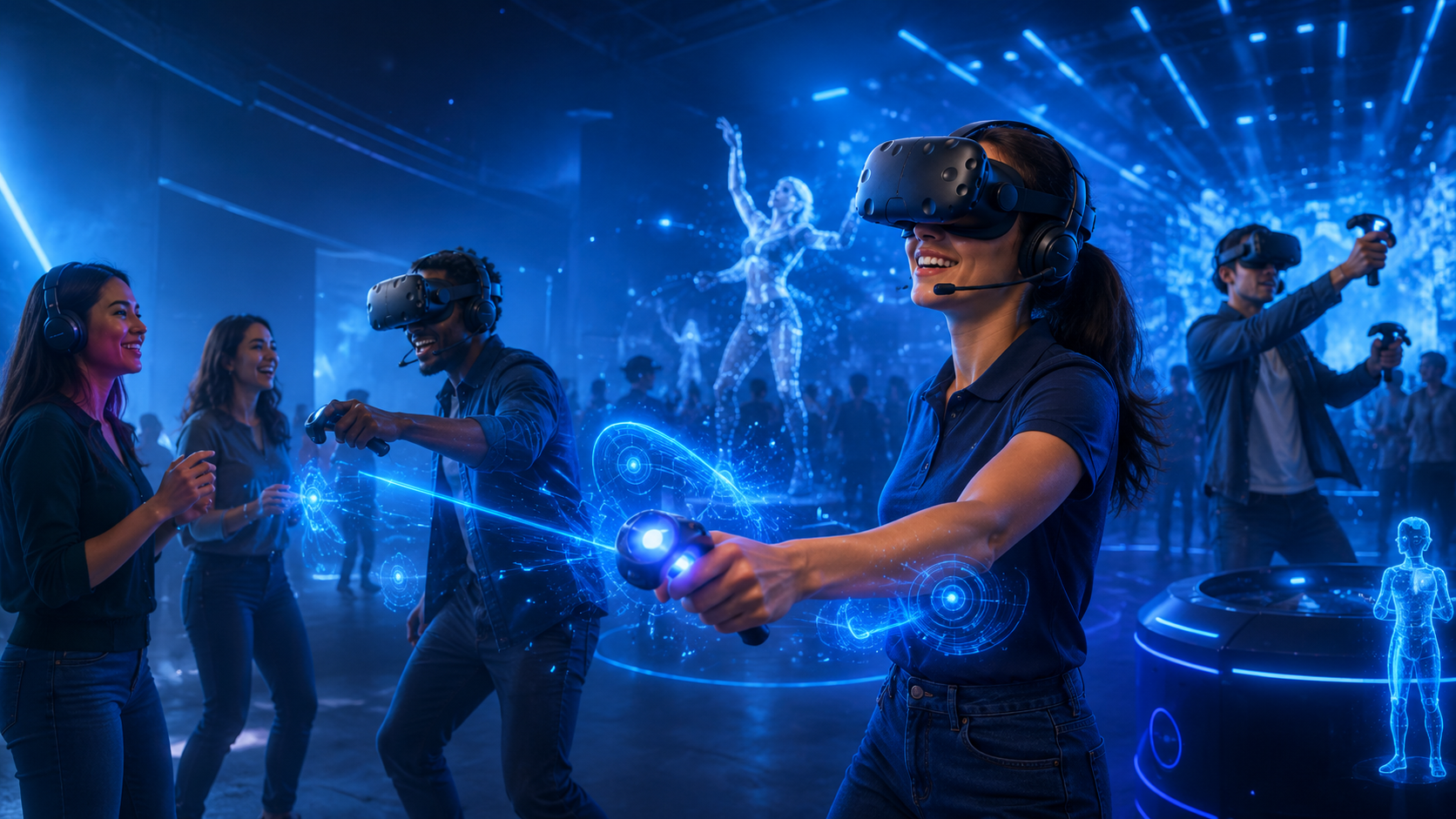
Team building works best when people are engaged, active, and genuinely having fun. Virtual reality team building brings employees into shared immersive experiences where they can communicate, solve problems, compete, collaborate, and laugh together.
Unlike traditional team-building activities, VR gives every participant a memorable role. Teams can solve puzzles, play multiplayer games, complete missions, explore virtual worlds, or compete in friendly challenges. The result is an event that feels fresh, inclusive, and energizing.
Whether you are planning a company offsite, employee appreciation day, conference activity, or internal team event, this guide explains how VR team building works and how to plan it successfully in 2026.
What Is VR Team Building?
VR team building is a group activity where participants use virtual reality headsets to play games, complete challenges, or share immersive experiences together. It can be competitive, collaborative, or a mix of both.
Instead of sitting through passive activities, employees step into an interactive environment. They may work together to solve a virtual escape room, compete in rhythm games, coordinate in multiplayer missions, or take turns cheering on teammates.
Why Companies Use VR for Team Building
Companies use VR team building because it creates high engagement quickly. It is different from standard office activities, and it gives employees something to talk about after the event.
VR can help teams:
- Improve communication
- Build trust
- Encourage collaboration
- Reduce workplace stress
- Create shared memories
- Increase employee engagement
- Support hybrid or distributed team culture
- Add energy to corporate events
VR also works well for teams with mixed personalities. Some people enjoy competition, others enjoy discovery, and others prefer watching and cheering. A well-planned VR event can include all of these roles.
Best VR Team Building Activities
1. Multiplayer Challenge Games
Multiplayer games are ideal for teams that enjoy competition. Participants can compete in small groups, rotate through stations, or work toward a shared leaderboard.
These activities are great for company parties, employee engagement days, and conference entertainment.
2. Collaborative Puzzle Experiences
Puzzle-based VR activities encourage communication and problem solving. Teams must share information, make decisions, and coordinate actions to complete the challenge.
This format works well for leadership groups, project teams, and departments that want a more collaborative experience.
3. VR Escape Rooms
VR escape rooms are popular because they combine storytelling, teamwork, and time pressure. Participants must solve clues and complete tasks before time runs out.
A VR escape room can be easier to set up than a physical escape room because the environment is digital and portable.
4. Rhythm and Reaction Games
Rhythm games are energetic, easy to understand, and fun for spectators. They work well when not everyone will use a headset at the same time because the group can watch, cheer, and compare scores.
5. Virtual Sports and Arcade Games
VR sports and arcade games are great for casual corporate events. They are easy to explain and can accommodate different experience levels.
6. Creative VR Experiences
Creative VR activities let participants paint, build, design, or explore. They are useful for teams that prefer lower-pressure activities over competition.
7. Training-Based Team Simulations
Some companies use VR team building to blend fun with learning. For example, teams may practice communication, safety awareness, customer interaction, or leadership decision-making in a simulated environment.
How to Plan a VR Team Building Event
Step 1: Define the Goal
Start by deciding what you want the event to accomplish. Is the goal entertainment, collaboration, leadership development, employee appreciation, or conference engagement?
Your goal will shape the choice of games, event format, number of headsets, and staffing needs.
Step 2: Estimate Group Size
The number of participants affects the setup. A small team may only need a few headsets, while a larger group may need stations, rotations, or multiple activities.
For large groups, it is important to keep wait times short. A good VR rental provider can recommend the right number of devices for your schedule.
Step 3: Choose the Right Format
Common VR team-building formats include:
- Open play stations
- Timed team rotations
- Tournament format
- Collaborative challenge format
- Mixed activity zones
- Facilitated team competition
A tournament format is great for high energy. A collaborative format is better for communication and problem solving.
Step 4: Select Activities
Choose activities that match your audience. If many participants are new to VR, use simple and intuitive games first. If the team is more tech-savvy, you can introduce more advanced experiences.
Avoid overly complicated controls for short events. The best event games are easy to learn and exciting to watch.
Step 5: Plan the Space
VR needs safe movement space. The event area should be clear of obstacles, with enough room for users, staff, and spectators.
Consider:
- Floor space
- Power access
- Wi-Fi needs
- Seating for waiting participants
- Viewing screens if available
- Queue management
- Cleaning station
Step 6: Use On-Site Facilitators
A facilitator helps the event run smoothly. They explain the activity, help users put on headsets, manage turns, clean devices, and troubleshoot technical issues.
For corporate groups, facilitation is one of the most important parts of the experience.
VR Team Building for Hybrid Teams
VR can also support hybrid team culture. While in-person VR events create the strongest shared experience, virtual or distributed teams can still use VR activities for remote engagement when the right equipment and setup are available.
For companies bringing remote employees together for an offsite, VR can serve as a memorable anchor activity.
How Long Should a VR Team Building Event Last?
Most VR team-building events work well in sessions of one to three hours, depending on the group size and format. Shorter events can focus on fast games and rotations. Longer events can include tournaments, multiple activity stations, and breaks.
Tips for a Successful VR Team Building Event
- Choose beginner-friendly experiences
- Keep sessions short and engaging
- Use facilitators for setup and support
- Create a rotation plan for larger groups
- Include spectator-friendly games
- Offer low-pressure options
- Clean headsets between users
- Use a leaderboard for competition
- Match activities to company culture
Why Rent VR for Team Building?
Renting VR equipment is easier than buying it for a single event. A rental package can include headsets, games, setup, and staff support. This reduces the burden on internal teams and helps ensure the experience runs smoothly.
To start planning, book a VR team building event with IGIVU
VR team building is effective because it creates shared experiences that people remember. It brings energy to corporate events, encourages interaction, and gives employees a fun way to connect outside normal work routines.
With the right planning, equipment, and facilitation, VR can turn a standard team event into something immersive, social, and exciting.
Ready to bring your team together in a new way? IGIVU can help you plan a VR team-building event with the right headsets, games, setup, and support.