VR Event Rental Solutions for Every Occasion
Professional VR event rental services deliver far more than just equipment delivery. Full-service providers supply enterprise-grade virtual reality hardware, handle complete setup and breakdown, provide trained technical staff throughout your event, and offer 24/7 support to ensure seamless operation. These turnkey solutions eliminate the complexity of DIY rentals, allowing event planners to focus on attendee experience rather than technical troubleshooting.
Modern VR rental fleets include 50+ synchronized headsets, custom-branded experiences tailored to your event goals, real-time analytics dashboards, and backup equipment ready for instant deployment. Professional providers manage everything from initial venue assessment through post-event data delivery, transforming VR from a technical challenge into a powerful engagement tool.
Trade Shows & Exhibitions
VR activations at trade shows generate measurable results. Exhibitors using virtual reality experiences report 87% higher booth traffic compared to traditional displays, with average dwell times extending from 90 seconds to over 8 minutes per visitor. This extended engagement creates meaningful conversations and qualified lead opportunities.
Multi-station VR setups maximize throughput at busy exhibitions. A typical 20×20 booth configuration supports four simultaneous VR stations, processing 60-80 participants per hour while maintaining quality interactions. Each station operates independently, preventing bottlenecks during peak traffic periods. Queue management systems display estimated wait times and capture contact information while attendees wait.
Custom-branded VR experiences reinforce your trade show messaging. Professional rental providers embed your logo, products, and key messages directly into virtual environments. Attendees might explore a virtual factory showcasing your manufacturing capabilities, navigate through your new product line in an immersive showroom, or experience your service benefits through interactive simulations.
Lead capture integration transforms VR engagement into actionable data. Modern VR rental systems automatically log participant information, track interaction points within experiences, measure completion rates, and export qualified leads directly to your CRM. Heat mapping reveals which product features generate the most interest, informing follow-up strategies.
Corporate Events & Conferences
Team building through VR creates memorable shared experiences that strengthen workplace relationships. Groups of 10-50 employees can simultaneously participate in collaborative virtual challenges, from escape rooms requiring coordinated problem-solving to virtual construction projects demanding clear communication. These experiences break down hierarchical barriers and encourage creative collaboration.
Product demonstrations in VR showcase capabilities impossible with physical displays. Sales teams can walk clients through massive industrial equipment without shipping costs, demonstrate software workflows in three-dimensional space, or visualize architectural projects at full scale. Simultaneous sessions allow multiple client groups to experience personalized demonstrations without scheduling conflicts.
Multi-user VR sessions enable unprecedented conference interactions. Keynote speakers can transport entire audiences to virtual locations relevant to their presentations. Breakout sessions become immersive workshops where participants manipulate 3D data visualizations together. Panel discussions take place in virtual environments that reinforce discussion themes.
Executive briefing centers equipped with premium VR hardware create impressive client experiences. Private demo suites feature high-resolution headsets, spatial audio systems, and comfortable seating for extended sessions. Technical staff remain discretely available while executives guide clients through strategic visualizations, competitive comparisons, and future vision presentations.
Training & Simulation Events
Safety training in VR reduces workplace accidents by 43% compared to traditional methods. Rental packages include pre-built modules for confined space entry, lockout/tagout procedures, fall protection protocols, and hazardous material handling. Trainees practice dangerous scenarios without real-world risks, building muscle memory and decision-making skills.
Medical simulation rentals provide continuing education opportunities at conferences and hospitals. Healthcare professionals practice rare procedures, experience patient perspectives, and collaborate in virtual operating rooms. Rental fleets include specialized medical content libraries covering emergency response, surgical techniques, and patient communication scenarios.
Manufacturing process training through VR accelerates onboarding and reduces errors. New employees learn assembly sequences, quality control procedures, and equipment operation in virtual factories matching your exact specifications. Mistakes in VR become learning opportunities rather than costly production delays.
Scalable classroom configurations support groups from 10 to 200 participants. Wireless VR headsets eliminate cable management challenges in training rooms. Instructor dashboards display all participant views simultaneously, allowing real-time guidance and progress monitoring. Automated scoring systems track competency development across multiple training sessions.
VR Equipment Rental Packages
Professional VR event rental providers maintain extensive hardware inventories to support events of any scale. Equipment packages include the latest consumer and enterprise headsets, powerful rendering workstations, comprehensive tracking systems, and all necessary accessories. Technical specifications, compatibility requirements, and scalability options help event planners select optimal configurations for their specific needs.
Standalone VR Headset Rentals
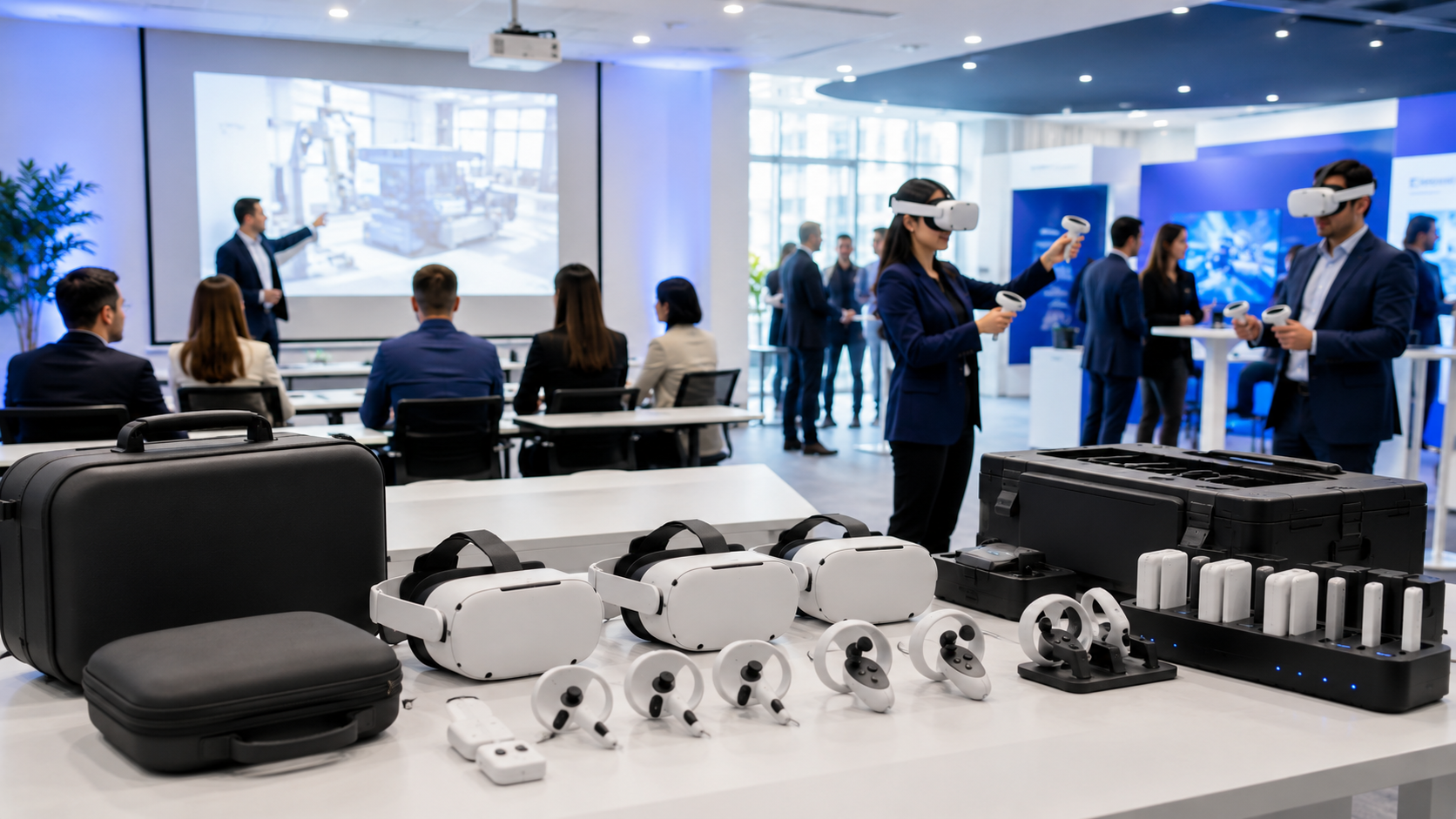
Meta Quest 3 fleets represent the current standard for large-scale event deployments. Each headset delivers 2064×2208 per-eye resolution, 120Hz refresh rates, and 6DOF inside-out tracking without external sensors. Rental fleets typically include 50-100 units, enabling simultaneous experiences for large groups. Battery hot-swap systems ensure continuous operation throughout 8-hour event days.
Pico 4 Enterprise headsets offer enhanced security features for corporate deployments. Kiosk modes prevent unauthorized access to device settings, while mobile device management (MDM) integration enables remote configuration and monitoring. These headsets support custom enterprise applications and provide detailed usage analytics for training validation.
Minimum rental quantities typically start at 10 headsets for small corporate events, with discounts applied at 25, 50, and 100-unit thresholds. Large conferences often deploy 200+ headsets across multiple venues and session rooms. Rental providers maintain 20% spare inventory on-site to handle unexpected attendance or equipment issues.
Hygiene protocols protect attendee health and comfort. Each rental includes disposable face masks for every participant, antibacterial wipes for between-session cleaning, UV-C sanitization cases for overnight sterilization, and hypoallergenic strap covers for sensitive users. Professional staff manage cleaning rotations to maintain throughput while ensuring safety.
PC-Powered VR Stations
High-end graphics workstations unlock premium VR experiences requiring substantial computational power. Rental configurations feature NVIDIA RTX 4090 graphics cards, Intel Core i9 processors, 64GB RAM, and NVMe storage arrays. These systems render photorealistic environments, complex simulations, and multi-user networked experiences impossible on standalone headsets.
Valve Index and HTC Vive Pro 2 setups deliver maximum visual fidelity for demanding applications. The Valve Index’s 144Hz displays and precision finger-tracking controllers excel at detailed manipulation tasks. HTC Vive Pro 2’s 5K resolution reveals fine details in architectural visualizations and medical imaging applications. Both systems utilize lighthouse tracking for millimeter-precision movement detection across 10×10 meter play spaces.
Space requirements vary by application and headset type. Seated experiences require 2×2 meter zones per station, while room-scale installations need 3×3 meter minimum areas with 4×4 meter recommended for optimal comfort. Safety barriers, padded flooring, and overhead cable management systems prevent accidents during active sessions. Clear sight lines between stations allow staff to monitor multiple participants simultaneously.
Power and networking infrastructure demands careful planning. Each PC-powered station requires dedicated 15-amp circuits to prevent overloads. Gigabit ethernet connections ensure smooth multi-user experiences and cloud content streaming. Rental providers supply power distribution units, network switches, and backup UPS systems to maintain stable operation throughout events.
Supporting Equipment & Accessories
Advanced tracking systems expand VR capabilities beyond standard headset sensors. OptiTrack and Vicon motion capture arrays enable full-body tracking for performance capture, sports training analysis, and ergonomic assessments. Rental packages include 8-24 cameras, calibration tools, tracking markers, and specialized software licenses.
Haptic feedback devices add tactile sensations to virtual experiences. Haptic gloves enable users to feel virtual object textures, resistance, and temperature variations. Haptic vests deliver impact sensations for training simulations and gaming experiences. Force feedback controllers provide resistance for medical training and industrial applications. Complete haptic packages enhance realism and improve skill transfer.
Spectator display systems engage audiences beyond active participants. 85-inch 4K displays show participant perspectives to waiting attendees. Video walls aggregate multiple user views for competitive experiences. Streaming encoders broadcast VR sessions to remote audiences. Mixed reality capture systems composite users into virtual environments for compelling promotional content.
Branded physical props bridge virtual and physical realities. Custom-printed floor decals mark play areas with corporate colors and logos. Themed staging elements reinforce experience narratives. Physical product replicas match virtual representations for tactile examination. Branded giveaways extend engagement beyond the event itself.
Full-Service Event Support
Professional VR event rental extends far beyond equipment delivery. Comprehensive support services ensure smooth operations from initial planning through post-event analysis. Experienced teams handle technical complexities, allowing event organizers to focus on attendee engagement and business objectives. This full-service approach differentiates professional providers from basic equipment rental companies.
Pre-Event Planning & Consultation
Venue site surveys identify potential challenges before event day. Technical specialists evaluate available space dimensions, ceiling heights, and traffic flow patterns. They document electrical capacity, internet bandwidth, and HVAC considerations. Detailed floor plans optimize VR station placement for maximum throughput while maintaining safety clearances. 3D venue models help visualize final configurations before committing to layouts.
Content selection aligns VR experiences with event objectives. Rental providers maintain libraries of proven experiences across industries and use cases. Consultation sessions identify key messages, target demographics, and desired outcomes. Custom content development timelines range from simple branding additions (1-2 weeks) to completely bespoke experiences (8-12 weeks). Content testing sessions ensure experiences meet expectations before events.
Attendee throughput calculations prevent bottlenecks and disappointed guests. Standard VR experiences average 3-5 minutes per session, processing 12-20 users per hour per station. Complex training modules may require 15-30 minutes, limiting throughput to 2-4 users per hour. Mathematical models factor in setup time, cleaning protocols, and break schedules to predict realistic capacity. Queue management strategies maintain engagement during wait times.
Technical requirement assessments prevent day-of surprises. Detailed checklists verify power availability, internet connectivity, and environmental conditions. Load calculations ensure electrical systems support equipment demands. Network tests confirm bandwidth sufficiency for cloud-connected experiences. Contingency plans address potential failure points with backup equipment and alternative configurations.
On-Site Setup & Management
Professional installation teams transform empty spaces into immersive VR environments. Experienced technicians typically complete standard 4-station configurations in 2-3 hours. Large 20+ headset deployments require 6-8 hours including network configuration and content synchronization. Teams arrive with complete tool kits, safety equipment, and spare components to handle unexpected challenges.
Real-time technical support staff ensure continuous operation throughout events. Certified VR specialists maintain 1:4 staff-to-station ratios for standard experiences, increasing to 1:2 for complex training scenarios. Support staff handle headset adjustments, guide first-time users, troubleshoot technical issues, and manage hygiene protocols. Discrete communication systems coordinate staff responses without disrupting attendee experiences.
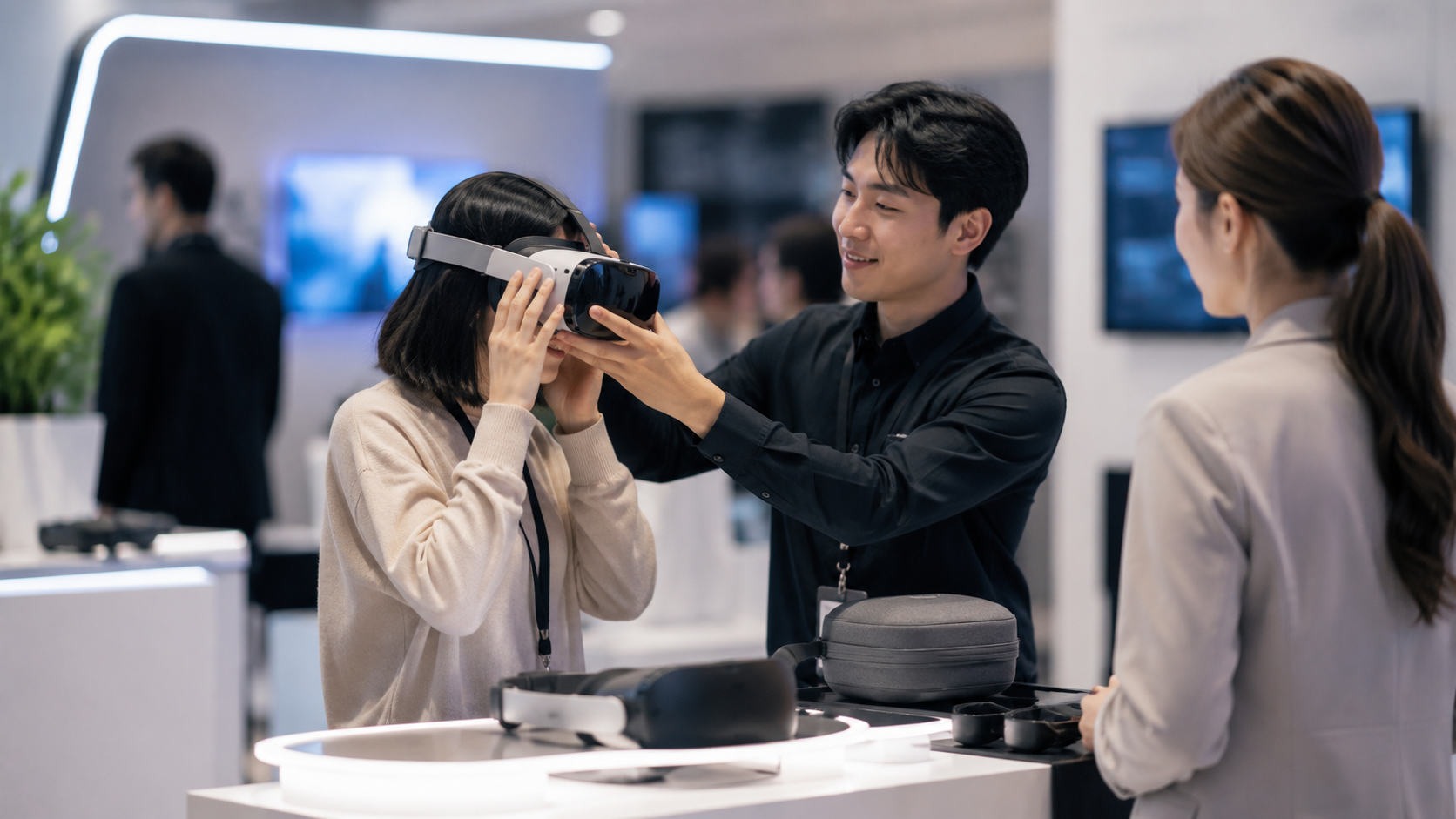
Attendee onboarding maximizes engagement and minimizes anxiety. Welcome stations explain VR basics and set expectations before participants enter experiences. Comfort settings accommodate varying interpupillary distances and vision corrections. Progressive difficulty options ease newcomers into VR while challenging experienced users. Safety briefings cover spatial awareness and emergency procedures.
Equipment swap protocols maintain continuous operation despite technical failures. Hot-spare headsets remain charged and configured for instant replacement. Diagnostic tools quickly identify faulty components. Swap procedures complete in under 60 seconds, minimizing disruption. Failed equipment undergoes immediate troubleshooting for potential restoration. Escalation procedures engage remote support specialists for complex issues.
Post-Event Analytics & Reporting
Engagement metrics quantify VR activation success. Analytics dashboards track total participants, average session duration, completion rates, and replay frequency. Demographic data reveals audience composition and preferences. Time-based analysis identifies peak engagement periods and optimal staffing levels. Comparative metrics benchmark performance against industry standards.
Heat maps visualize user behavior within virtual environments. Color-coded overlays show movement patterns, gaze focus areas, and interaction hotspots. Product demonstrations reveal which features attract the most attention. Training simulations identify common error points requiring additional instruction. Spatial analytics inform future content optimization and experience design.
Lead capture data exports integrate with existing CRM systems. Structured CSV files include contact information, engagement metrics, and interest indicators. API integrations enable real-time data synchronization with marketing automation platforms. Custom fields capture event-specific information relevant to follow-up campaigns. GDPR-compliant processes ensure data privacy compliance.
ROI measurement frameworks justify VR investment to stakeholders. Cost-per-engagement calculations compare VR activations to traditional event marketing. Lead quality scores weight VR-generated contacts against other sources. Training effectiveness metrics demonstrate knowledge retention improvements. Long-term tracking correlates VR engagement with sales conversions and customer lifetime value.
VR Event Rental Pricing & Logistics
Transparent pricing structures help event planners budget accurately for VR activations. Professional rental providers offer flexible packages accommodating various event scales, durations, and geographic locations. Understanding cost components, logistical considerations, and insurance options ensures smooth rental experiences without unexpected expenses.
Rental Duration Options
Single-day event pricing typically ranges from $2,000-$5,000 for basic 4-headset packages to $15,000-$25,000 for premium 20-station configurations with full support staff. Pricing includes equipment, setup/breakdown, basic technical support, and standard content libraries. Additional charges apply for custom content, extended hours, and specialized equipment.
Multi-day conference packages offer significant per-day savings compared to single-day rentals. Three-day conferences typically receive 20-30% discounts on daily rates. Week-long events may negotiate 40-50% reductions. Multi-day rentals include overnight security protocols, daily equipment checks, and battery/hygiene supply refreshes. Dedicated technical staff maintain consistency throughout extended events.
Long-term touring event solutions support roadshows and multi-city activations. Monthly rental rates average 10-15x daily rates, providing substantial savings for extended deployments. Touring packages include ruggedized shipping cases, detailed setup documentation, and remote technical support. Equipment refresh cycles ensure consistent performance across months-long tours.
Setup and strike days factor into total rental costs. Most providers charge 50% daily rates for dedicated setup/breakdown days. Same-day setup/strike incurs overtime charges for extended staff hours. Complex installations may require multiple setup days for content testing and staff training. Early morning or late evening logistics sometimes avoid separate day charges.
Geographic Coverage & Shipping
Major metro same-day delivery zones typically encompass 50-mile radiuses around provider warehouses. Cities like New York, Los Angeles, Chicago, and San Francisco maintain local inventory for rapid deployment. Same-day delivery requires morning confirmation for afternoon availability. Emergency rentals may access premium courier services for 2-4 hour delivery windows.
National shipping timelines vary by destination and equipment volume. Ground shipping typically requires 3-5 business days for coast-to-coast delivery. Express shipping reduces transit to 1-2 days at premium rates. Large orders may utilize freight services requiring 5-7 day lead times. Tracking systems monitor shipment progress and confirm delivery windows.
International event support requires additional planning and documentation. Customs clearance adds 2-5 days to shipping timelines. Carnet documents facilitate temporary equipment importation without duties. Local technical partners provide on-site support in foreign markets. Power adapters and content localization ensure compatibility with international standards.
Return shipping procedures streamline post-event logistics. Pre-paid return labels simplify the process for event staff. Original packaging must be retained and reused for returns. Detailed packing instructions prevent damage during transit. Pickup scheduling coordinates with venue availability and staff schedules. Most providers allow 24-48 hours for equipment packing and return initiation.
Insurance & Damage Policies
Standard coverage included with professional rentals typically protects against normal wear and minor accidents. Basic policies cover up to $500 per headset in damage with $2,500 aggregate event limits. Deductibles range from $250-$500 per claim. Coverage excludes theft, gross negligence, and acts of nature. Detailed condition reports document equipment state before and after events.
Additional insurance options provide comprehensive protection for high-value rentals. Premium coverage eliminates deductibles and increases limits to full replacement value. Theft protection adds security for overnight events and touring activations. Business interruption insurance covers rental costs if equipment failure cancels events. Special event policies bundle multiple coverage types at discounted rates.
Damage assessment procedures ensure fair and transparent claim resolution. Photo documentation captures any visible damage immediately upon return. Functional testing identifies internal component failures. Repair estimates determine whether damage exceeds normal wear thresholds. Dispute resolution processes provide appeals for contested charges. Most providers waive minor cosmetic damage that doesn’t affect functionality.
Equipment replacement guarantees ensure events continue despite accidents. Professional providers maintain 20-30% spare inventory for immediate replacement. Overnight shipping delivers replacement units for next-day events. Technical support assists with rapid reconfiguration of replacement equipment. Replacement costs typically waive if damage occurs despite following provided guidelines.
Getting Started with Your VR Event Rental
Taking the first step toward incorporating VR into your event requires gathering key information and understanding the rental process. Professional providers streamline booking procedures while ensuring all technical requirements are addressed before event day.
Instant Quote Process
Online configuration tools simplify initial pricing estimates. Interactive forms capture event type, expected attendance, duration, and geographic location. Equipment selectors recommend appropriate hardware based on experience types and throughput requirements. Budget calculators show package options across different price points. Most providers generate quotes within 2-4 hours of submission during business hours.
Required event details ensure accurate proposals. Essential information includes venue address and floor plans, event dates including setup/strike windows, expected number of participants, desired experience types or specific content requirements, available power and internet specifications, and budget ranges for equipment and services. Providing comprehensive details upfront prevents revision cycles and accelerates booking confirmation.
Typical response times vary by provider size and request complexity. Standard configurations receive quotes within 4 business hours. Custom content requests may require 24-48 hours for creative team consultation. International events need 3-5 days for logistics coordination. Rush quotes for events within 72 hours receive priority processing but may incur expedite fees.
Budget planning worksheets help justify VR rental investments. ROI calculators estimate cost-per-engagement based on attendance projections. Comparison charts show VR rental costs versus traditional activation alternatives. Financing options spread large rental costs across multiple payment periods. Grant application templates support funding requests for educational and non-profit events.
Booking Timeline Recommendations
Ideal advance booking windows ensure equipment availability and allow proper preparation. Large conferences should secure VR rentals 60-90 days before events. Trade shows benefit from 30-45 day advance bookings. Corporate events typically book 15-30 days ahead. Custom content development requires minimum 8-week lead times.
Rush order capabilities accommodate last-minute opportunities. Most providers maintain emergency inventory for 24-48 hour deployments. Rush fees typically add 25-50% to standard rates. Express shipping and overtime setup charges increase total costs. Limited equipment selection may constrain experience options. Same-day rentals possible in major metros with 4-hour minimum notice.
Cancellation policies protect both parties while providing flexibility. Standard terms allow free cancellation 14+ days before events. 7-14 day cancellations incur 25-50% fees. 48-hour cancellations charge 75% of rental costs. Less than 24-hour notice results in full charges. Force majeure clauses address extraordinary circumstances. Rescheduling options may waive cancellation fees.
Date hold procedures reserve equipment without immediate commitment. Soft holds typically last 5-7 business days while awaiting event approval. First-right-of-refusal prevents other bookings from displacing held dates. Hold extensions possible with good faith deposits. Conversion from hold to confirmed booking requires signed agreements and initial payments.
Frequently Asked Questions
How many VR headsets should I rent for my event?
Calculate one headset per 15-20 expected participants for trade show activations where attendees cycle through experiences. Corporate training events need one headset per simultaneous participant. Consider 20-30% spare units for large events to handle peak demand and equipment issues. A 500-person conference with optional VR demos typically requires 8-12 headsets, while mandatory training for 50 employees needs 50-60 units.
What’s included in a VR event rental package?
Standard packages include VR headsets with controllers, necessary cables and accessories, hygiene supplies, basic technical support, setup/breakdown services, and access to standard content libraries. Premium packages add dedicated staff, custom content, analytics dashboards, backup equipment, and comprehensive insurance. Always verify whether shipping, taxes, and overtime charges are included in quoted prices.
Do you provide on-site technical support during events?
Professional VR rental companies provide trained technical staff at 1:4 to 1:8 headset ratios depending on experience complexity. Support staff handle equipment setup, attendee onboarding, troubleshooting, hygiene protocols, and breakdown. Premium support packages include dedicated account managers, real-time remote assistance, and specialized operators for complex experiences.
Can we use our own VR content with rental equipment?
Most rental equipment supports custom content with advance coordination. Provide APK files for Quest headsets or Steam builds for PC-powered systems at least 5 days before events. Content must undergo compatibility testing and security screening. Some providers charge nominal fees for custom content deployment and testing. Enterprise agreements may restrict third-party content on certain hardware.
What are the space requirements for a VR event setup?
Seated VR experiences require minimum 6×6 foot areas per station including safety buffers. Room-scale experiences need 10×10 foot cleared spaces with 8-foot minimum ceiling heights. Allow additional space for queuing areas, spectator zones, and equipment storage. Outdoor setups require shaded areas to prevent headset overheating and tracking interference.
How far in advance should I book VR equipment for an event?
Book major conferences and trade shows 60-90 days in advance to ensure equipment availability and custom content development time. Standard corporate events should reserve equipment 30 days ahead. Small meetings may book 7-14 days out depending on local inventory. Rush rentals are possible with 24-48 hour notice in major markets but incur premium charges and limited selection.
What happens if VR equipment fails during my event?
Professional providers include 20-30% spare equipment for immediate replacement. On-site technicians diagnose and swap failed units within 2-3 minutes. Remote support specialists assist with complex issues. Replacement guarantees ensure refunds or credits if backup equipment cannot restore service. Document all failures for potential service credits or insurance claims.
Can you ship VR rentals internationally?
International shipping is available to most countries with 7-14 day lead times for customs clearance. Carnet documentation facilitates temporary imports without duties. Local partners provide on-site support in major international markets. Additional fees cover international shipping, customs brokerage, and return logistics. Some high-end equipment may face export restrictions to certain countries.
Conclusion
VR event rental services transform ordinary gatherings into extraordinary experiences that attendees remember long after events conclude. From driving trade show traffic to revolutionizing corporate training, virtual reality delivers measurable results that justify investment. Professional rental providers eliminate technical complexity through comprehensive support services, from initial planning through post-event analytics.
Success with VR events requires selecting the right equipment package, ensuring adequate technical support, and choosing experiences aligned with your objectives. Whether you need four headsets for an executive briefing or 200 units for a major conference, professional rental services scale to meet your requirements while maintaining consistent quality.
The combination of cutting-edge hardware, proven content libraries, and experienced support staff ensures your VR activation achieves its goals without technical distractions. Advanced analytics prove ROI while identifying optimization opportunities for future events.
Ready to elevate your next event with professional VR rental services? Request a customized quote today to explore equipment options, review relevant experiences, and receive expert recommendations tailored to your specific event requirements. Our team of VR event specialists stands ready to transform your vision into reality, ensuring attendees leave with unforgettable memories and meaningful connections to your brand.