When most businesses search for “VR development cost,” they’re looking for a number to put in a budget deck. What they find instead are studio rate cards designed for bespoke software projects. This guide reframes the question. For a business, VR development cost isn’t just the price of building an application—it’s the total cost of getting an immersive experience in front of an audience.
That audience could be at a trade show booth, a product launch, or a safety training session. The total cost includes content creation, hardware, staffing, logistics, and technical support. It varies dramatically depending on which deployment path you choose.
The Three Deployment Paths and Why They Have Different Cost Structures
Business buyers face three realistic paths for deploying a VR experience, each with a fundamentally different cost structure.
- Path 1: Custom VR Development: Commissioning original software built to your exact specifications, typically through a specialized VR studio or an internal development team. This path front-loads costs into labor and time.
- Path 2: Rental with Existing Content: Renting headsets pre-loaded with licensed or off-the-shelf experiences. This path requires no development and shifts costs to per-event hardware and logistics.
- Path 3: Rental with Light Customization: Renting hardware paired with a modified or branded version of an existing experience. This hybrid approach has a lower development cost than a full custom build.
Most cost guides focus only on Path 1. However, most business buyers, especially for one-off events or pilot programs, are actually evaluating Path 2 or Path 3. Understanding the total cost of each is key to making an informed decision.
Custom VR Development Costs: What You’re Actually Paying For
Custom VR development is the most expensive and time-intensive path. It’s the right choice only in a narrow set of circumstances, but it offers the highest degree of control and brand fidelity. Understanding what drives the cost—and what is often excluded from studio quotes is essential before committing to a build.
Typical Cost Ranges by Project Type
Labor accounts for 80-90% of a custom VR project’s budget, with the majority of that going toward 3D asset production rather than coding. Costs vary based on complexity, interactivity, and visual fidelity.
- Simple Interactive VR Experience: A single environment with limited interactivity, suitable for a basic proof-of-concept or demo, typically costs between $15,000 and $50,000.
- Mid-Complexity Product Visualization or Guided Demo: This involves creating custom 3D assets of your products and building branching interactions. Expect to pay $50,000 to $150,000. Most business VR projects fall into this range.
- High-Fidelity Training Simulation: A complex simulation for scenarios like safety procedures or technical skills, featuring multiple scenarios and assessment logic, can range from $100,000 to $300,000+. Enterprise-grade projects with extensive features can even exceed $500,000.
Projects built in Unreal Engine with photorealistic rendering will sit at the upper end of each range due to the increased time for asset production and lighting. These estimates assume you are hiring a third-party studio; using an internal team shifts the cost to headcount, tooling, and overhead.
What Studio Quotes Typically Exclude
The price from a development studio is rarely the total cost. Business buyers must budget for several items that are almost always scoped separately.
- Hardware: Studio quotes are for software only. Headsets, powerful PCs for tethered experiences, and cables are a separate and significant cost.
- Content Updates: Once the app is delivered, any changes or additions are typically billed as new work unless a maintenance contract is in place.
- On-site Technical Support: If a custom app crashes at a trade show, there is no built-in support. You’ll need to pay for a developer or technician to be on-site.
- Asset Production: The cost of 3D modeling proprietary products or environments is often scoped separately from the application build itself. This can range from $5,000 to over $30,000 depending on complexity.
- QA and Device Compatibility: Extensive testing across different headset models (e.g., Meta Quest, Pico, Apple Vision Pro) adds to the cost and timeline.
When Custom Development Is Worth the Cost
- Proprietary Content: The experience needs to showcase a product, environment, or process that does not exist in any off-the-shelf library.
- High Reuse: The experience will be deployed repeatedly across many events or training cohorts, allowing the high upfront cost to be amortized over time.
- Strict Brand Fidelity: Your brand guidelines are so strict that a modified rental experience would not pass internal review.
- Sufficient Timeline: You have a 3–6 month development cycle before the first deployment. Complex projects can take even longer.
VR Rental Costs: The Deployment Path Most Business Buyers Should Price First
For businesses running a single event, a product launch, or a pilot training program, a rental-based deployment typically delivers a lower total cost and a much faster path to execution. The cost structure is fundamentally different: you are paying for hardware access, logistics, and operational support rather than software labor.
Per-Event Rental Cost Ranges by Headset Type
Rental pricing depends on the headset model, quantity, and rental duration. Prices are often quoted per headset, per day.
- Standalone Headsets (e.g., Meta Quest 3): These are the most common for events and typically rent for $150–$400 per headset per day. Some providers offer lower rates for longer-term or bulk rentals.
- PC-Tethered Headsets (e.g., Valve Index, HP Reverb): Requiring a powerful gaming PC, these are more expensive at $300–$700 per headset per day, plus the cost of the PC rental.
- Apple Vision Pro: As a premium device, the Vision Pro commands a higher rental price, typically $300–$600 per unit per day, though availability can be limited.
Most rental providers offer multi-day event packages that are more cost-effective than daily rates. Expect minimum order quantities and additional fees for delivery, setup, and return logistics, which can add $500–$2,000 to the total.
What Is Included vs. What Is Extra in a Rental Package
Understanding the fine print is crucial to avoiding surprise costs.
- Typically Included: Headsets, controllers, charging cases, pre-loaded content from the provider’s library, and basic setup instructions.
- Typically Extra:
- On-site Technician: This is the most commonly underestimated cost. A trained VR attendant to manage the station, assist users, and troubleshoot issues runs $300–$600 per day.
- Custom Content Loading: If you have your own app, the provider will charge to load and test it on their fleet.
- Branded UI Overlays: Adding your logo or colors to an existing experience.
- Insurance: Coverage for accidental damage to the equipment.
Total Cost Example: 3-Day Trade Show Activation with 5 Headsets
Let’s calculate the realistic total cost for a small but professional trade show booth using rental equipment with an existing game or experience.
- Hardware Rental: 5 standalone headsets x 3 days @ $250/day = $3,750
- Logistics: Delivery, setup, and return shipping = $800
- On-site Technician: 1 technician x 3 days @ $450/day = $1,350
- Content: Pre-loaded from rental library = Included
- Total Estimated Cost: ~$5,900
This stands in stark contrast to the $30,000–$80,000 needed for a comparable custom-built experience. If light customization were added, it might add another $2,000–$8,000.
Light Customization Costs: Branded Experiences Without Full Development
The middle path—renting hardware paired with a customized version of an existing experience—is often the best fit for business use cases. It allows for brand presence and specific messaging without the cost and timeline of commissioning original software. This is the most underexplored but often most practical option.
What Light Customization Typically Includes
This approach involves modifying a pre-existing, licensable VR application or template.
- Branded UI Overlays: Adding your company’s logo, color palette, and custom intro/outro screens to an existing experience.
- 3D Model Swaps: Replacing generic objects in a product viewer template with your own 3D product models.
- Scenario Adjustments: Recording localized or scenario-specific narration and text for an existing training simulation.
- Custom Kiosk Materials: Designing loading screens and physical signage around the VR station to match your event branding.
Cost Range for Light Customization
These services are typically offered by VR rental companies or studios with a library of customizable templates.
- Branded UI and Intro/Outro Screens: $1,500–$5,000, depending on complexity.
- 3D Product Model Integration: $3,000–$10,000, depending on the fidelity of the model and the number of products.
- Narration and Text Changes: $2,000–$6,000 for a standard training module.
For a single event, a light customization budget typically falls between $3,000 and $15,000, which is an additional cost on top of the hardware rental fees. Crucially, this path requires a lead time of only 2–6 weeks, compared to the 3–6 months needed for full custom development.
VR Development Cost by Use Case: Events, Training, and Product Demos
How you plan to use the VR experience dramatically impacts the budget and the most logical deployment path.
Trade Show and Brand Activation
- Goal: Attract booth traffic, create a memorable brand story, and collect leads.
- Typical Path: Rental with existing or lightly customized content.
- Cost Range: $4,000–$20,000 per event. This all-in figure includes hardware, logistics, staffing, and any light customization. A full custom build is usually only justified if the product is highly unique and the activation will run across five or more events.
- Key Operational Cost: The need for dedicated staff to manage headset sanitization, attendee queuing, and technical resets is frequently underestimated.
Product Launch and Sales Demo
- Goal: Allow buyers, press, or stakeholders to experience a product before it physically exists or to understand a complex product in a controlled, virtual setting.
- Typical Path: A custom 3D product model integrated into a rental or licensed viewer application.
- Cost Range: $8,000–$40,000, depending on the complexity of the 3D model and the number of deployment events.
- Hardware Choice: The Apple Vision Pro is increasingly used for high-end product demos due to its superior display quality. While its rental cost is higher, the development cost for a spatial viewer can be lower than a full VR simulation.
VR Training Programs
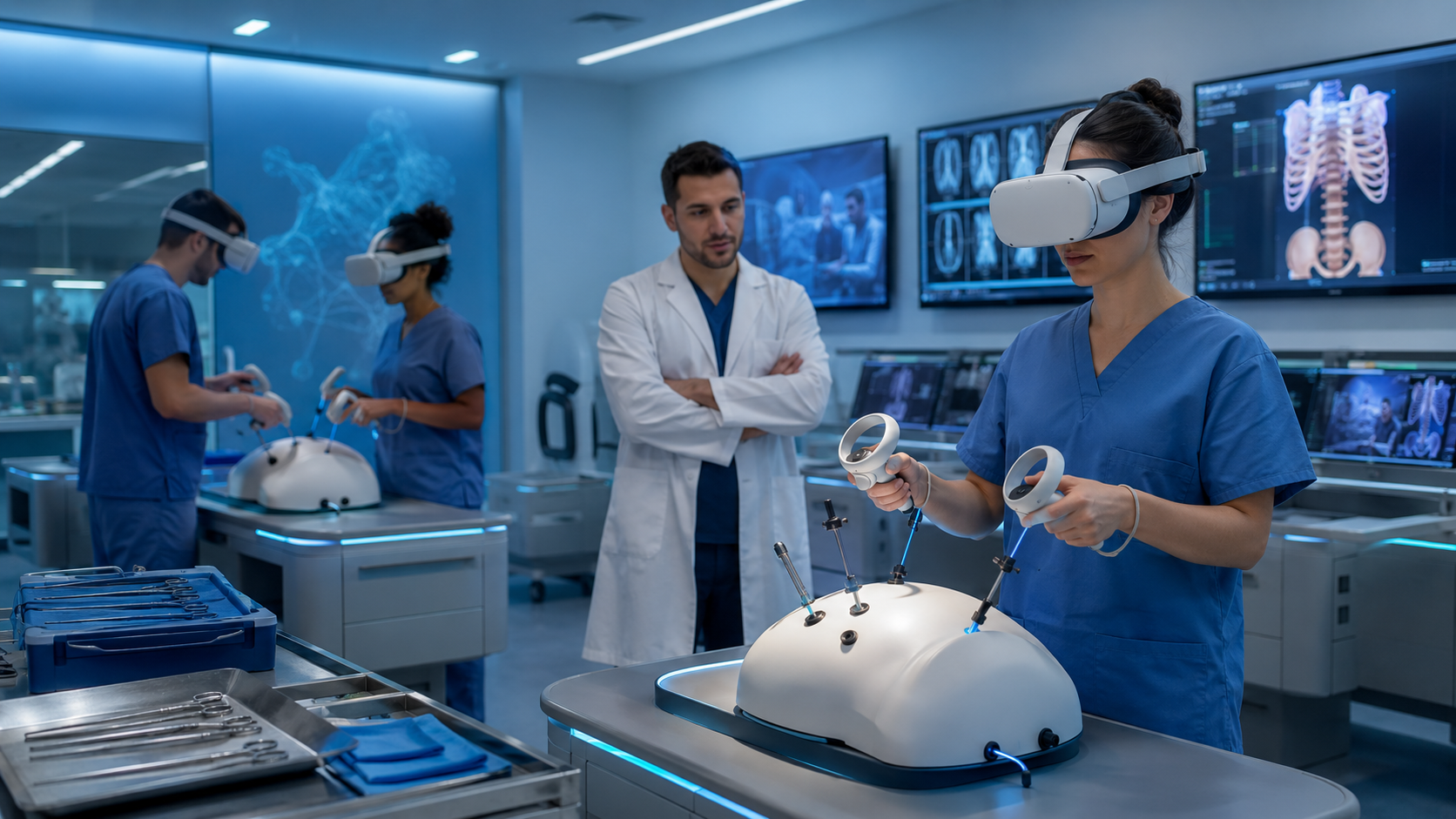
- Goal: Simulate hazardous, complex, or high-stakes scenarios to improve skills and ensure compliance.
- Typical Path: This is the use case where custom development is most common, especially for proprietary processes. However, licensed simulation platforms are a cost-effective option for common safety categories (e.g., OSHA).
- Cost Range:
- Custom Development: $15,000–$300,000+. A single-scenario pilot may cost $25,000–$75,000, while a full-scale, interactive program lands in the $150,000–$300,000 range.
- Licensed Platforms: $5,000–$30,000 per cohort or $200-$500 per employee annually.
- Pilot Programs: Renting equipment for a pilot program is a viable way to prove ROI before committing to a large hardware purchase. A rental-based training day for 10-20 participants can cost $2,000–$8,000.
The Hidden Costs That Blow VR Budgets
The most common reason VR projects go over budget is not the initial development quote; it’s the operational costs that are never included in a studio proposal. For any deployment outside a developer’s office, these costs are as real as the software line item.
Hardware Failure and Redundancy
A live event is an unforgiving environment. A plan without redundancy is a plan to fail.
- A booth with five headsets and no spares is one dead battery or cracked controller away from a 20% capacity loss.
- Standard practice is to budget for 1–2 spare headsets for every 5 units deployed.
- PC-tethered setups have more points of failure (cables, GPUs, software crashes), each requiring a trained technician to diagnose and resolve.
Content Preparation and Asset QA
Getting content ready for VR is not a simple drag-and-drop process.
- 3D models from CAD files must be heavily optimized by a 3D artist before they can render smoothly in a headset. This is a specialized skill and a separate cost from the app build.
- Content must be tested on the exact headset model being deployed, as performance can vary significantly.
- Last-minute content changes at an event are often impossible without a developer on-site and can be prohibitively expensive.
Staffing and Training
VR is not yet a self-serve technology at public events.
- Every VR station requires a trained attendant to help users, ensure hygiene, and handle technical glitches.
- This staffing costs $300–$600 per person, per day. A 3-day event with three VR stations needs a minimum of three attendants, adding thousands to the budget.
- Even if using internal staff, they need 2–4 hours of dedicated training to manage a live activation effectively.
How to Choose the Right Path: A Decision Framework
The right VR deployment path is determined by four variables: timeline, budget, reuse frequency, and content specificity. Use this framework to identify which approach fits your business case before you contact a vendor.
1. Timeline as the First Filter
- Under 6 Weeks to Deployment: Custom development is not viable. Your only realistic path is rental with existing or lightly customized content.
- 6–12 Weeks: Light customization with rental hardware is feasible. A very simple custom build might be possible if a studio has immediate availability, but it’s risky.
- 12+ Weeks: Full custom development is on the table, but only if your use case justifies the higher cost and complexity.
2. Budget as the Second Filter
- Under $10,000 Total: Your best option is rental with existing content, perhaps with a small budget for minor branding like a custom splash screen.
- $10,000–$40,000: This range comfortably fits rental with significant light customization. It could also cover a simple custom build if the experience will be reused many times, amortizing the cost.
- $40,000+: Custom development is a viable option, provided the project requires proprietary content or will be deployed at a scale that makes rental uneconomical over the long term.
3. Reuse Frequency as the Third Filter
- Single Event or Pilot Program: Rental almost always wins on total cost. The high upfront investment of a custom build cannot be justified.
- 3–5 Events Per Year: The math begins to shift. Compare the annual cost of renting versus the one-time cost of a custom build plus hardware purchase.
- Ongoing Training Program: For monthly cohorts, custom development and hardware ownership typically produce a lower total cost of ownership over a 2-year horizon.
By filtering your project through these three lenses, you can confidently determine whether a custom build, a simple rental, or a hybrid approach is the right starting point for your budget conversation.
Frequently Asked Questions (FAQs)
1. How much does it cost to develop a VR experience for a trade show?
For a typical trade show, most businesses should budget between $4,000 and $20,000 per event. This covers renting a few headsets, on-site staff, logistics, and light branding on an existing VR experience. A fully custom-built trade show app starts at $30,000 and goes up significantly from there.
2. What is the difference in cost between custom VR development and renting VR equipment?
Custom development is a large, one-time software investment ($50,000–$150,000+) that you own. Renting is an operational expense for hardware and support, paid per event ($150–$400 per headset, per day). For a single event, renting is vastly cheaper.
3. How long does VR development take for a business event or product launch?
A full custom VR application takes an average of 3-6 months from kickoff to launch. A lightly customized rental experience can be ready in 2-6 weeks.
4. Can I use rented VR headsets with my own custom content?
Yes. Most VR rental companies offer services to load, configure, and test your custom application on their fleet of headsets for an additional fee.
5. What is included in a VR rental package for a corporate event?
A standard package includes the headsets, controllers, charging stations, and often a library of pre-loaded games or experiences. On-site technical staff, shipping, insurance, and any content customization are typically billed as extra line items.
6. How much does VR training program development cost?
A custom VR training program can range from $25,000 for a single-scenario pilot to over $300,000 for a multi-module simulation with complex analytics. Using a licensed, off-the-shelf training platform is much cheaper, often costing a few thousand dollars per training cohort.
7. What are the hidden costs of deploying VR at a live event?
The biggest hidden costs are staffing ($300-$600 per attendant per day), hardware redundancy (budgeting for spare headsets), and on-site technical support. These operational costs are rarely included in a software quote but are critical for a successful deployment.
8. Is Apple Vision Pro worth the extra rental cost for a product demo?
For high-end product demonstrations where visual fidelity is paramount, the Apple Vision Pro’s superior display can justify its higher rental cost ($300-$600/day). It creates a premium experience for executives or key clients, but for high-traffic events, the Meta Quest 3 offers a more cost-effective balance of quality and throughput.